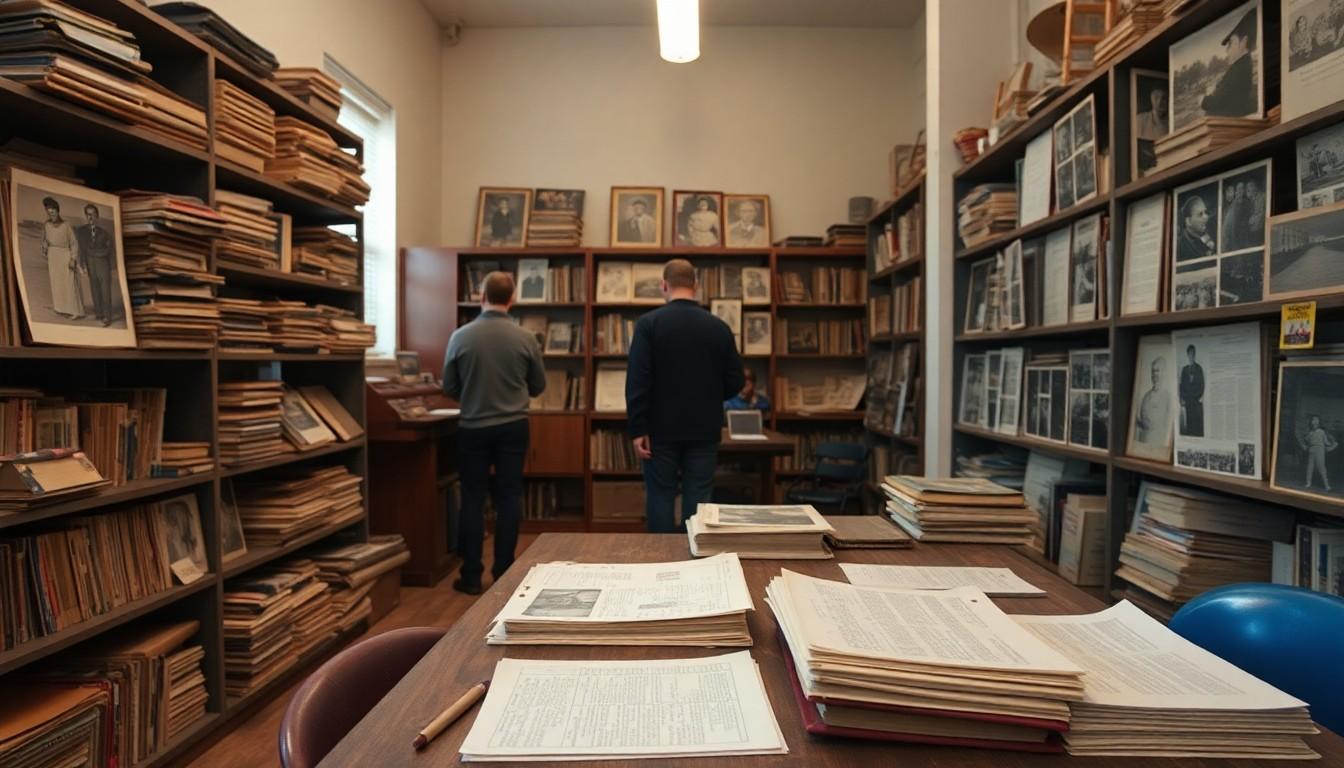
Atlanta’s Georgia Rainbow History Project has proposed two LGBTQ halls of fame: one for the city and metro area, and another for communities across Georgia. The plans would invite free public nominations and aim to recognise people, organisations and collectives whose contributions might otherwise be missed. Here’s how the proposal fits into a wider effort to document LGBTQ history.
Essential Takeaways
- Two proposed honours: One hall would focus on Atlanta and its metropolitan communities; the other would recognise contributions across Georgia.
- A phased plan: The proposed Atlanta class of eight to 12 honourees is targeted for October 2027, with a separate statewide class targeted for 2028, subject to a board vote.
- Open nominations: The proposed process would be free and available online, by email or on paper, with posthumous nominations allowed.
- Broad areas of contribution: Suggested fields include advocacy, health, arts, faith, nightlife, sport and education.
- A modest starting budget: The provisional 2027 funding target is $15,000, to be sought through donations, sponsorships and grants.
Two halls, with different maps to cover
The proposal’s central idea is simple but meaningful: recognise LGBTQ contributions both in Atlanta and across Georgia, rather than treating the capital as the whole story. The Georgia Rainbow History Project says the Atlanta hall would cover work centred in the city and its metropolitan communities, while the statewide version would recognise historically significant contributions elsewhere in Georgia.
According to Rough Draft Atlanta, the project is targeting an inaugural Atlanta group of eight to 12 honourees for October 2027, timed to coincide with Atlanta Pride. Statewide research and regional outreach would begin in 2027, with a separate Georgia class targeted for 2028, subject to a board vote. Organisers hope the statewide programme’s first host would be outside metro Atlanta.
Why documenting history matters
Atlanta has already taken steps to record LGBTQ history through the city’s LGBTQ+ Historic Context Statement. Georgia Public Broadcasting reported that the research documents people, places and events that shaped community life, from organising and activism to healthcare, religion and the arts. Its account points to Midtown as an important centre for social life and advocacy, and notes concern that changing land use could put significant places and their stories at risk.
The city’s Future Places programme describes the context statement as a tool for assessing places with historical significance. The work has involved the city, Historic Atlanta and Georgia’s Historic Preservation Division, with research into neighbourhoods, public spaces and buildings. It’s a reminder that history isn’t only held in biographies; it can also live in the places where people gathered, supported one another and built community.
Who could be nominated, and how?
Under the proposal, the public could nominate people, organisations and collectives for free, online, by email or on paper. Nominations could also be made posthumously, an important option for recognising people whose contributions weren’t formally recorded during their lifetimes.
The suggested fields are deliberately wide-ranging: advocacy, public service, HIV/AIDS and health, arts, media, business, faith, nightlife, sport and education. Rough Draft Atlanta also reports that outreach would aim to include rural communities and histories that have been overlooked, including those of Black LGBTQ organisers, transgender pioneers, faith communities and people involved in the AIDS response.
That emphasis on broad participation echoes Atlanta’s earlier history projects. The American Planning Association reported that research for the city’s historic context statement drew on archives, oral histories, interviews, public meetings and surveys, helping bring community knowledge into preservation work. For anyone considering a nomination, the practical takeaway is to think beyond public profile: the proposal explicitly makes room for organisations and collectives, not just individuals.
A civic proposal with community roots
The planned halls would add a recognition programme to a longer record of local history work. Touching Up Our Roots, a Georgia-based LGBTQIA+ history initiative, describes its work as preserving and sharing stories through oral history, public events and outreach. Its account also underlines why recording memories matters, particularly when people who could tell those stories are no longer here.
Atlanta’s public institutions have also explored ways to support LGBTQ community life. The City of Atlanta has announced a feasibility study for a proposed cultural, educational and recreational centre, offering a separate example of civic planning focused on LGBTQ contributions and community needs. The hall-of-fame proposal is at an earlier, distinct stage, but both efforts reflect an interest in making recognition and community history more visible.
The first challenge is making room for everyone
The proposal sets a provisional 2027 funding target of $15,000: $8,000 for the Atlanta pilot, $4,000 for Georgia planning and $3,000 for shared work. Project director Tom Dibble Dempsey said the Georgia Rainbow History Project would seek donations, sponsorships and grants to support the work.
Those figures are plans, not a guarantee that either hall will proceed on schedule. Still, the proposal’s reach is notable: it aims to connect public nominations with research and regional outreach, so the story isn’t limited to the best-known names or the city’s most familiar landmarks. A useful first step for interested readers is to keep an eye on the project’s nomination plans and consider whose contribution deserves to be remembered.
A hall of fame can only tell a fuller story if people help put the names forward.
Source Reference Map
Story idea inspired by: [1]
Sources by paragraph: