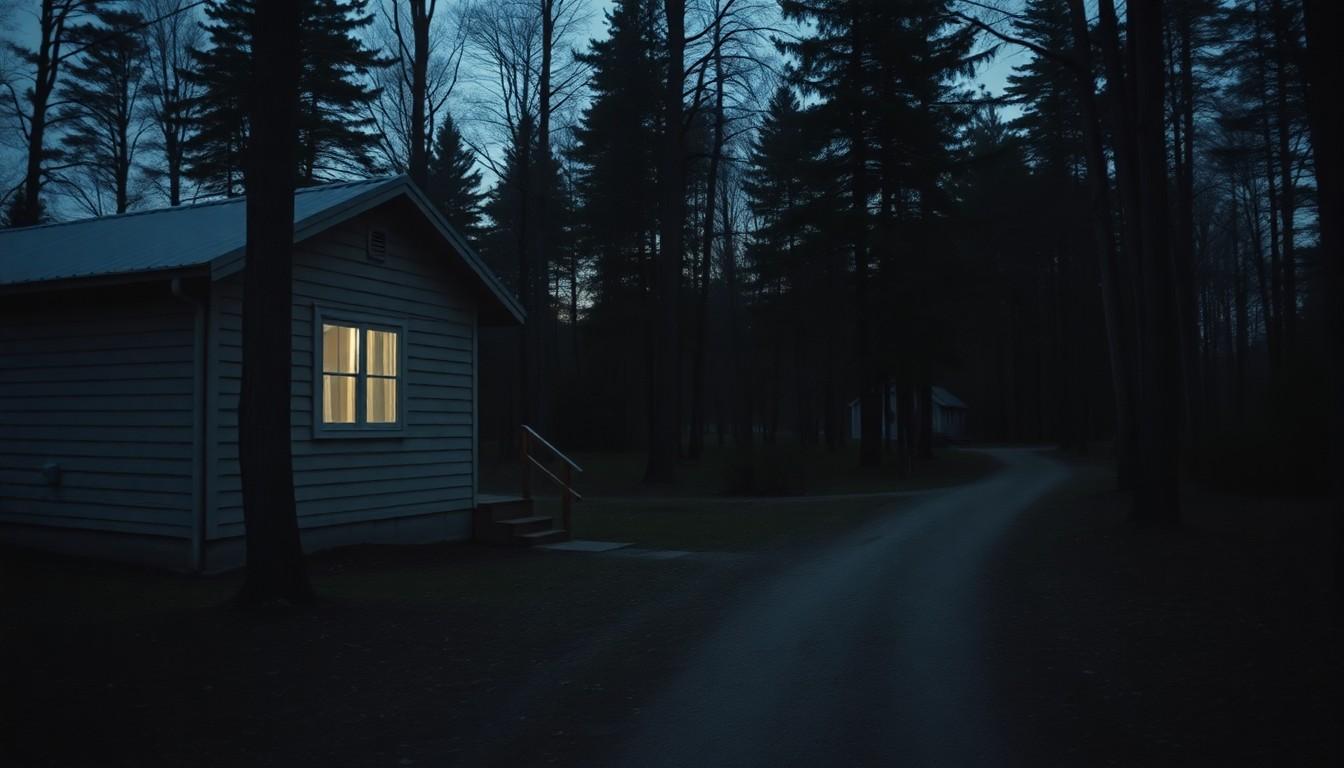
A filmmaker’s encounter with Jane Schoenbrun’s queer horror film becomes a moving reflection on sex, spectatorship and the images that shape desire. Through Kris and Billy, the story explores what it means to watch yourself from outside your body, and why that experience needn’t have one neat explanation.
Essential Takeaways
- The film’s central pair: Hannah Einbinder plays Kris, a filmmaker tasked with reviving the Camp Miasma slasher series; Gillian Anderson plays Billy, an actor tied to its earlier films.
- Horror meets desire: The story draws on fear, fantasy and the shifting boundary between watching and being watched.
- Images can shape identity: Kris and Billy revisit the franchise as they consider how its stories have influenced their understanding of themselves.
- A personal response, not a diagnosis: The essayist reflects on their own experience of watching themselves during sex; that account isn’t clinical evidence or a diagnosis.
- Play sits alongside anxiety: The film’s sweets and candy-coloured imagery connect forbidden pleasure with queer sexuality and comfort.
A slasher film opens an unexpected door
In Jane Schoenbrun’s Teenage Sex and Death at Camp Miasma, a horror franchise becomes a mirror. Kris, played by Hannah Einbinder, is hired to revive the fictional Camp Miasma films, while Billy, played by Gillian Anderson, is linked to the series’ earlier story. As they return to its images, the film asks how fear and fantasy can shape the way people understand themselves.
That question lands especially sharply in the essayist’s account of watching Billy describe leaving her body during sex, then feeling pleasure as she watched. The writer recognises something of their own history in that image, while making clear that personal resonance isn’t a universal explanation. It’s an intimate, unsettling starting point for thinking about who gets to look, and what looking can mean.
Frameline describes the film as a queer psychosexual slasher concerned with fear, desire and self-discovery. Sight and Sound, meanwhile, highlights its interest in cinema, spectatorship and the boundary between watching and being watched.
Kris turns a horror scene into a question
One of the essay’s most vivid moments centres on Kris watching an old Camp Miasma film. A scene shifts between threat and sexual suggestion, and Kris writes “DESIRE” in her notebook. For the writer, it’s funny and revealing: faced with a complicated feeling, Kris tries to make it legible by turning it into a word.
That impulse runs through the film. RogerEbert.com reads the fictional franchise as a framework through which Kris can explore feelings she struggles to articulate directly. Sight and Sound similarly describes a story that moves beyond film analysis towards experience and sexual fantasy.
And the old slasher imagery has its own pull: the held breath, the almost-touch, the moment before danger arrives. In the essayist’s reading, horror offered a way to approach erotic feeling indirectly, through images that could be watched and revisited before they could be spoken about.
The film blurs the line between watching and being watched
Billy’s experience gives that tension a more intimate shape. She sees herself from outside her body, while images from the horror franchise enter the scene. The film brings watcher and watched together, making room for a feeling that doesn’t settle into a simple explanation.
The American Psychiatric Association describes depersonalisation as a feeling of detachment from one’s mind, self or body, which can include feeling as if you’re watching events happen from outside yourself. That general description doesn’t diagnose the essayist, or establish what their experience meant. The essay’s point is personal: an observer perspective can feel different from the distressing detachment the clinical term describes.
Sight and Sound notes how the film loosens the distinction between spectator and spectacle, while Frameline presents it as a story about the ways genre can become part of personal identity. That doesn’t make every viewer’s response the same. It does give the film a compelling way to hold fear, pleasure and uncertainty in the same frame.
Candy, queer play and the stories we borrow
Kris’s hotel-room scene has a lighter, more mischievous detail: she watches the old film surrounded by sweets and snacks. The Cannes press kit connects the film’s colourful candy imagery with forbidden pleasure and queer sexuality, and says director Jane Schoenbrun saw candy as a form of comforting aftercare around anxiety-provoking experiences.
The essayist also describes borrowing identities from films and television while learning how desire felt. Sometimes, they write, wanting to be someone and wanting that person didn’t remain separate. RogerEbert.com’s discussion of Schoenbrun’s work offers a useful parallel, considering how horror and popular culture can give shape to feelings that are difficult to name.
Little Death folds another idea into the film’s playful unease. Its name evokes “la petite mort”, a phrase associated with orgasm, though the history of that expression is more complicated than a simple claim of ancient French usage, as the DIG podcast’s historical discussion makes clear. In the film and essay, the wordplay matters less as a definitive origin story than as a meeting point for pleasure, fear and transformation.
Desire doesn’t always come with an origin story
The essayist once wanted a clear account of where their desires began: which feelings came from experience, and which had been shaped by images and stories. But Teenage Sex and Death at Camp Miasma resists a tidy answer. Cinema feeds fantasy, fantasy influences experience, and experience changes what we notice next.
That uncertainty is part of the film’s appeal. Frameline calls it a meditation on the stories that influence people and the process of becoming; Sight and Sound likewise finds no neat intellectual explanation for what its characters feel. The writer’s conclusion is more personal: a desire doesn’t have to be fully explained before it can be recognised as one’s own.
Sometimes a film doesn’t solve a feeling. It gives you a new way to watch it.
Source Reference Map
Story idea inspired by: [1]
Sources by paragraph:
- Paragraph 1: [2]
- Paragraph 2: Lead article only
- Paragraph 3: [2], [3]
- Paragraph 4: Lead article only
- Paragraph 5: [7], [3]
- Paragraph 6: Lead article only
- Paragraph 7: Lead article only
- Paragraph 8: [5]
- Paragraph 9: [3], [2]
- Paragraph 10: Lead article only
- Paragraph 11: [4]
- Paragraph 12: Lead article only
- Paragraph 13: [7]
- Paragraph 14: [6]
- Paragraph 15: Lead article only
- Paragraph 16: [2], [3]
- Paragraph 17: Lead article only