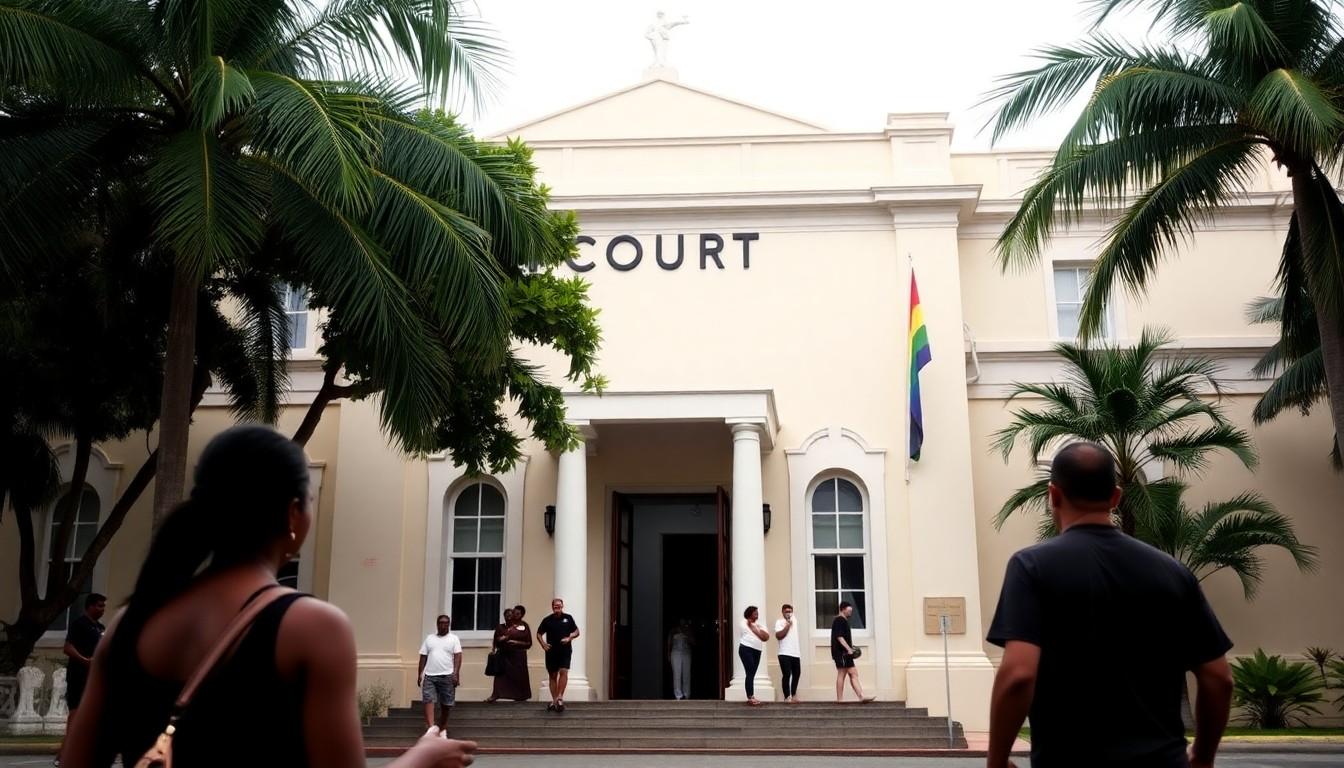
A Privy Council ruling against Trinidad and Tobago’s law criminalising consensual same-sex relations has reopened a difficult conversation across the Caribbean. In Jamaica, religious and LGBT advocates disagree over whether current protections are enough, while a separate 2023 court decision means the ruling does not automatically change Jamaican law.
A Trinidad ruling, and a Jamaican debate
The Privy Council’s decision on Trinidad and Tobago’s law has prompted sharply different responses in Jamaica. Bishop Dr Alvin Bailey, president of the Jamaica Evangelical Alliance, says existing legislation sufficiently covers LGBT people’s rights, and that Jamaicans aren’t open to legalising consensual same-sex relations.
The judgment followed a challenge by Trinidadian activist Jason Jones. The Judicial Committee of the Privy Council ruled that Trinidad and Tobago’s Sexual Offences Act breaches the country’s Constitution. Jones described the outcome as a significant moment for gay people in the Caribbean and called for equal treatment across the region.
Why the decision doesn’t change Jamaican law
The ruling concerns Trinidad and Tobago’s Constitution and legislation, so it doesn’t directly alter Jamaican law. That distinction matters: constitutional cases can turn on a country’s own laws and legal history, even when the issues appear closely related.
Jamaica’s Supreme Court considered a separate challenge in 2023. Its case record identifies the savings law clause and the Offences Against the Person Act as central issues. Human Dignity Trust says the court held that the clause prevented scrutiny of provisions criminalising same-sex sexual activity.
Advocates say the legal picture is only part of the story
Nickoy Wilson, programmes and advocacy manager for Equality for All Foundation Jamaica, called Bailey’s views out of touch with reality. He says stigma and discrimination continue to disadvantage vulnerable groups, highlighting how the debate extends beyond what laws say on paper.
Outright International’s Jamaica profile also describes criminalisation and discrimination-related concerns, alongside the work of LGBTIQ organisations. It reports that the Inter-American Commission on Human Rights concluded Jamaica’s criminalisation laws breach rights protected by the American Convention on Human Rights. Those concerns help explain why a discussion about legal protections can also be a discussion about everyday treatment.
What the comparison tells us
The Trinidad and Tobago case and Jamaica’s 2023 case are distinct legal proceedings, each tied to its own constitutional framework. The Privy Council judgment explains the reasoning in Jones’s case; Jamaica’s Supreme Court record concerns a separate challenge under Jamaican law.
So, while the ruling has wider regional significance for Jones, it doesn’t settle Jamaica’s legal position. For readers following the debate, the useful distinction is between a decision that changes the law in the country before the court and one that may influence public discussion elsewhere.
The disagreement remains sharply drawn
Bailey’s defence of current legislation and Wilson’s criticism of continuing stigma reflect competing views about what protection means in practice. Jones’s appeal for equal treatment adds a regional dimension, but the legal outcome in Trinidad and Tobago doesn’t resolve the Jamaican debate.
The contrast is a reminder that court rulings can mark a significant moment without ending disagreement. In Jamaica, the law, the savings clause and concerns about discrimination all remain part of the conversation.
The ruling has widened the regional discussion, but Jamaica’s own legal debate remains distinct.
Source Reference Map
Story idea inspired by: [1]
Sources by paragraph: