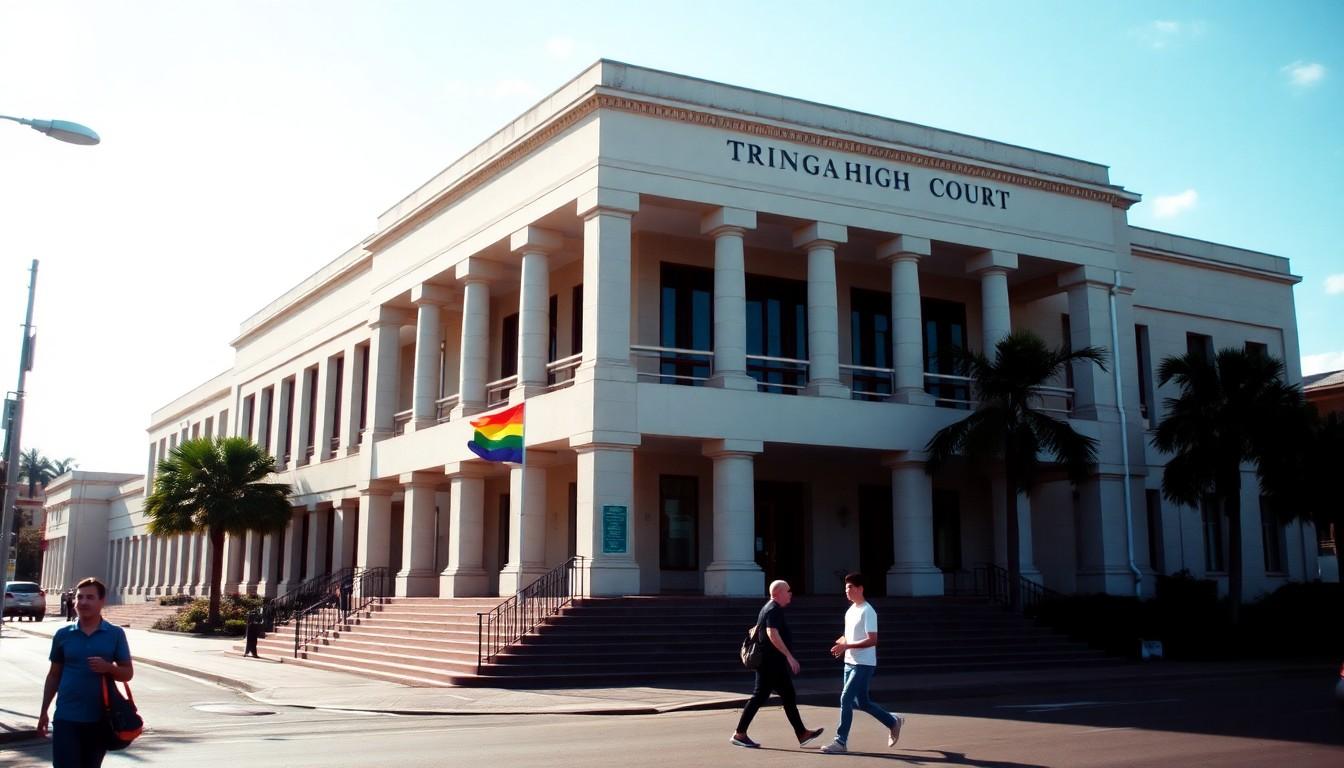
A unanimous Privy Council decision has struck down Trinidad and Tobago’s criminal restrictions on private, consensual same-sex relations between adults. The ruling gives LGBTQ+ activist Jason Jones a major legal victory after a long court battle, but it doesn’t settle the wider fight for equality. Here’s what the judgment says, how the case reached the UK-based court and what remains unresolved.
Essential Takeaways
- A unanimous decision: The Privy Council allowed Jason Jones’s appeal and dismissed the Attorney General’s cross-appeal.
- Two provisions challenged: Sections 13 and 16 of the Sexual Offences Act 1986 concerned buggery and serious indecency.
- Constitutional protection rejected: The court treated the provisions as new laws, not protected laws predating the 1976 Constitution.
- The final order is still to come: The court invited further written submissions before settling the remedy.
- Legal change isn’t social change: Jones welcomed the result while warning that wider equality issues remain.
A unanimous ruling, with privacy at its heart
The Privy Council has ruled unanimously in Jason Jones’s favour, finding that Trinidad and Tobago’s criminal restrictions on private, consensual same-sex relations between adults infringe constitutional rights. The decision centres on privacy and the freedom to build intimate relationships without criminal punishment.
According to TTT News, the Board allowed Jones’s appeal and dismissed the Attorney General’s cross-appeal. The case challenged sections 13 and 16 of the Sexual Offences Act 1986, which address buggery and serious indecency. The Associated Press reported that the court found the restrictions unjustifiable in a society that respects individual rights and freedoms.
Why the 1986 laws weren’t shielded
The legal argument turned partly on the Constitution’s savings clause, which can protect certain laws inherited from before the 1976 Constitution. The question was whether the challenged provisions fell into that protected category, or whether they could be examined under constitutional rights.
The Judicial Committee of the Privy Council’s official case page sets out that issue alongside Jones’s argument that the provisions breached his right to respect for private and family life. TTT News reported that the Board treated the 1986 provisions as new law, rejecting the argument that they were shielded from scrutiny as existing laws.
From a 2017 challenge to the final appeal court
Jones began his constitutional challenge in 2017. The High Court ruled in his favour in 2018, but the Court of Appeal later overturned part of that decision, prompting him to take the case to the Privy Council.
The Associated Press describes the appeal as the culmination of a legal fight lasting nearly a decade. The Privy Council is Trinidad and Tobago’s final court of appeal, and its official case record provides the background to the proceedings and the questions considered by the judges.
The decision is historic, but the remedy isn’t final
There’s an important distinction between the court’s ruling and the final order that will give effect to it. TTT News reported that the Privy Council invited further written submissions before deciding the precise remedy, so the terms of that order were still to be settled.
Human Rights Watch said the decision is the first time the Privy Council has ruled on the constitutionality of laws criminalising same-sex conduct. The organisation also argued that criminalisation can fuel stigma and discrimination even when laws are rarely enforced. That broader point matters: a legal judgment can change what the law permits without instantly changing how people are treated.
A Caribbean signal beyond one case
The ruling could matter beyond Trinidad and Tobago. Human Rights Watch noted that the Privy Council serves as a final appellate court for several independent Commonwealth countries and UK Overseas Territories, and connected the decision with recent court victories elsewhere in the Caribbean.
The Guardian reported that Jones welcomed the outcome but cautioned that a courtroom win won’t immediately remove discrimination in homes and workplaces. That’s a sober reminder of what this case can achieve, and what it can’t. The judgment is a significant legal step; the work of securing everyday equality continues.
The ruling marks a major change in the law, while the final order and wider impact are still to come.
Source Reference Map
Story idea inspired by: [1]
Sources by paragraph: