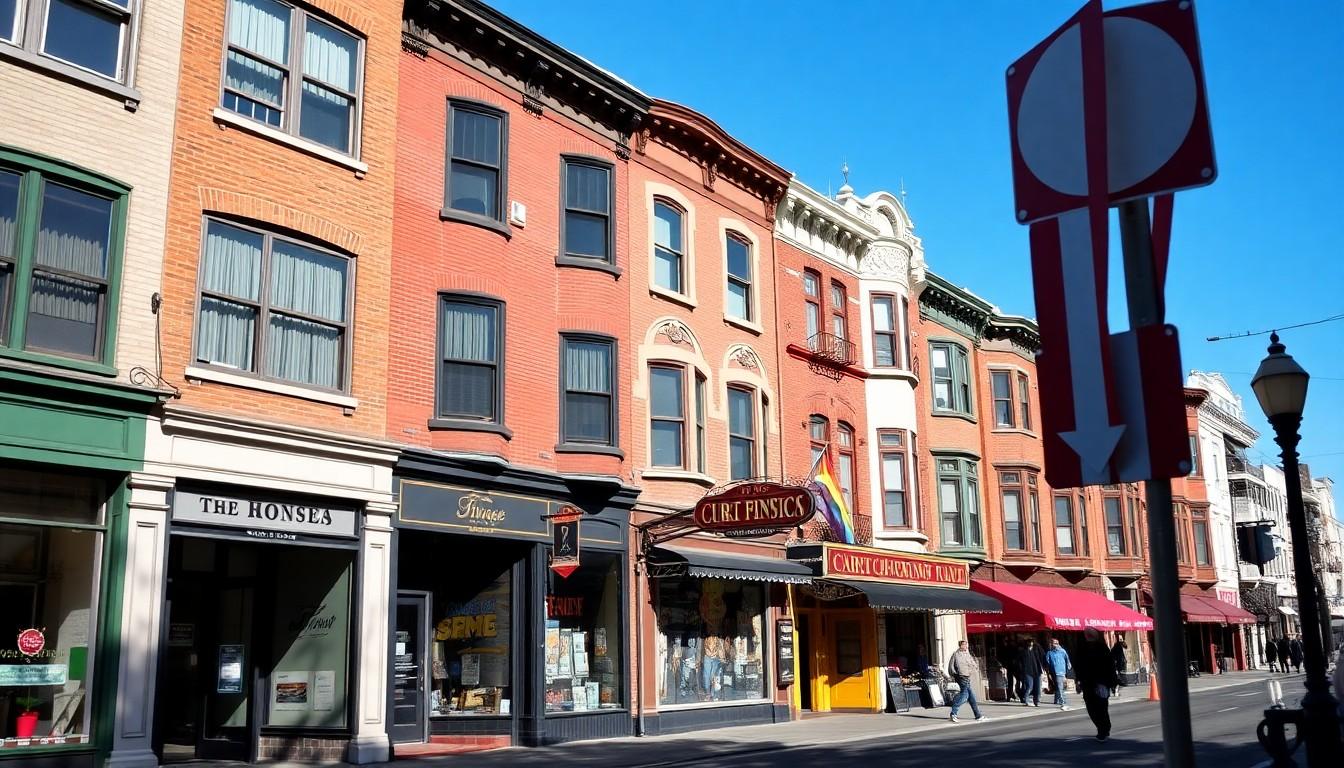
San Francisco is moving to recognise three former and current LGBTQ nightlife sites in North Beach, while also beginning historic-district processes for North Beach and the Castro. The unanimous vote is an important step, not the finish line: the landmark proposals need another board vote, and the district plans face further review.
North Beach’s LGBTQ landmarks move a step closer
Three North Beach properties linked to LGBTQ nightlife are on course for landmark status after San Francisco’s Board of Supervisors voted unanimously to advance the proposals. The sites are Vesuvio Cafe, Finocchio’s and Mona’s Candle Light, each with a different story woven into the neighbourhood’s lively past.
Vesuvio, at 253 Columbus Avenue, opened in 1948 and became a gathering place for Beat writers including Jack Kerouac. It sits beside City Lights Bookstore, on the pedestrian alley named for Kerouac, giving the venue a setting that feels almost like a meeting point between literary and queer San Francisco.
What happens after the supervisors’ vote?
The landmark proposals are ordinances, so they need a second vote by the Board of Supervisors before they can go to Mayor Daniel Lurie. The board has also voted to start historic-district processes for North Beach and the Castro, but those measures are resolutions rather than final designations.
That distinction matters. San Francisco’s Historic Preservation Commission is to hold hearings on the district proposals, while another supervisors’ decision on whether to establish the districts is not expected until 2027. The city’s legislative record describes the North Beach measure as initiating a designation process, not declaring the district already established.
Three venues, three chapters of queer nightlife
At 500-508 Broadway, the building once housed Finocchio’s, a female-impersonation cabaret that opened in the 1930s and closed in 1999. San Francisco’s LGBTQ historic-context research lists the club at 506 Broadway, with its operation spanning 1937 to 1999.
Mona’s Candle Light, at 473 Broadway, was one of several clubs opened by lesbian bar owner Mona Sargent. The city’s historic-context research records the venue at that address from 1948 to 1957, adding detail to the longer story of Mona’s businesses across different locations.
Why North Beach’s queer history reaches beyond three addresses
These venues weren’t isolated exceptions. San Francisco Heritage says more than twenty places catering to gay, lesbian and transgender patrons opened in North Beach and neighbouring Jackson Square between 1933 and 1965. Bars, cafés, nightclubs and floor shows formed part of a wider social landscape, where the word “bohemian” could also signal a welcome for people living outside conventional expectations.
The same historic-context research records many other venues, including the Black Cat, the Paper Doll and the 299 Club. Taken together, they show how LGBTQ gathering places helped shape the neighbourhood’s cultural life, rather than simply borrowing its famous streets and cafés as a backdrop.
Preservation can hold a neighbourhood’s stories in place
Vesuvio’s history shows how one building can carry several kinds of meaning at once. A North Beach preservation statement describes its long-running business presence and Beat-era associations, while the National Trust for Historic Preservation highlights its connection to the literary landscape around City Lights and Jack Kerouac Alley.
The proposed North Beach district offers a broader lens, looking beyond individual properties to the character and history of the area. Supervisor Danny Sauter initiated the district proposal and the effort to landmark the three sites; the city’s legislative record also lists Rafael Mandelman as a sponsor of the North Beach resolution.
A landmark can’t bring a closed club back, but it can make sure its place in the city’s story is harder to overlook.
Closing Line
For now, the next steps are procedural, but the message is clear: North Beach’s queer history deserves a lasting place on the map.
Source Reference Map
Story idea inspired by: [1]
Sources by paragraph: