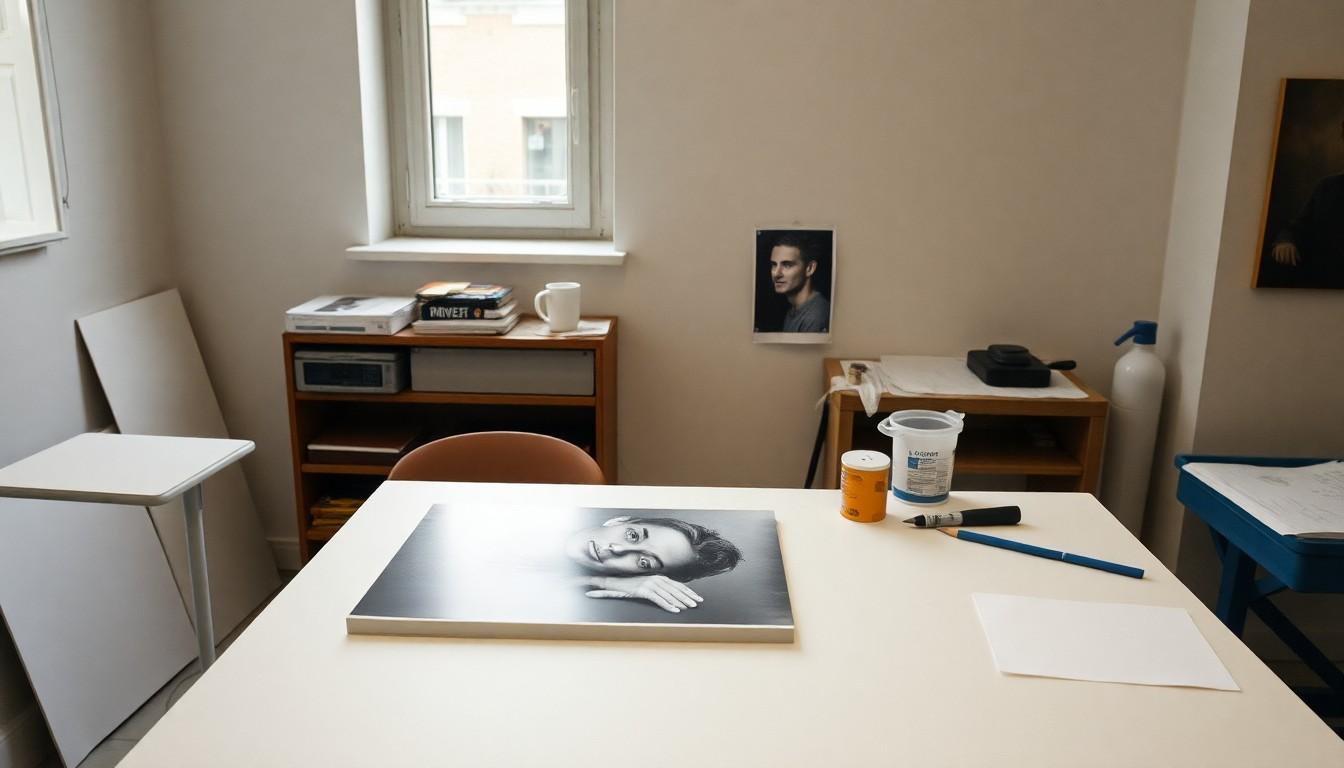
A Lyon artist is turning bleach into both a mark of damage and a sign of survival. In Underground · Projet corps, Robb Secco photographs LGBTQIA+ volunteers, then alters silver gelatin prints by hand. The result is a series of one-off portraits that asks what happens when queer bodies and images are pushed out of view - and who gets to decide what remains visible.
Essential Takeaways
- A portrait series with a purpose: Underground · Projet corps explores queer sexuality through portraits made with LGBTQIA+ volunteers.
- Every print is different: Secco applies bleach by hand to silver gelatin photographs, creating unpredictable fading and colour changes.
- Participants have a say: The project app lets models review images, choose what may be shown and decide whether to be credited or remain anonymous.
- A book and exhibition are planned: The series is intended to grow beyond the prints into a book and an exhibition.
The bleach changes the image, not the subject
The portraits in Underground · Projet corps carry a striking tension: their surfaces are being altered, but the people within them remain present. KALTBLUT Magazine introduces the project as a response to queer lives becoming less visible, whether through closing venues, disappearing online images or the erasure of queer bodies.
For Secco, the physical intervention is part of the message. Each silver gelatin print is reworked with bleach, which can burn, fade and colour the image. The marks are unpredictable, so no two finished prints are quite alike.
From drawing to a visual language
KALTBLUT describes Secco as a neurodivergent artist from Lyon who has found speech difficult, and for whom drawing and images became a way to communicate. That background gives the series a personal starting point, while its subject reaches beyond autobiography.
The portraits are made with LGBTQIA+ volunteers, including drag artists, artists and racialised participants. Secco’s professional website also describes a photography practice focused on LGBTQIA+ people and communities, with an emphasis on queer, trans and racialised subjects.
A chemical process with a human consequence
This isn't a digital filter that can be applied and undone with a click. The project website says each photograph is printed on silver-based paper and then treated by hand with water and bleach; the process is rapid and unpredictable, and the colours emerge as the print changes.
That material quality matters. The Victoria and Albert Museum's guide to photographic processes explains that gelatin silver prints can vary in tone and surface appearance, while chemical treatments can affect how a photograph looks. Here, the altered surface becomes part of the work's argument: damage may change an image, but it doesn't make its subject disappear.
Consent is part of the picture
The project website describes a private app that gives participants control over how their images are handled. Models can review photographs, decide which ones may be shown, choose how they're credited or opt for anonymity, and manage their images.
That approach echoes the consent-led practice described on Secco's professional website, where clients are addressed by their chosen names and pronouns and retain control over which photographs may be published. For intimate portraiture, that control isn't a side note; it's part of how the work is made.
More than a gallery of prints
KALTBLUT names Le Capotier, TENGA, YesforLOV, Furrjoi, The Ardore and fera-daemon as project supporters, and says the series is set to lead to a book and an exhibition. The official project website also says both are in preparation.
The magazine credits Photolix Lyon with producing the silver gelatin prints. Photolix's own site confirms it operates a photographic laboratory in Lyon and offers analogue photography services, although it doesn't independently confirm its role in this particular series. For those drawn to the process as much as the portraits, Secco's website and app offer a closer look at the project and how to support it.
Bleach leaves its mark, but these portraits insist that visibility can survive the damage.
Source Reference Map
Story idea inspired by: [1]
Sources by paragraph: