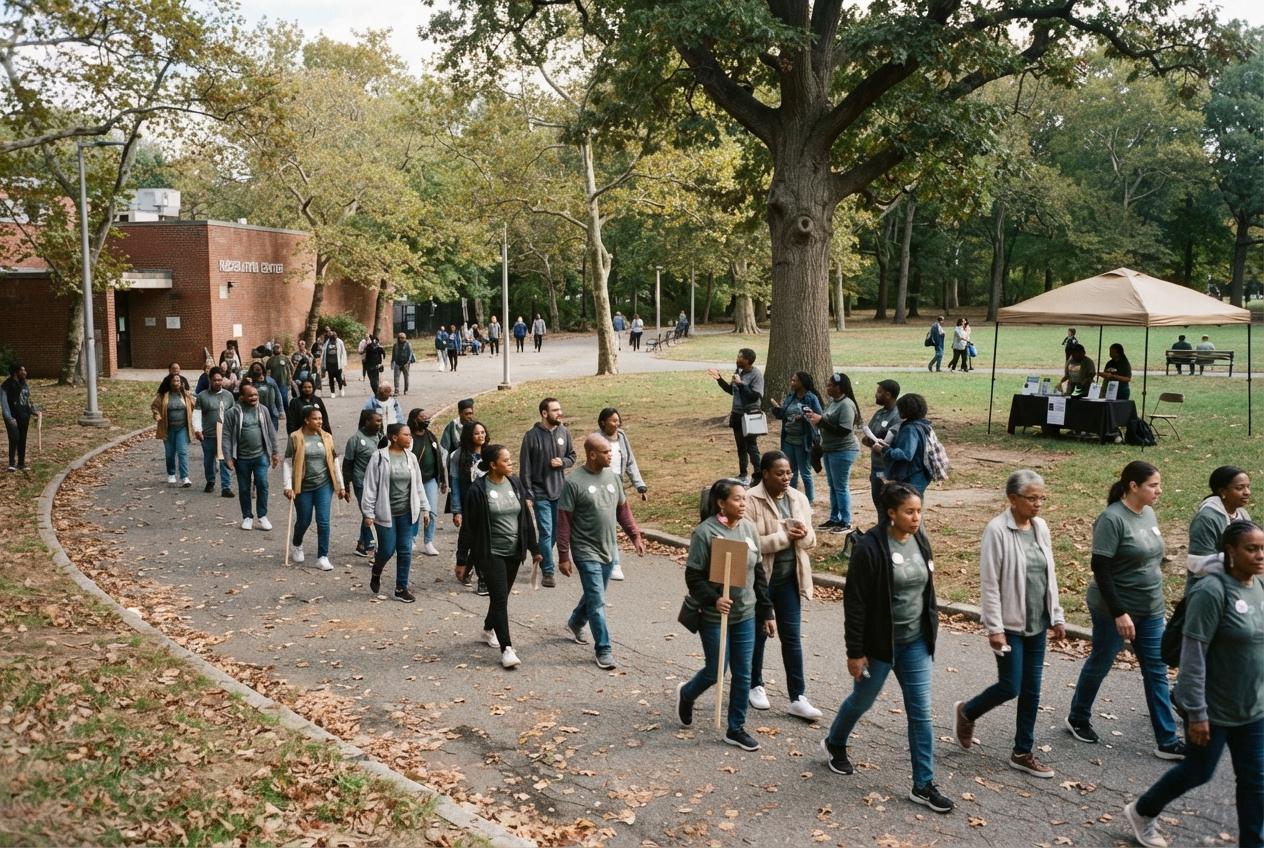
A walk in Philadelphia brought people together to honour trans women of colour, remember lives lost to violence and share reflections on safety, care and community. Hosted by the city’s Department of Behavioral Health and Intellectual disAbility Services, the 7 November gathering combined remembrance with practical support, making space for both grief and connection.
Essential Takeaways
- A community gathering: Around 40 people attended the Philadelphia event, held at Kingsessing Recreation Center.
- More than a memorial: The gathering included a resource fair, partner organisations and information about care and services.
- A history worth knowing: Transgender Day of Remembrance grew from community responses to violence and disrespectful coverage of victims.
- A local call to action: Speakers urged allies and city agencies to help advance safety, resources and LGBTQ+ justice.
A walk made room for grief and connection
Around 40 people gathered in Philadelphia for a Trans Day of Remembrance walk honouring trans women of colour. The event began at Kingsessing Recreation Center before participants walked to Clark Park, where they shared the names and stories of people they had lost.
The city’s Department of Behavioral Health and Intellectual disAbility Services hosted the 7 November event through its Engaging Women and Girls of Colour initiative. The department’s event listing confirms the date, location and focus on remembering trans women of colour.
Inside the recreation centre, photographs and names of people lost to anti-trans violence and systemic oppression made remembrance personal and immediate. A resource fair and partner organisations offered another kind of support: connections to care and services for those who wanted them.
Why Trans Day of Remembrance matters
Transgender Day of Remembrance is an annual observance for transgender, non-binary and gender-expansive people killed by anti-trans violence. Its history is closely tied to the 1998 murder of Rita Hester, a Black transgender woman, and the anger that followed media coverage that misgendered and disrespected her.
The Boston City Council’s account traces how Hester’s killing and the community response helped shape the observance. History.com likewise describes the first Transgender Day of Remembrance vigil in 1999 as a response to her murder and the way it was reported.
That history helps explain why remembrance is also about visibility and dignity. The Human Rights Campaign Foundation recorded at least 32 transgender and gender-expansive people killed in the United States in 2024, with 78 per cent of identified victims people of colour. The report cautions that misidentification and under-reporting can affect the numbers.
Speakers remembered lives and urged action
Philadelphia LGBTQ+ leaders, including Councilmember Rue Landau, Philly Black Pride President Jacen Bowman and ACLU advocate Naiymah Sanchez, addressed those gathered. Bowman spoke about Black trans leaders who helped him find confidence and presence, and about the heartbreak of losing people who deserved to grow old.
Sanchez spoke about the need for basic rights and resources, and encouraged people to stand alongside trans communities. Her message carried a practical challenge for allies: advocacy should not be left to the people most affected by discrimination and violence.
Malik Gray, DBHIDS’s director of community affairs, told PGN that he was considering how to become a better advocate as a cisgender, straight ally. He also pointed to funding disparities that can affect the department’s ability to serve LGBTQ+ communities.
Remembering local lives, not just statistics
Among those who spoke was Linda Jackson, mother of Diamond Jackson-McDonald, a Philadelphia trans woman killed in 2022. A Philadelphia District Attorney’s Office appeal from that year identified Linda Jackson as her mother and sought information to help solve the murder; it does not establish the case’s current status.
At Clark Park, Jackson offered a message centred on love, strength and being able to live authentically. Her words gave the gathering a tender counterpoint to its grief: remembering people means honouring the fullness of their lives, not only the violence that ended them.
The walk also brought up the longer local history of loss. PGN reported that attendees named Stacey Blahnik among those remembered and discussed the lack of movement on her case. A 2010 Philadelphia Inquirer report covered the initial investigation into Blahnik’s death, but does not establish whether the case remains unsolved today.
A remembrance walk can be a starting point
The gathering paired public remembrance with conversations about safety, support and advocacy. That combination matters: a memorial can honour people who have died while also giving those present a chance to find resources, build connections and think about what support should look like now.
For allies, the message was direct: listen to what trans people say they need, and use the spaces and influence available to help. For anyone attending a similar event, it’s worth checking whether organisers provide local support contacts or services alongside the programme.
Remembering is one way to honour those lost; standing alongside trans communities is how that care continues.
Source Reference Map
Story idea inspired by: [1]
Sources by paragraph:
- Paragraph 1: [1]
- Paragraph 2: [2]
- Paragraph 3: Lead article only
- Paragraph 4: [3]
- Paragraph 5: [7]
- Paragraph 6: [4]
- Paragraph 7: Lead article only
- Paragraph 8: Lead article only
- Paragraph 9: Lead article only
- Paragraph 10: [5]
- Paragraph 11: Lead article only
- Paragraph 12: [6]
- Paragraph 13: Lead article only
- Paragraph 14: Lead article only