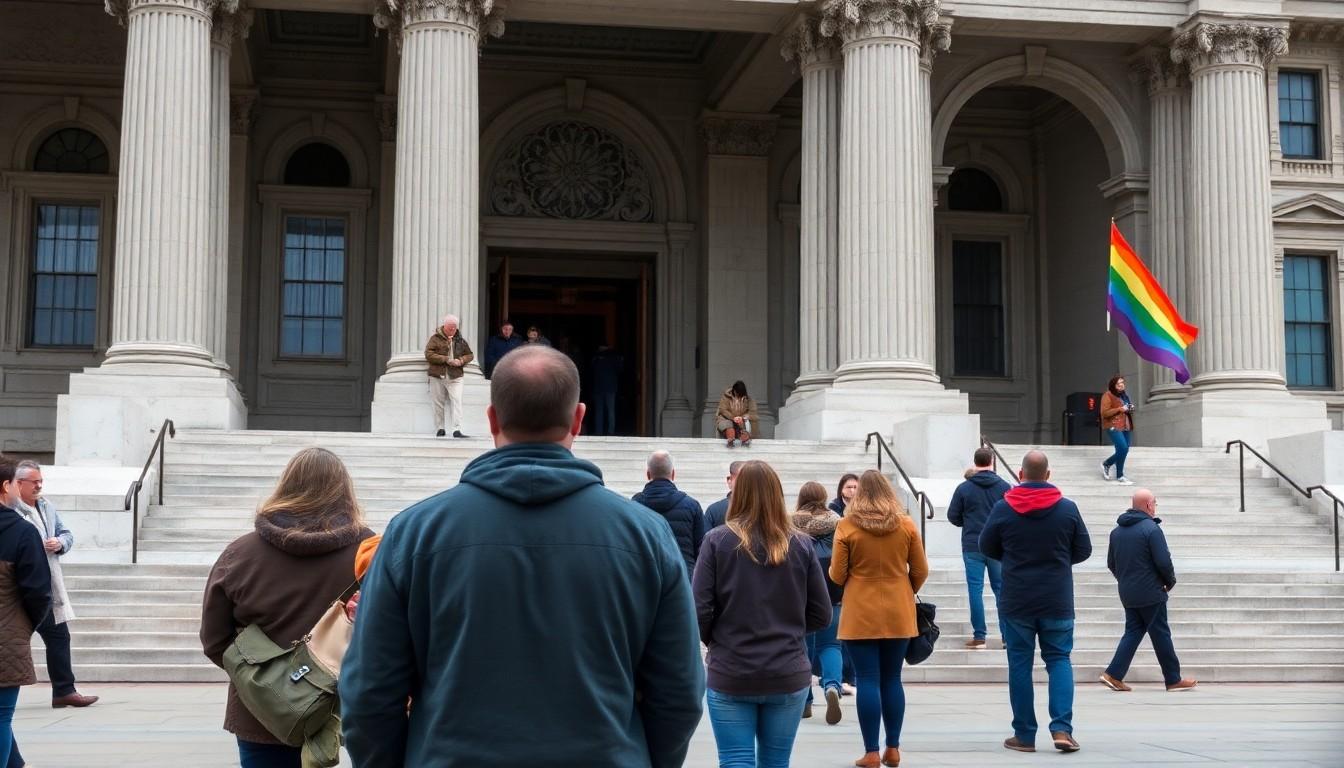
Pennsylvania Democrats say the Fairness Act will be a legislative priority in 2027, renewing hopes for explicit LGBTQ+ protections across the state. The pledge followed a Transgender Day of Remembrance gathering at the Capitol in Harrisburg. The bill would cover discrimination in employment, housing and public accommodations, but a public commitment is only the first step towards changing the law.
Essential Takeaways
- A stated priority: Pennsylvania Democratic leaders say they intend to prioritise the Fairness Act in 2027.
- What the bill proposes: House Bill 300 would explicitly name sexual orientation and gender identity or expression as protected characteristics under the Pennsylvania Human Relations Act.
- Three areas of protection: The proposal covers employment, housing and public accommodations.
- It is not yet law: The bill is still under consideration, and the pledge does not guarantee it will pass.
A pledge made at a moment of remembrance
The Fairness Act came into focus after a Transgender Day of Remembrance gathering at the Pennsylvania Capitol in Harrisburg. Against the solemn backdrop of a memorial for transgender and gender-diverse people lost to violence and suicide, Democratic leaders said the legislation would be a priority in 2027.
Representatives Jessica Benham and Dan Frankel attended the gathering. Both are co-sponsors of House Bill 300, introduced by Representative Malcolm Kenyatta. The Pennsylvania General Assembly’s bill record confirms their sponsorship and identifies the proposal as the Fairness Act.
What Pennsylvania’s Fairness Act would change
House Bill 300 would amend the Pennsylvania Human Relations Act to explicitly include sexual orientation and gender identity or expression as protected characteristics. The General Assembly’s bill description covers discrimination in employment, housing and public accommodations.
That wording matters because current protections and explicit statutory language aren’t the same thing. The Pennsylvania Human Relations Commission says its employment guidance applies the existing Act to discrimination based on sex, including gender identity and sexual orientation. The ACLU of Pennsylvania explains that the Commission accepts related complaints under its interpretation of sex discrimination, while those characteristics aren’t explicitly listed in the law.
The protections would reach beyond the workplace
The proposal’s reach goes further than employment decisions. Its stated scope includes housing and public accommodations, giving the Fairness Act a broader footprint across everyday life, from finding somewhere to live to accessing businesses open to the public.
Local rules already provide protections in Pittsburgh and Allegheny County, according to the original report, but many Pennsylvania municipalities lack them. The proposed statewide wording could offer a clearer legal foundation than a patchwork of local protections and administrative interpretation.
The bill has a record, but no guarantee
House Bill 300 is a proposal, not an enacted change. The General Assembly’s record shows it was referred to the House Judiciary Committee in June 2025, reported as committed in March 2026, considered and later re-committed to Appropriations.
That procedural history is a useful reminder that a public pledge and a law are very different milestones. The Pennsylvania Youth Congress’s legislation tracker also places the bill among a wider range of LGBTQ+-related proposals, not all of which become law.
What to watch next
The Democratic leaders’ reported commitment marks a change in political emphasis after years of stalled proposals, but the next test is whether the bill advances through the legislative process. The official record can help readers follow its formal status; the Pennsylvania Human Relations Commission’s guidance and the ACLU of Pennsylvania’s explainer offer context on how protections are currently understood.
For LGBTQ+ Pennsylvanians, the distinction is more than a matter of wording: it’s about whether protections remain rooted in interpretation or are set out expressly in state law. The pledge raises expectations, but its practical effect depends on what lawmakers do next.
A priority is a promising start; the real measure will be whether it becomes law.
Source Reference Map
Story idea inspired by: [1]
Sources by paragraph: