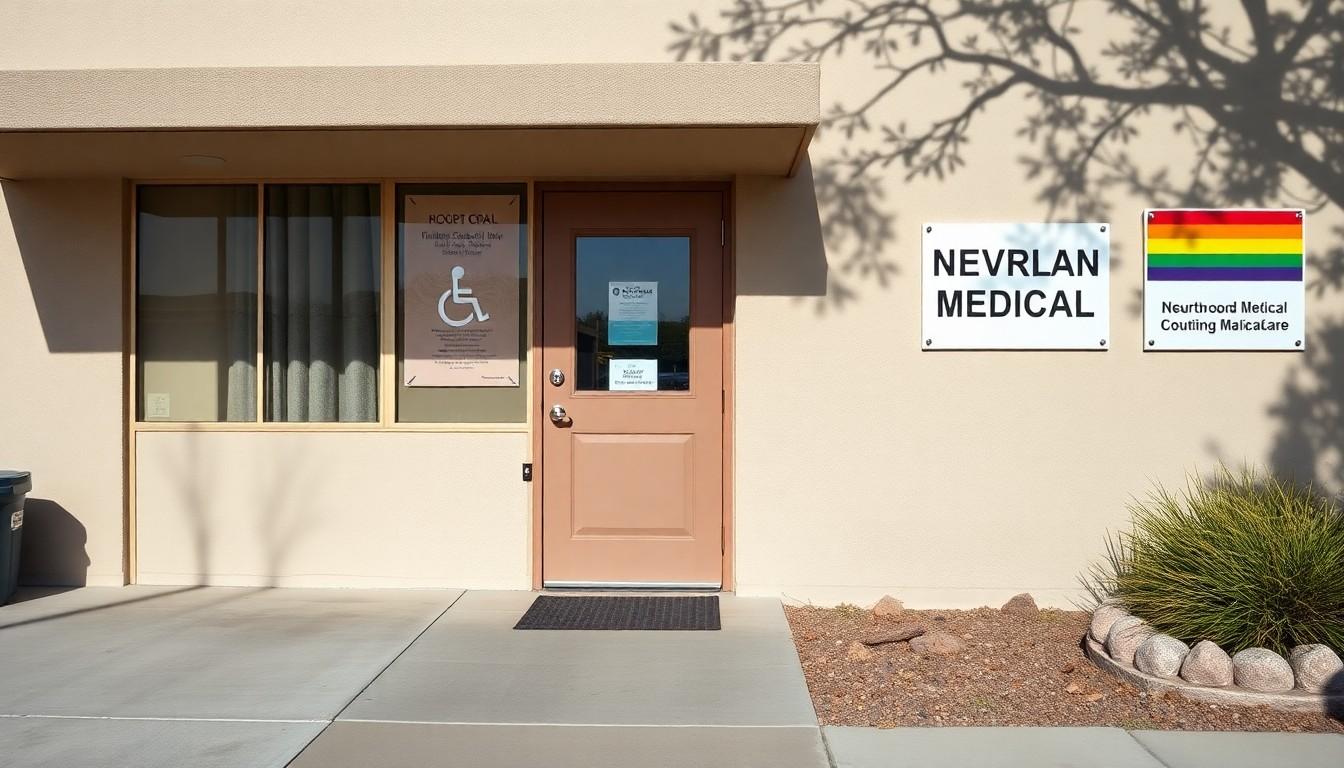
Nevada has earned a reputation as a safe place for LGBTQ+ people, but that promise can feel incomplete when transgender residents struggle to find suitable medical care. State law provides insurance coverage for some gender-affirming treatment, yet reported clinician shortages and legal uncertainty leave patients asking a practical question: where can they actually get care?
Essential Takeaways
- A leading safety ranking: SafeHome.org placed Nevada first in its 2026 LGBTQ+ state rankings, using selected legal and hate-crime measures.
- Coverage isn’t the same as access: Nevada’s SB 163 requires specified insurance plans to cover medically necessary gender-affirming treatment, but it doesn’t guarantee a nearby clinician.
- Shield-law proposals were vetoed: Governor Joe Lombardo vetoed SB 302 in 2023; the opinion article says he also vetoed SB 171 in 2025.
- Reported shortages are stark: Endocrinologist Michael Uzmann said about 300 transgender patients came to his practice after Huntridge Family Clinic temporarily closed.
- There’s a useful comparison: Nevada enacted protections against out-of-state legal action involving reproductive care, while dedicated protections for gender-affirming care remain contested.
Nevada’s safety reputation meets a harder reality
A state can look reassuring on a chart and still be difficult to navigate when you need a specialist. That tension sits at the heart of Lotus Gage’s Nevada Independent opinion article: the state’s welcoming reputation, and its leading place in a national LGBTQ+ safety ranking, don’t automatically translate into accessible gender-affirming healthcare.
SafeHome.org ranked Nevada first in its 2026 report, with an A+ grade and a score of 95.8. Its comparison draws on selected measures of state laws and reported hate crimes, not an assessment of how easily transgender patients can find qualified clinicians. That distinction matters: a strong overall score can describe a broader environment, but it can’t answer whether a suitable provider is taking patients nearby.
Insurance protections don’t guarantee a doctor
Nevada’s SB 163, enacted in 2023, requires specified insurance plans to cover medically necessary gender-affirming treatment. The law also includes provisions on access to experienced providers and consultation during certain medical-necessity appeals. But its scope is insurance coverage, not a guarantee that every patient will find a clinician who offers the care they need.
That gap between coverage and availability is more than a technicality. Gage’s article describes providers who are reluctant to offer care amid legal uncertainty, especially for young people. Las Vegas Weekly also reported on the shortage through the experiences of patients and endocrinologist Michael Uzmann, while noting that its accounts don’t amount to a statewide census.
The shield-law debate is still unresolved
The dispute centres partly on whether Nevada should protect providers from certain out-of-state legal actions involving care that is legal in Nevada. In 2023, lawmakers passed SB 302, which proposed protections for providers and limits on some forms of cooperation with out-of-state proceedings. Governor Joe Lombardo vetoed the bill, saying it could limit the executive branch’s ability to ensure care for minors complied with state law.
Gage contrasts that veto with Nevada’s protections for reproductive healthcare, including SB 131, which was enacted in 2023. The comparison raises a question about how the state balances protection from out-of-state interference with oversight under its own laws. The opinion article also says SB 171, a later attempt to establish protections for gender-affirming care providers, was vetoed in 2025.
A small number of clinics can carry a heavy load
When a clinic closes, the consequences can travel well beyond its own waiting room. Uzmann told Las Vegas Weekly that he saw roughly 300 transgender patients arrive at his practice after Huntridge Family Clinic temporarily closed. That reported influx offers a vivid glimpse of how pressure can gather around the relatively small number of providers willing and able to offer care.
Gage also cites paediatrician Julpohng Vilai’s account that families are struggling to find paediatricians who provide gender-affirming care. A provider might be willing to see a patient, yet still not have the specific experience needed; meanwhile, fear of legal action can make an already difficult search harder. For families, finding care can mean more than locating a name on a list.
What Nevada’s ranking can and can’t tell you
The SafeHome.org report is a comparative measure built from legal and hate-crime data, with its law score shaped by a survey of 1,004 LGBTQ+ Americans. Its high ranking supports Nevada’s reputation for broader LGBTQ+ safety, but the report itself acknowledges that a state score can’t capture every person’s experience. It doesn’t measure the availability or quality of gender-affirming healthcare.
That distinction helps explain why people might move to Nevada hoping for both greater safety and treatment, then find that those hopes don’t line up neatly. Las Vegas Weekly reported on a transgender man who relocated from the Midwest and encountered difficulty finding care. The story is a reminder that safety and healthcare access are related, but they’re not interchangeable.
A safer reputation matters, but meaningful access depends on whether patients can find care and providers can deliver it with confidence.
Source Reference Map
Story idea inspired by: [1]
Sources by paragraph: