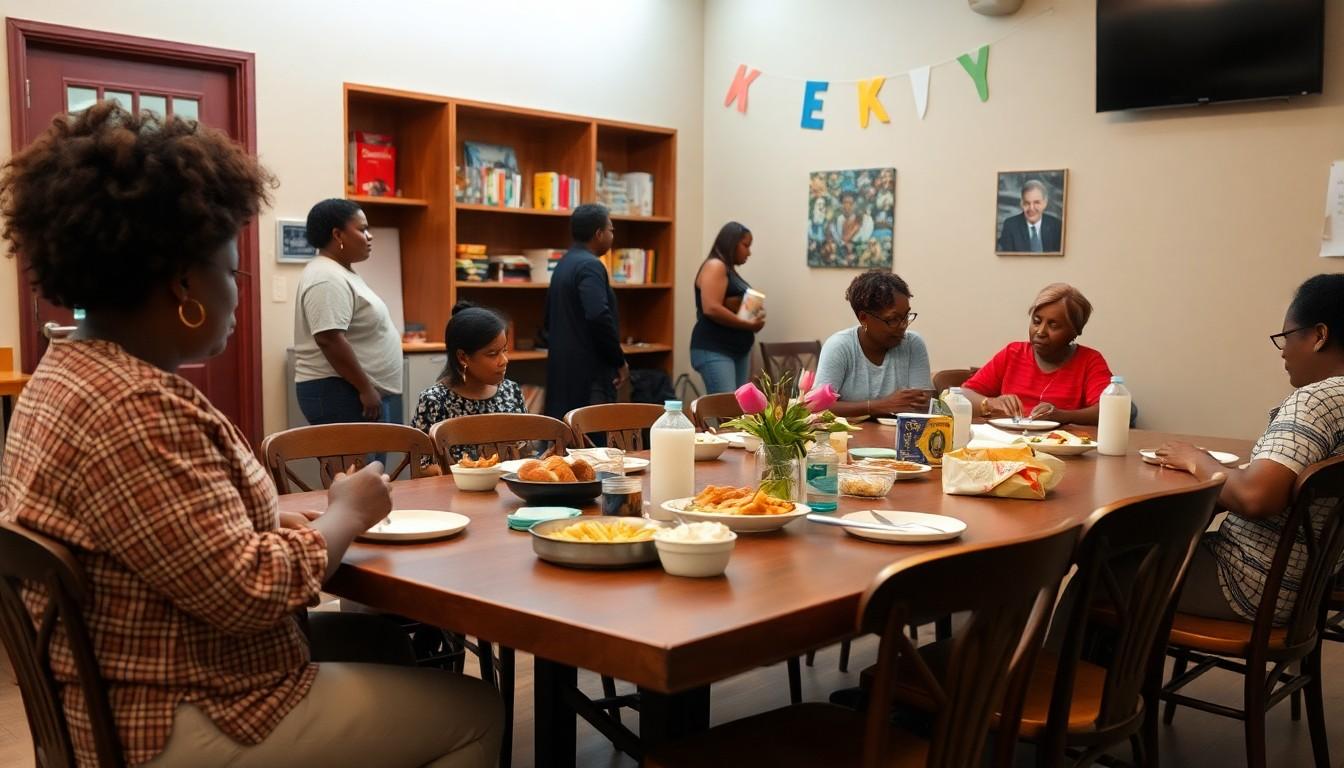
Nashville’s MashUp is bringing Black LGBTQ+ residents together through gatherings shaped with local partners, from grief potlucks to jazz nights and spiritual workshops. The programme reflects a wider idea of community care: people shouldn’t have to leave parts of themselves at the door to find support, connection or a place to celebrate.
Essential Takeaways
- A whole-person approach: MashUp’s work spans social, spiritual, cultural and health-focused programming.
- Built with local partners: The organisation works alongside community leaders, nonprofits and residents to shape its gatherings.
- A wide range of events: Activities include ancestor-altar workshops, grief potlucks, sexual-health dinners and jazz nights for people aged 50 and over.
- Reported signs of connection: MashUp says 95 per cent of Timeless Jewels participants felt connected in 2025.
- A local economic commitment: MashUp reports that 80 per cent of its budget goes to local Black and queer businesses and professionals.
Care that makes room for the whole person
A potluck can be more than a meal when people have space to talk about grief, memory and the people they’ve lost. That’s the thinking behind MashUp Nashville’s programme of gatherings for Black LGBTQ+ residents, which brings together social, spiritual, cultural and health-focused activities.
The Nashville nonprofit organised 24 events between 18 September and 4 December, working with community leaders, nonprofits and local residents. The programme ranged from ancestor-altar workshops and a spiritual series to sexual-health dinners, jazz nights and a World AIDS Day luncheon.
MashUp describes its approach as care for the whole person, rather than a single part of someone’s life. Its mission centres Black queer liberation and community-shaped, identity-rooted care, according to the organisation’s website.
Local partnerships give each gathering its shape
Partnership is central to how MashUp puts its programme together. The organisation says it brings activities into spaces the community already knows and develops them with people who understand the needs and character of those spaces.
That approach showed up in gatherings focused on remembrance, including an ancestor-altar workshop with Larkspur Conservation and a community potluck organised with Nashville Grief and Ashewil Holistic Concierge. MashUp also partnered with Scarritt Bennett Center’s Racial Justice Ministries on The Clearing, a series exploring spirituality through story.
And the programme isn’t all reflection. Timeless Jewels offers jazz nights for Black LGBTQ+ people aged 50 and over, while MashUp’s public event listing describes the programme as centring older queer people and creating opportunities to gather.
Why belonging matters to health
The case for connection sits alongside evidence that discrimination can affect wellbeing. The Center for American Progress reported that 83 per cent of Black LGBTQ respondents said discrimination had negatively affected their physical wellbeing to some degree, compared with 61 per cent of white LGBTQ respondents.
Faith and identity can also intersect in complicated ways. Pew Research Center reported that 33 per cent of LGBT adults with a religious affiliation in its survey said they experienced some conflict between their religious beliefs and their sexual orientation or gender identity. The research was published in 2013, so it provides historical context rather than a current estimate.
MashUp’s programme reflects a response to those kinds of pressures through varied spaces for connection and conversation. Its dinners, healing circles and cultural events offer different ways for people to meet, share experiences and feel part of a community.
What MashUp’s reported outcomes show
MashUp says 95 per cent of participants in Timeless Jewels reported feeling connected in 2025. The organisation also reports that eight Dining Dialogues dinners drew 233 people, with 90 per cent of attendees leaving with new or deeper knowledge.
Those figures come from MashUp’s own reporting. Its 2025 impact report describes a wider programme built around healing, health equity, community knowledge and leadership, and reports 100 events and 4,071 attendees from 2018 to 2025.
The organisation also says 80 per cent of its budget goes back to local Black and queer businesses. It’s a practical part of the model: community support can mean not only showing up for one another, but directing resources back into the local people and businesses that help sustain that work.
A small team, a shared effort
MashUp CEO Jerry Ivery said the organisation’s team of three couldn’t deliver the work alone, and that it wouldn’t want to. The organisation’s model depends on partners bringing their expertise while MashUp brings its community connections.
That shared approach gives the programme room to hold different kinds of experience, from grief and spirituality to music, health and chosen family. As MashUp puts it, its aim is to bring every piece home.
For a closer look at community care in action, MashUp’s events show how much can grow from making space for people to gather as themselves.
Source Reference Map
Story idea inspired by: [1]
Sources by paragraph:
- Paragraph 1: Lead article only
- Paragraph 2: Lead article only
- Paragraph 3: [5]
- Paragraph 4: Lead article only
- Paragraph 5: Lead article only
- Paragraph 6: [6]
- Paragraph 7: [3]
- Paragraph 8: [4]
- Paragraph 9: Lead article only
- Paragraph 10: Lead article only
- Paragraph 11: [2]
- Paragraph 12: Lead article only, [2]
- Paragraph 13: Lead article only
- Paragraph 14: Lead article only