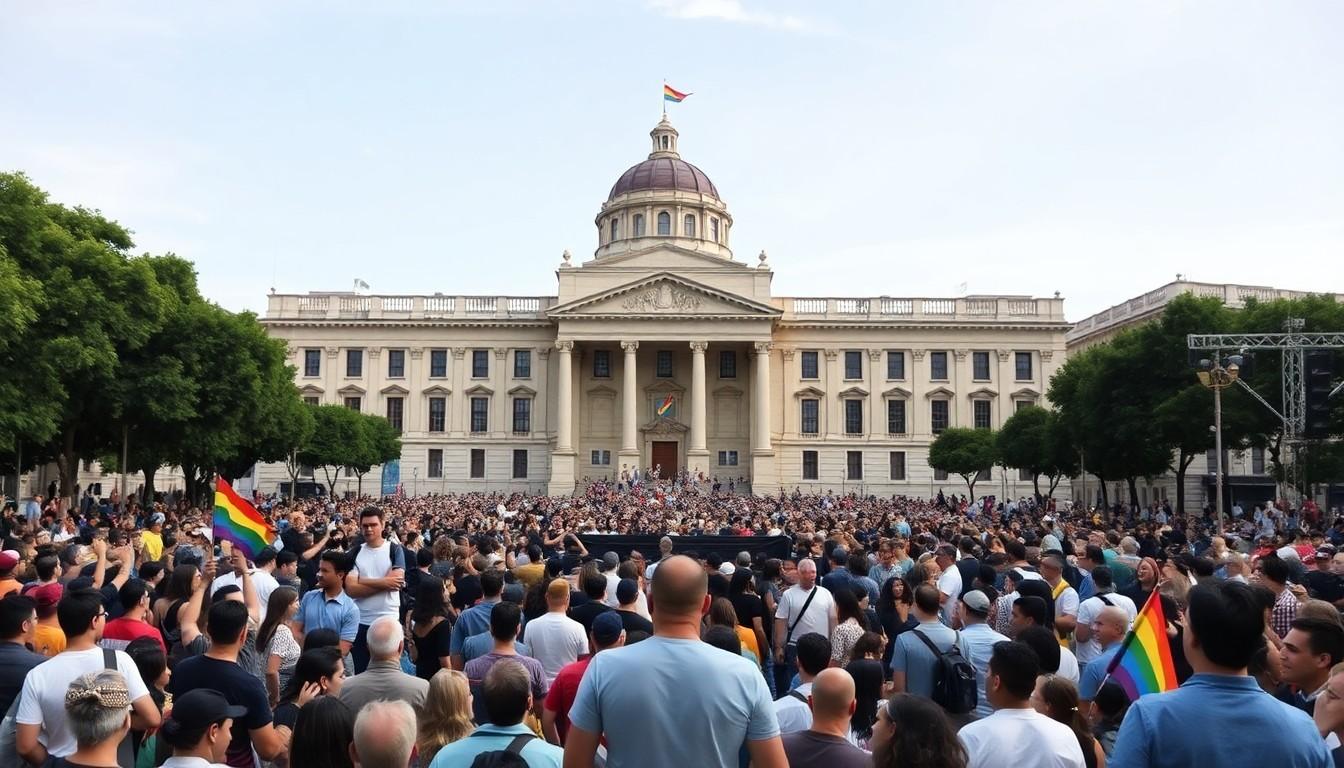
A crowd of nearly three million gathered in Buenos Aires for the 2026 Pride March, where music and protest shared the streets. María Becerra closed the event at Congress with a message about hate crimes and inclusion, while La Joaqui and other performers brought a celebratory soundtrack to a day shaped by demands for LGBTQ+ rights.
Essential Takeaways
- A major gathering: Organisers estimated that nearly three million people attended the 35th Buenos Aires Pride March.
- A changed route: The procession travelled from the Avenida 9 de Julio and Avenida de Mayo area towards Congress, rather than starting at Plaza de Mayo.
- A rights-focused finale: María Becerra closed the programme wearing a shirt declaring that inclusion is a right.
- Music met protest: La Joaqui, Roze and other performers joined a day that also highlighted demands for protections and historical reparations.
A march that made room for celebration and protest
Pride in Buenos Aires carried both a party atmosphere and a clear political message. Under the slogan “When hate advances, pride in the streets is resistance”, the 35th march brought a huge crowd together for performances and calls for LGBTQ+ rights.
According to Clarín, organisers estimated attendance at three million. The procession moved along Avenida de Mayo towards Congress, giving the day a different route from earlier editions and bringing music and protest together in the city centre.
Why the route changed this year
Rather than setting off from Plaza de Mayo, participants gathered near Avenida 9 de Julio and Avenida de Mayo before heading towards Congress. Clarín reported that the revised route was linked to security arrangements for Pope Leo XIV’s planned visit.
The practical change didn’t soften the day’s message. Infobae’s preview outlined demands including a comprehensive trans law, stronger anti-discrimination rules and historical reparations for older travesti and trans people.
María Becerra put inclusion at the heart of the finale
Becerra closed the musical programme at Congress in a T-shirt stating, “Inclusion is not an option, it is a right.” Before performing, she spoke about hate crimes and the violence faced by people who cannot express themselves freely, stressing that behind every statistic is a person with a life worth living without fear, as TN reported.
She also looked beyond the moment, acknowledging those who had fought for LGBTQ+ rights before and those still working for change. Her hope was that the show would feel like an embrace for people who had sometimes felt they had no place in the world.
La Joaqui added a pointed note to the celebration
La Joaqui performed at the march and spoke about the double standards around prejudice. Clarín reported her wish that people would fear having a violent child as much as having a gay child.
Her remarks sat alongside the day’s music, rather than apart from it. The programme also featured Roze, Six Sex, K4OS and Martín Cirio, among other performers, according to Clarín.
A useful reminder if you’re following a large city event
The changed route shows why it’s worth checking the latest event information before setting out: meeting points and procession plans can shift when security arrangements change. Infobae’s preview also offered public-transport suggestions for reaching the march and festival areas.
And the day’s programme made clear that Pride was more than a concert. Music brought people together, while the speeches and community demands kept attention on the rights and safety the march was calling for.
In Buenos Aires, the music made the gathering louder, but its message was about making everyday life safer and freer.
Source Reference Map
Story idea inspired by: [1]
Sources by paragraph: