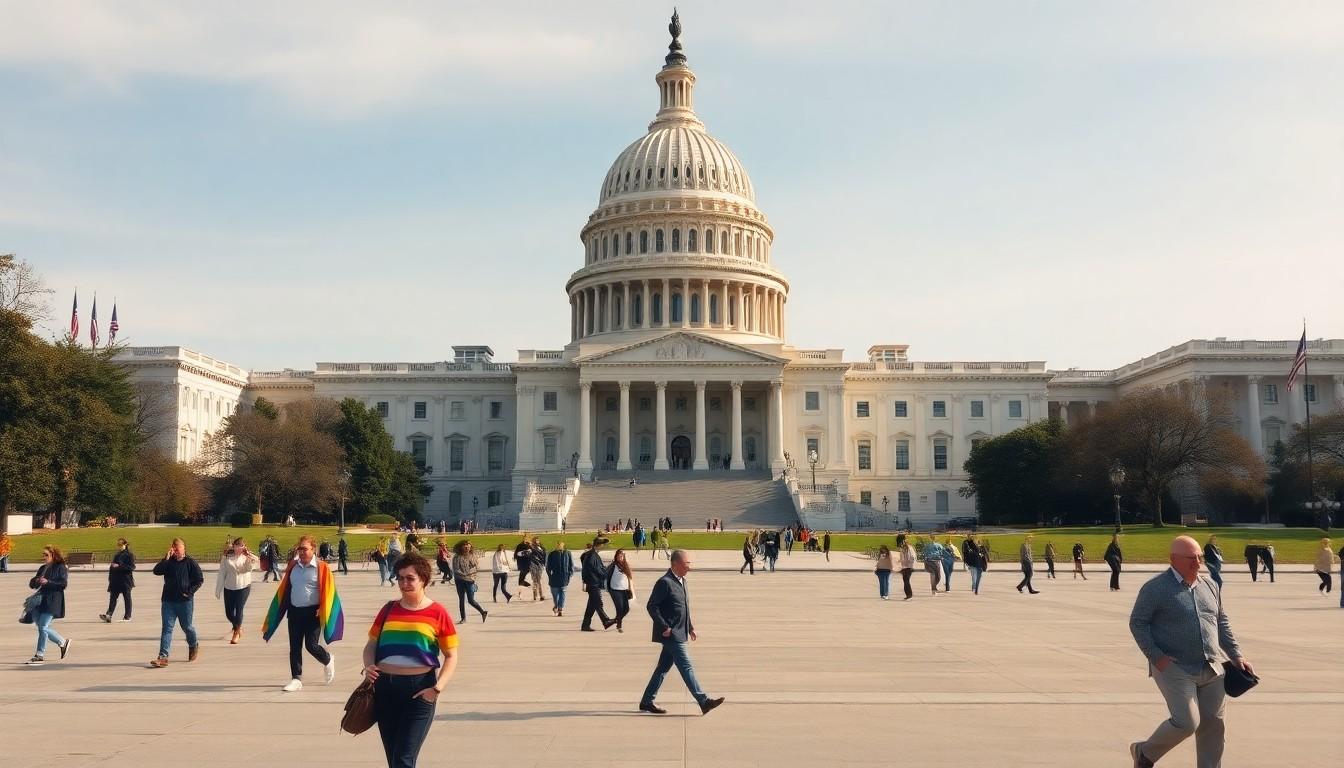
A record number of openly LGBTQ+ lawmakers are expected in the next US Congress, after Democrats won both chambers in the 2026 midterms. But the Congressional Equality Caucus’s celebration of that milestone drew angry responses from conservative commentators, who argued that Democrats should focus instead on the cost of living.
The incoming Congress marks a historic moment
At least 18 openly LGBTQ+ lawmakers are expected to serve in the incoming 120th Congress, all Democrats, according to LGBTQ Nation. The Congressional Equality Caucus called it the “gayest” Congress in US history, turning a major representation milestone into an immediate political flashpoint.
The Associated Press reported that Democrats won control of both the House and Senate in the midterms. Chris Pappas, elected in New Hampshire, will become the first openly gay man in the US Senate, a milestone also reported by the Washington Blade and Roll Call.
Online backlash turned the celebration into a culture-war row
The caucus’s post prompted hostile replies on X from conservative commentators and politicians. Some framed the celebration as evidence that Democrats were neglecting everyday economic concerns; others used anti-LGBTQ+ language or imagery.
Right-leaning outlets joined the argument. Townhall’s Amy Curtis criticised the caucus for celebrating LGBTQ+ representation while voters were concerned about costs such as groceries and petrol, while The Gateway Pundit and Breitbart also attacked the prospect of expanded LGBTQ+ representation and transgender rights.
Affordability and equality aren't separate conversations
The caucus answered that equality and affordability are connected, arguing that people need the rights and opportunity to participate fully in society and the economy. It also said voters had rejected fearmongering, citing nearly $400 million spent on anti-transgender advertising during the election cycle.
That argument has a practical edge: LGBTQ+ candidates’ campaigns have also addressed issues such as healthcare, housing and affordability, the Washington Blade reported. The LGBTQ+ Victory Fund likewise highlighted those concerns in its account of endorsed candidates’ wins. Representation and household costs may make for separate campaign talking points, but the sources show they can share the same political stage.
The election results include more than one milestone
The Washington Blade reported that 17 of 18 LGBTQ+ candidates running for federal office won, while some counts were still being finalised. Roll Call highlighted several firsts, including openly gay candidates elected from New York, Indiana and Michigan, alongside Pappas’s Senate victory.
The tallies are framed differently: LGBTQ Nation says at least 18 openly LGBTQ+ lawmakers are expected to serve, while the Blade counts candidates who won federal races. That distinction is worth keeping in mind when comparing early post-election figures.
What the backlash says about the next Congress
The response to the caucus’s announcement shows how quickly a milestone in representation can become a broader argument over what voters want from their elected officials. Townhall presented the celebration as misplaced against economic concerns, while the caucus argued that equality belongs in the same conversation as affordability.
For readers, the clearest takeaway is that both claims are part of the debate, but they aren't the same thing as evidence of what every voter prioritised. The incoming Congress will inherit questions about the cost of living and LGBTQ+ rights alike, with members’ records and decisions providing a better measure than a campaign-season post.
A historic milestone is only the beginning; the work now is what Congress does with it.
Source Reference Map
Story idea inspired by: [1]
Sources by paragraph: