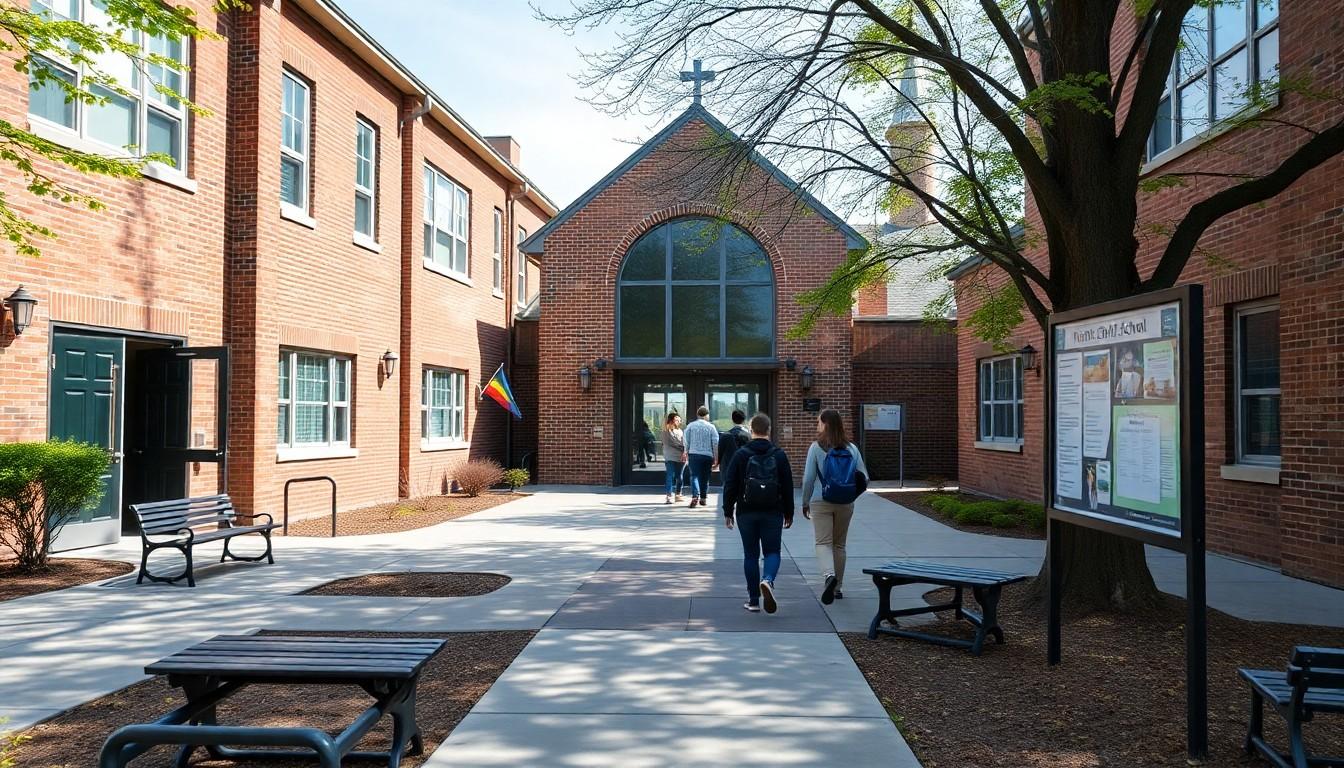
Catholic schools are being asked to look beyond pastoral care and ask what students experience in daily school life. A recent reflection on LGBTQ student wellbeing sets out five questions for Catholic communities, from checking anti-bullying rules to listening directly to young people. The challenge matters because evidence links supportive school environments with greater safety and belonging.
Safety starts with the school climate
For many LGBTQ students, feeling safe at school is not a given. Glisten’s 2025 National School Climate Survey found that 67 per cent of respondents, including 71 per cent of transgender and gender-expansive students, had felt unsafe at some point because of their LGBTQ+ identity.
The survey describes harassment and barriers in everyday settings such as bathrooms and locker rooms. It also makes clear that safety means more than avoiding bullying: students want supportive relationships and room to be themselves without self-censorship.
The Centers for Disease Control and Prevention likewise reports disparities in bullying, sexual violence and mental health among LGBTQ+ students. These are population-level patterns, not predictions about any individual young person, and the CDC notes that many LGBTQ+ students thrive.
Catholic education puts flourishing in view
The reflection from Outreach Faith grounds its appeal in Catholic teaching, which describes education centred on Jesus as a path towards human flourishing. The United States Conference of Catholic Bishops also says Catholic schools should affirm each person’s dignity and serve marginalised people.
That gives schools a useful starting point: not only asking how to respond when a student is struggling, but also whether school rules, routines and assumptions help students feel they belong. Outreach Faith argues that mental health support and pastoral care are essential, yet insufficient on their own if wider conditions remain unexamined.
The distinction matters. A caring conversation can help, but it cannot by itself settle whether a student can use a facility, join an activity or see their experience represented in learning.
Five questions turn concern into reflection
Outreach Faith frames its approach as five sets of questions rather than a fixed checklist. Schools are encouraged to identify what may cause harm, decide which values cannot be compromised, describe what flourishing looks like in their own community, discern responses together and examine what students actually experience.
The questions invite students, families, teachers, leaders and trustees into the conversation. Most importantly, LGBTQ young people are treated as contributors and leaders, not as subjects for debate. That shift makes listening a practical part of school life, rather than a box to tick.
Schools might ask whether anti-bullying policies explicitly name sexual orientation and gender identity, whether staff are prepared to respond to harassment, and whether students have access to supportive groups and community resources. Glisten’s recommendations also point to everyday details such as bathrooms, dress codes, books and disability accommodations.
Policies matter, but evidence needs care
The Trevor Project reports an association between anti-LGBTQ+ school policies and higher reports of mistreatment and mental health risks. Its brief also says that the effects of many recently introduced policies are too new to measure fully, and that its survey findings show associations, not proof that a particular policy caused an outcome.
That caution is worth keeping in view. School rules differ, and a written policy is only one part of students’ experience. Supportive educators, inclusive learning and trusting relationships also matter, according to research summarised by Glisten and the Trevor Project.
For Catholic schools, the practical question is what happens on an ordinary school day. Do students know how to report harassment? Are adults equipped to listen without judgement? Can young people and families find support when the school cannot provide everything itself?
Listen, then check what students experience
Outreach Faith asks schools to assess their work from the student’s point of view: whether everyone can participate without unnecessary barriers, whether safe-space signs are backed by staff preparation, and how LGBTQ students and alumni would judge the school.
That last question cuts through institutional good intentions. A school may see itself as welcoming, but students’ day-to-day experiences are the more meaningful test. Glisten’s findings reinforce the value of asking young people directly about belonging, safety and support.
The policy landscape also forms part of the context. The US Department of Education announced that it had rescinded the 2024 Title IX regulation and reinstated the 2020 regulation; its announcement records the department’s position, but does not establish the effect on every student or school. Outreach Faith uses such changes as a prompt for Catholic communities to consider what support they can offer in their own circumstances.
Closing Line
A more welcoming school begins with listening, then making sure everyday practice matches the promise.
Source Reference Map
Story idea inspired by: [1]
Sources by paragraph: