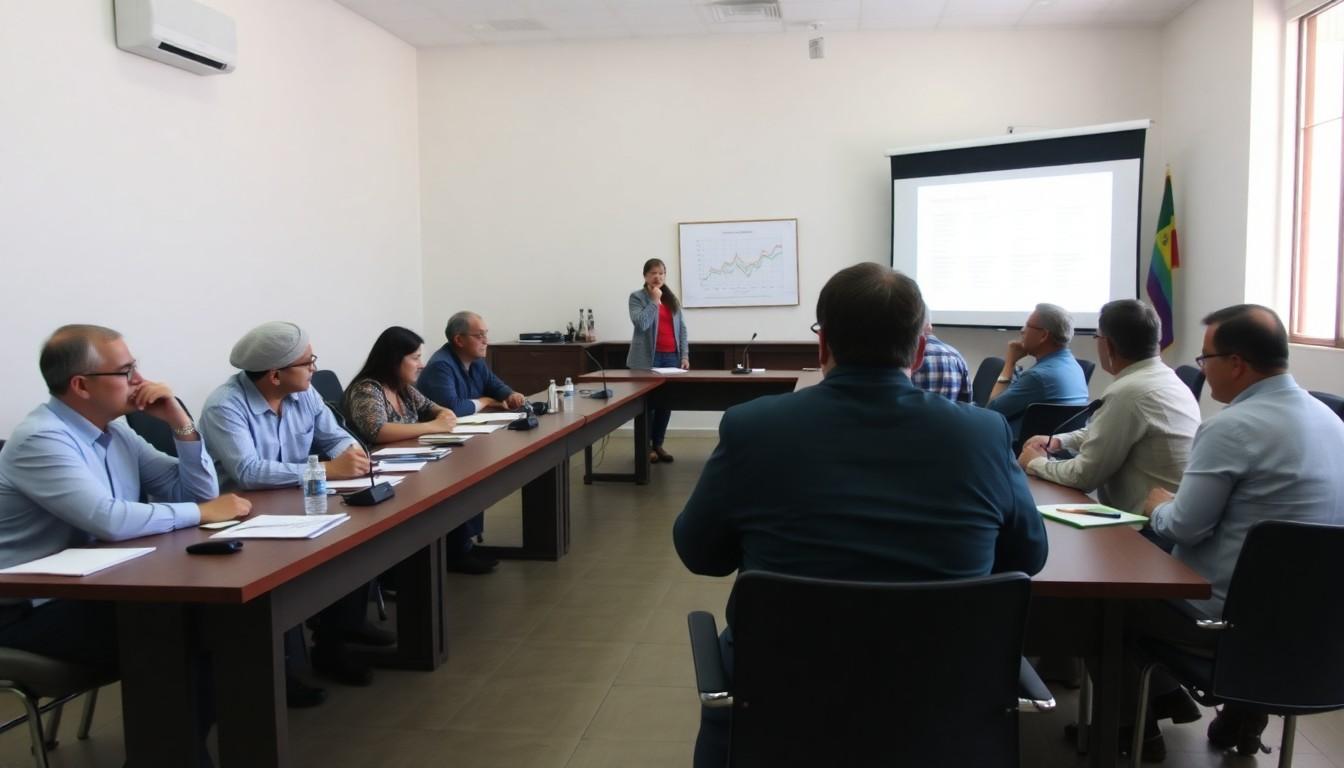
Guanajuato’s government has reaffirmed its commitment to LGBTQ+ communities, setting out five inclusion projects backed by a 10-million-peso allocation for 2026. At a meeting with 48 representatives, officials shared progress on training, local services and a planned diversity clinic in Irapuato, while community groups called for stronger protections and better access across the state.
Essential Takeaways
- Five projects are planned: They cover training for education, prison, prosecution and health staff, plus a protocol to prevent discrimination.
- The allocation is 10 million pesos: The report says 9.69 million pesos had been contracted at the time of the meeting.
- Local support is part of the picture: Officials reported 164 awareness sessions and support for 23 municipal diversity-attention units.
- Rights procedures have been recorded: The state reported 609 equal marriages and 320 administrative gender-identity recognition procedures.
- The Irapuato clinic is in development: Its executive design was described as complete and technically validated, while a budget estimate was being prepared.
Five projects put training and respectful services in focus
The clearest message from Guanajuato’s meeting was that inclusion work is intended to reach public services, not remain a slogan. According to SDP Noticias, the government presented five strategic projects with a 10-million-peso allocation for 2026; 9.69 million pesos had been contracted, with 303,600 pesos left as savings from contracting.
The planned work includes training for education staff, prison personnel and the state prosecution service. It also covers a protocol to prevent discrimination against women from sexual and gender-diverse communities, alongside training for health workers using the Rainbow Care Protocol as a reference.
That emphasis on practical training has a wider context. An earlier Guanajuato government bulletin described diversity training for municipal prevention contacts and security personnel, including guidance on respectful public engagement and the use of the state’s Guanajuato Embraces Diversity guide.
The meeting put community voices in the room
Human Rights Secretary Liz Alejandra Esparza Frausto led the dialogue, alongside Government Secretary Jorge Daniel Jiménez Lona. SDP Noticias reported that 48 representatives from community groups, organisations and municipal offices took part, with the meeting intended to keep channels for listening and participation open.
There is also a formal framework behind the work. Guanajuato’s law on sexual and gender diversity, published in 2024 and amended in 2025, sets out public bodies’ responsibilities around equality, non-discrimination and human rights. It also calls for relevant authorities to take budgetary and administrative measures and collect information about programmes.
That makes the calls raised at the meeting especially concrete: participants proposed legal reforms, wider communication about identity procedures in rural communities, stronger municipal services and better data to shape policy.
Reported activity spans awareness sessions and local units
Officials reported 164 awareness sessions involving 10,634 people, as well as 1,046 consultations intended to promote inclusion in public and private settings. They also said the government had supported the establishment of 23 municipal diversity-attention units.
An earlier official account of public-sector training offers a glimpse of how those efforts can look on the ground. The state said municipal security personnel were introduced to a diversity guide, a glossary and police-response protocols, with the aim of supporting more respectful and professional service.
The meeting also included figures on rights procedures. According to SDP Noticias, the state reported 609 equal marriages and 320 administrative gender-identity recognition procedures during the administration, including 126 in 2025 and 194 in 2026 as of the meeting.
Irapuato’s planned diversity clinic is moving through preparation
The proposed Diversity Clinic in Irapuato is another part of the picture, though the work described is still at a planning stage. Officials said its executive project had been completed and technically validated, while the Public Works Secretariat was preparing a reference budget to establish the investment needed.
A Periódico Correo report from July 2026 described earlier progress on a planned specialist clinic in Irapuato, including work at a former health-centre site. That account gives useful background, but it reflects an earlier point in development and does not confirm the later meeting’s update on the project design or budget preparation.
For residents, the practical test will be how these plans translate into accessible, respectful services. Training, local units and a specialist clinic each address a different part of that challenge, and the meeting’s proposals suggest communities want those pieces to reach further.
Transparency matters as projects take shape
The spending figures come with a reminder that public money needs clear oversight as well as stated goals. Periódico AM reported that Guanajuato’s Secretariat of Honesty was reviewing contracting documentation connected to the diversity programme, with a verification process under way; it did not give a confirmed completion date.
That report is separate from the meeting coverage and does not independently verify all the figures presented there. Still, it adds useful context to officials’ emphasis on transparent, rules-based spending: for people waiting to see services improve, the way funds are managed matters alongside the projects themselves.
The next measure of progress will be whether dialogue, budgets and training become support people can readily find in their own communities.
Source Reference Map
Story idea inspired by: [1]
Sources by paragraph:
- Paragraph 1: Lead article only
- Paragraph 2: [2]
- Paragraph 3: [2]
- Paragraph 4: [4]
- Paragraph 5: [2]
- Paragraph 6: [5]
- Paragraph 7: [2]
- Paragraph 8: [2]
- Paragraph 9: [4]
- Paragraph 10: [2]
- Paragraph 11: [2]
- Paragraph 12: [6]
- Paragraph 13: [6]
- Paragraph 14: Lead article only
- Paragraph 15: [7]
- Paragraph 16: [7]
- Paragraph 17: Lead article only