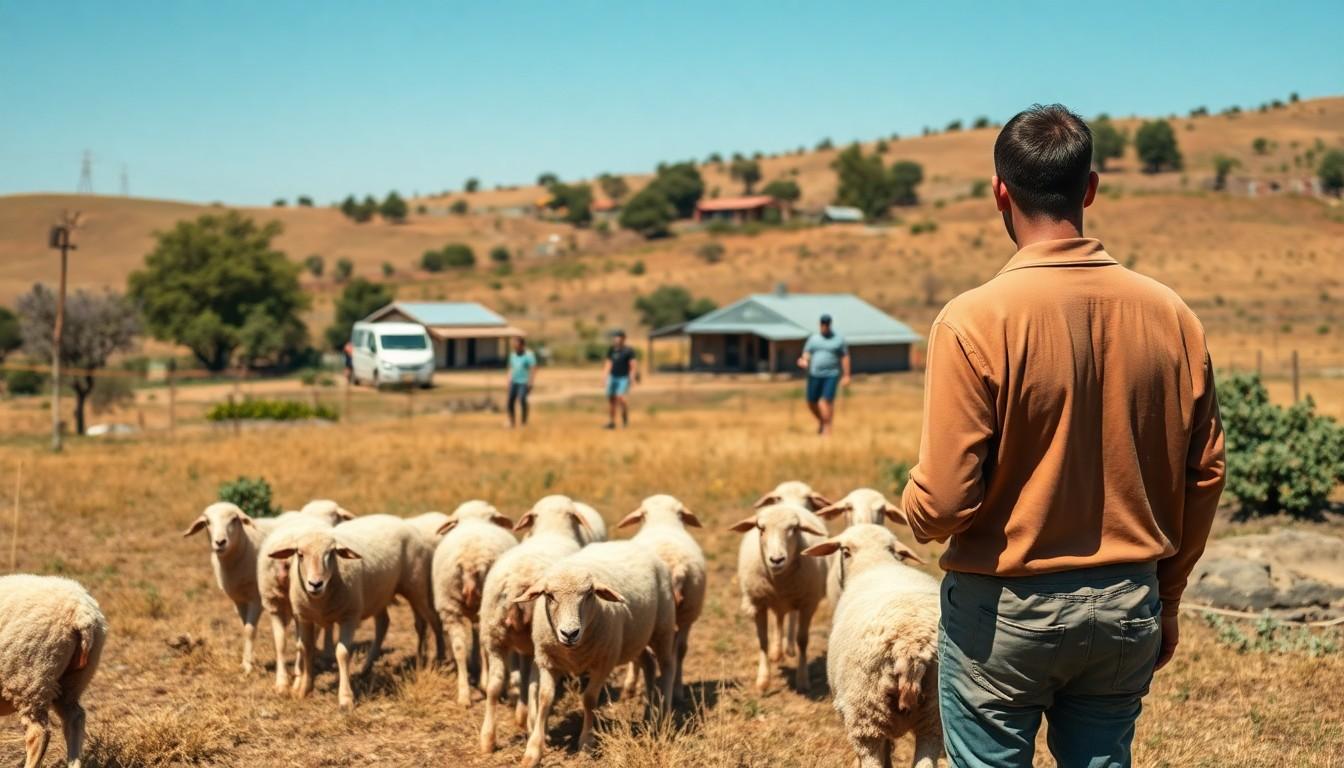
Three gay men in small South African towns describe the distance, discretion and family expectations that shape rural life. Their stories also show how connection can take root far from the city, through a partner, a community group or simply a familiar face across the bar.
Essential Takeaways
- Three lives, two towns: Cobus Botha and Johan Smith farm sheep in Smithfield, while Johan Fourie lives in Northam, Limpopo.
- Distance is practical, too: The men describe long journeys, limited chances to meet and travel costs that can make queer social life harder to reach.
- Coming out looks different for everyone: Botha came out at 39; Fourie chose to live openly, while Smith has never told his elderly father.
- Connection can be home-grown: Dating apps and Smith’s 351-member WhatsApp bear group help people find community.
- Rights and reality are not the same: South Africa’s Constitution protects against unfair discrimination on the grounds of sexual orientation, but legal protections don’t automatically settle everyday social pressures.
Where the tar ends, distance takes on a different meaning
For Cobus Botha, the nearest man like him on his phone was nearly 300 kilometres away. On South Africa’s platteland, that distance isn’t just a number. It can mean fuel money, a long drive and the question of how much of yourself you’re ready to reveal.
Bear World Magazine’s feature follows Botha and his partner, Johan Smith, sheep farmers in Smithfield, and Johan Fourie, an openly gay man in Northam. The towns are far from the big-city settings that often dominate stories about gay life. Here, small communities and wide-open distances shape the everyday possibilities for meeting people and feeling at home.
Smithfield is a small settlement in the southern Free State, according to its town information website. That rural setting matters, but it isn’t the whole story: the men also speak warmly about the people and routines they’ve built around them.
A close-knit town can feel welcoming and watchful
Botha says he kept his sexuality private until he was 39, wary of what people in a small community might think. When he did come out, he found his family and friends supportive. That’s a useful reminder that fearing a reaction and experiencing one aren’t always the same thing, even if the fear can still keep someone quiet for years.
Smith’s history is more complicated. He grew up on a family farm, married to meet expectations and has never told his elderly father that he is gay. Fourie, by contrast, decided to live openly in Northam. Their choices aren’t a neat before-and-after story of progress; they show how family, faith and local relationships can pull people in different directions.
There’s a wider evidence gap, too. A scholarly review in AIDS and Behavior says rural men who have sex with men have been under-researched, with much existing work focused on cities. It cautions that identities and relationships don’t always fit the same labels, and that urban findings shouldn’t simply be applied to rural communities.
Connection takes planning when the nearest profile is far away
Dating apps can help men find one another, but they don’t shrink the map. Botha and Smith first connected at a distance of roughly 250 to 300 kilometres, and the feature describes travel expenses as a real barrier to joining events. For people weighing up a trip, the practical cost can matter as much as the invitation.
Smith has created another route to connection: a WhatsApp group for bears with 351 members, from across South Africa and beyond. He and Botha also hope to build a campsite on their farm as a welcoming place for people who need a break or someone to talk to. It’s an appealingly local idea: instead of waiting for a queer space to appear nearby, make one.
Research into rural LGBTQIA+ life in Namaqualand offers relevant, though not directly comparable, context. A University of the Free State dissertation based on interviews with eleven participants describes how isolation, family support, stigma and access to affirming mental-health services can affect wellbeing. Its focus is different from the lives in Bear World Magazine’s feature, but it underlines why supportive relationships and local groups can matter.
Legal rights matter, but belonging is lived
South Africa’s Constitution says everyone is equal before the law and bars unfair discrimination on grounds including sexual orientation. It also protects dignity. Those are important legal guarantees, but they don’t tell us how someone will be treated at home, at work or in a small-town social circle.
That distinction sits quietly behind the men’s stories. The feature describes the pressure of keeping a secret, the limits of local social life and the uncertainty of being visible. It also records support, humour and friendship. Botha’s family accepted him, while Fourie’s everyday routines include greeting neighbours and meeting people at Northam’s only pub.
A University of South Africa thesis on gender- and sexually diverse young people in a rural Free State community also points to the importance of supportive families, friends, peers and community organisations. It studies young people, not these three men, but its broader message is clear: belonging is built through people and places, not granted by a legal text alone.
Belonging can look like a Tuesday at the pub
The men’s experiences differ, but none is simply a story of escape from rural life. Smith’s roots are on the farm; Fourie values Northam’s quiet and its bushveld surroundings; Botha and Smith are building a life together in Smithfield. The platteland can bring isolation, but it’s also home.
The feature’s most affecting image is modest: Fourie looking forward to Tuesday, when the livestock auction brings familiar faces to Northam’s pub. For someone living far from a city’s larger queer spaces, an ordinary gathering can carry real weight. Sometimes community starts with a group chat; sometimes it’s just knowing who’ll be there for a drink.
A little more connection can make a long road feel less lonely.
Source Reference Map
Story idea inspired by: [1]
Sources by paragraph: