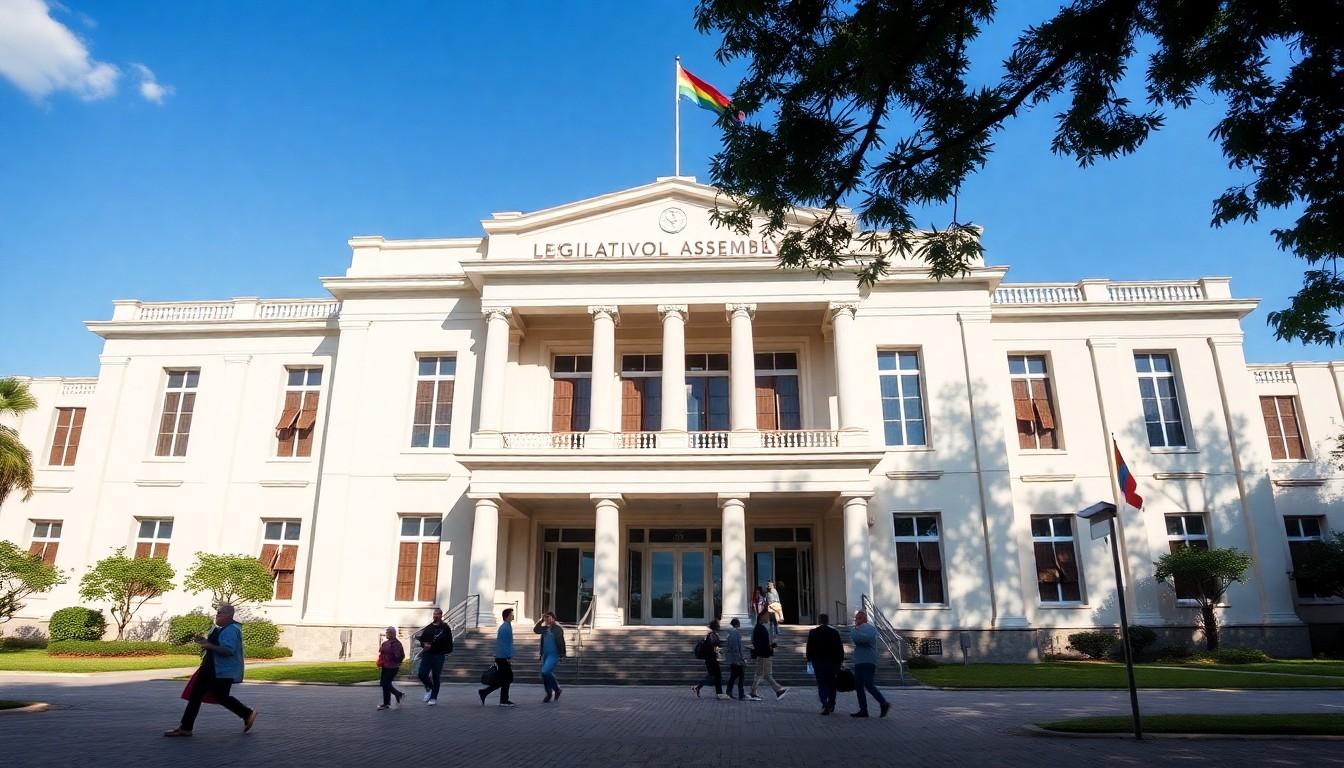
A gay federal highway police officer and human-rights activist, Fabrício Rosa has been elected to Goiás’s Legislative Assembly with 81,540 votes. His arrival marks a first for the state legislature, and he says he wants to connect public security with the left, champion LGBTQ+ rights and take his work beyond the capital.
Essential Takeaways
- A historic first: Rosa is the first openly gay man elected to Goiás’s Legislative Assembly.
- A strong result: He won 81,540 votes, placing second among the state assembly candidates.
- Security reform is central: He supports body cameras, oversight of police activity, better working conditions and human-rights training.
- He wants more LGBTQ+ voices in politics: Rosa says his mandate should help develop and support future leaders.
- His plans reach beyond Goiânia: He wants a lasting presence across all 246 municipalities in Goiás.
A landmark win, with a bigger ambition
Fabrício Rosa’s election gives Goiás’s Legislative Assembly its first openly gay man, and the result was substantial: Veja’s election tally records 81,540 votes, the second-highest total among the assembly candidates. Rosa had already become the first openly gay councillor elected in Goiânia, winning a city council seat in 2024.
But he says being first brings more than a moment of recognition. In an interview with Brasil de Fato, Rosa described the role as a responsibility to help open political doors for others, particularly trans people, who face significant barriers to entering public life. He also spoke of facing attacks, threats and attempts to silence him.
The election result also stands out against a crowded field. Brasil de Fato reported that only 11 of 595 state assembly candidates in Goiás disclosed a sexual orientation other than heterosexual in the figures it cited. Rosa’s presence, then, is not just a personal milestone; it makes representation harder to treat as a side issue.
Why a police officer is arguing for reform
Rosa has worked as a federal highway police officer for 26 years and is also a human-rights activist. He rejects the idea that those roles are incompatible, arguing that police should protect people’s rights, including the right to protest.
His own arrest during an MST protest in April sharpened the public focus on policing. Brasil de Fato later reported that the case against him was closed after prosecutors found no basis for criminal proceedings. Separately, the Brazilian Public Security Forum’s 2024 report put the share of intentional violent deaths attributed to police forces in Goiás at 32.2 per cent in the dataset it examined, a figure that helps explain why police accountability is a major part of the debate.
Rosa’s proposals include body cameras, mechanisms to oversee police activity, better professional conditions and human-rights training. The point, as he frames it, is not a weaker police force, but one focused on protecting the public rather than violating people’s rights.
Building a bridge between the left and security workers
Rosa says the left should engage more with people working in public security, rather than leave them to authoritarian political messaging. Police officers, he argues, are workers too, facing issues such as pay, mental health and difficult working conditions.
That argument carries its own challenge. Rosa told Brasil de Fato that he has had to build trust both within a police institution marked by machismo and conservatism, and among social movements shaped by experiences of police repression. His approach is to treat those tensions as a reason to keep talking, rather than proof that dialogue is impossible.
There’s a practical political calculation here as well: if left-wing parties give up on talking to security workers, Rosa warns, they risk surrendering that constituency to the far right. His election gives him a prominent platform for making that case, but the work of building trust will take more than a slogan.
From digital campaigning to a state-wide mandate
Rosa credits his electoral growth to energetic social media, communication aimed at younger voters and a campaign that began early and travelled widely. Mais Goiás reported that he received 20,500 votes in his 2022 assembly bid, compared with 81,540 in the latest election. An official Goiânia City Council profile records 20,432 votes for that earlier campaign.
He also says he did not soften his positions to appeal to conservative voters, naming LGBTQ+ rights, human rights, land reform and opposition to police violence among the issues he continued to champion. His earlier municipal election gave him a platform too: Mais Goiás records 7,216 votes in 2024, while the council’s official profile lists his professional and civic background.
Now he says the mandate should reach all 246 municipalities in Goiás, not just Goiânia. His plans include online meetings with regional leaders, a travelling human-rights programme and a network of local contacts. That’s an ambitious promise, but the underlying point is straightforward: a state-wide seat should involve listening across the state, not only showing up during election season.
A louder platform for representation and accountability
Rosa also wants to support LGBTQ+ people entering politics and continue advocating for trans children and families. He argues that public discussion should involve families, health professionals, researchers and social organisations, and that children’s welfare should not become a pretext for discrimination.
Inside the assembly, he expects to face conservative opposition and has argued that the Workers’ Party should consider putting forward its own candidate for the chamber’s presidency. He says negotiations are possible, but that his party’s political independence and its ability to speak and vote freely are not up for trade.
A seat in the legislature won’t resolve those debates on its own. But Rosa’s election gives those questions a new voice in the chamber, and he says he intends to use it.
A historic first matters most when it helps make room for those who follow.
Source Reference Map
Story idea inspired by: [1]
Sources by paragraph: