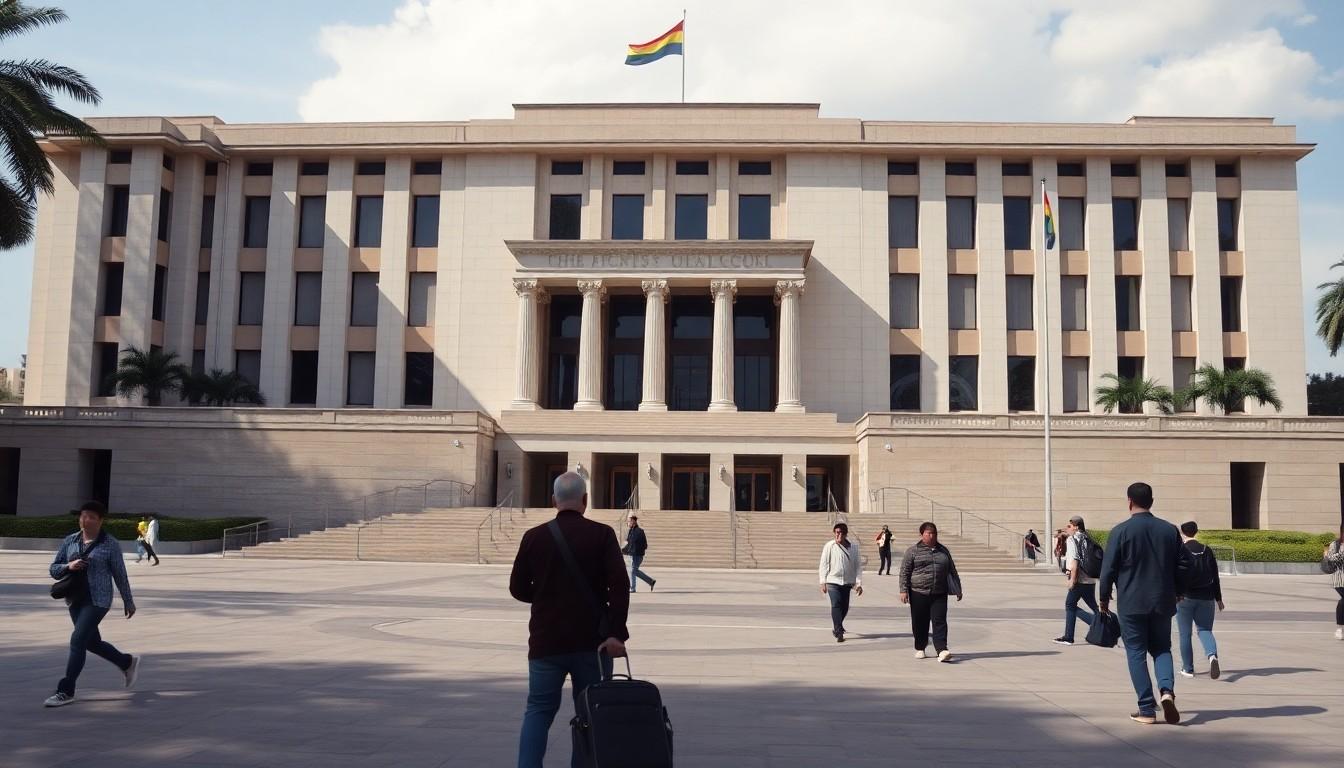
A Brazilian manifesto is calling on the state, society and the international community to confront what its signatories describe as structural segregation of trans people. It points to hundreds of restrictive laws, persistent lethal violence and unresolved legal questions. The document matters because it frames these harms not as isolated incidents, but as an institutional pattern.
Essential Takeaways
- A manifesto is open for signatures: Individuals and organisations can add their names to the call against trans segregation in Brazil.
- The document cites 284 laws: An INTRAJUS inventory identified at least 284 anti-trans laws, covering areas including education, bathrooms, sport and health.
- Recorded killings have limits: Monitoring organisations count documented cases, not every death; gaps in reporting mean fewer records don’t necessarily mean less violence.
- The courts have addressed some issues, not all: Brazil’s Supreme Federal Court recognised homotransphobia within the social concept of racism in ADO 26, while Theme 778 ended without a ruling on the merits of the bathroom-access question.
- Signatories want practical action: Their demands include legal accountability and conditions that enable trans people to exercise their rights.
A manifesto names the scale of the problem
The striking thing about the Brazilian manifesto is the scale of the legal picture it presents: at least 284 anti-trans laws, according to an inventory by the National Institute of Trans Jurists and Workers in the Justice System, known as INTRAJUS. The measures cited span education, language, bathrooms, public expression, sport, health and legal protection.
Brasil247 reports that 86.6 per cent of the laws in the inventory came from right-wing or far-right forces, while the South and South-east accounted for 59.1 per cent of subnational measures. The manifesto’s supporters say this is more than scattered prejudice: they describe a pattern of institutional segregation.
That framing is the manifesto’s argument, not a court finding. Still, it gives the campaign a sharper focus: the signatories are asking readers to look not only at individual acts of discrimination, but also at the rules and institutions that shape daily access to rights.
What recorded killings can - and can’t - tell us
The manifesto also points to Brazil’s long-standing place at the top of recorded trans-murder counts. Agência Brasil reported that 80 cases were documented in Brazil in 2025, down from 122 the previous year, while the country remained first in that annual count. The figures are grave, but they need to be read as documented cases rather than a complete record of every death.
That distinction matters. Trans Europe and Central Asia’s monitoring relies on cases that can be identified and verified, and the organisation warns that under-reporting and unequal recognition affect what gets counted. A lower number of records in one place, then, doesn’t prove that violence is less common there.
The manifesto says Black trans women and travestis are especially affected. It also cites economic exclusion and mental-health risks, including claims about reliance on sex work and suicidal thoughts among transmasculine people. Those figures point to serious concerns, but the underlying studies and their scope matter: research described by Pesquisa FAPESP, for example, covered participants in particular locations, not every trans person in Brazil.
The legal picture is mixed
Brazil’s Supreme Federal Court has recognised homophobic and transphobic conduct, in relevant circumstances, within the social concept of racism in its ADO 26 decision. The Court’s reasoning treats such conduct under existing racism legislation until Congress enacts specific legislation, while also setting limits related to protected religious expression.
But that ruling doesn’t settle every question raised by the manifesto. In Theme 778, a case about a trans woman’s use of a women’s bathroom and personal dignity, the Court ended the appeal and cancelled recognition of its general repercussion in June 2024. The case page records no ruling on the merits of the broader bathroom-access issue.
The manifesto criticises that outcome as part of what it calls “defensive jurisprudence”. That is the signatories’ political interpretation, rather than the Court’s own description of its decision. The procedural record does, however, confirm that the case ended without a merits judgment resolving the wider question.
Why the signatories call it “trans apartheid”
The choice of “apartheid” is deliberate: the manifesto argues that cumulative legal and institutional harms fit the terms of the International Convention on the Suppression and Punishment of the Crime of Apartheid. That is the document’s interpretation of the harms it describes, not a court determination that Brazil has committed the crime.
Supporters also place the issue in a wider international context, arguing that anti-trans politics travel across borders and feed into similar legislative campaigns. The broader point is that the manifesto treats the Brazilian situation as part of a connected political challenge, while asking domestic institutions to answer for what happens at home.
What the campaign wants next
The signatories are calling on Brazil’s branches of government, the justice system, social movements and international bodies to recognise what they describe as a serious human-rights violation. They also want accountability for people and organisations promoting anti-trans measures, alongside practical and institutional conditions that allow trans people to exercise their rights.
For readers, one useful distinction is between the manifesto’s demands and the evidence it cites: some points are verified legal records, while others are claims or interpretations that deserve careful attention to their source and scope. Taking the document seriously doesn’t require treating every conclusion as settled; it does mean asking what the law permits, what the courts have decided and whose experience remains under-recorded.
A call beyond signatures
At its heart, the manifesto asks whether a democracy can be called inclusive while trans people face barriers to safety and equal participation. Signing is one route to supporting its call, but the wider challenge is to keep attention on the laws, court decisions and everyday conditions behind the argument.
Source Reference Map
Story idea inspired by: [1]
Sources by paragraph: