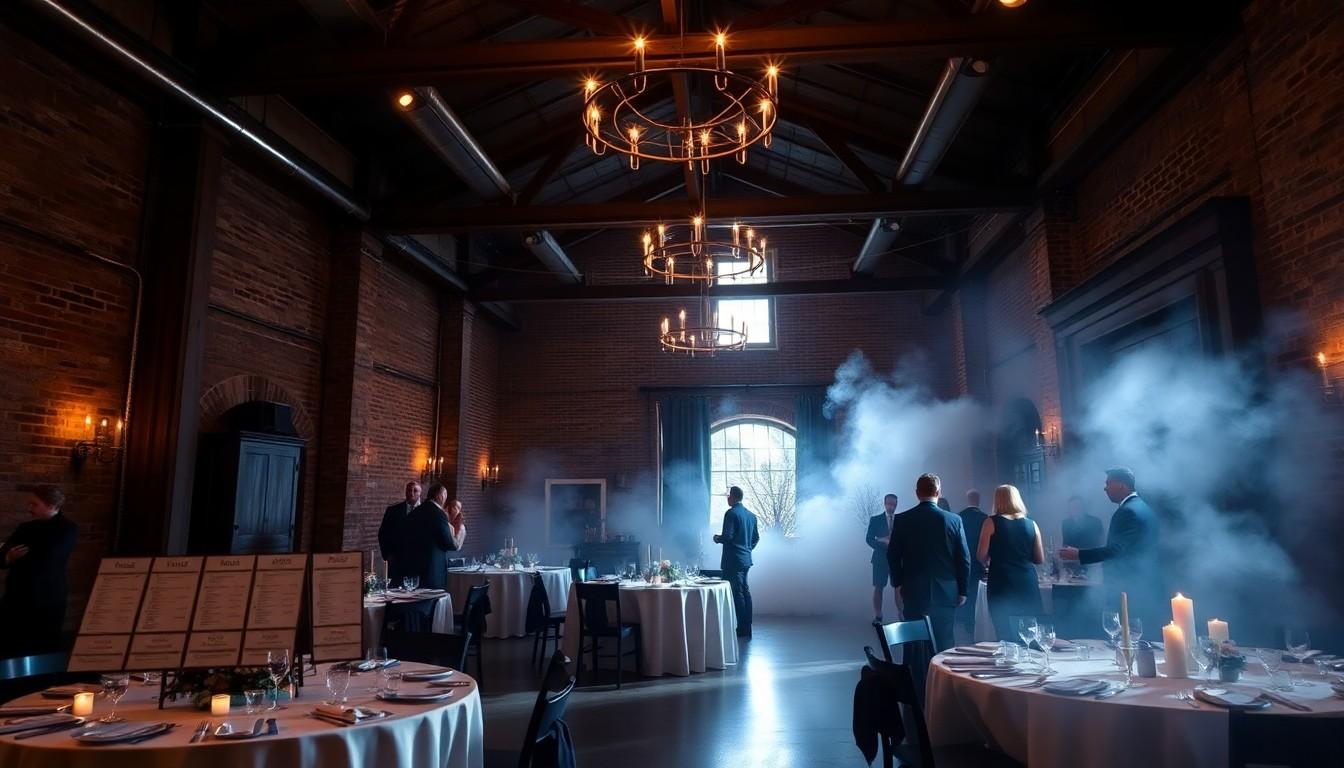
A swipe right during the pandemic led Lilly and Sarah to a midnight rooftop engagement, then a joyful, dark-and-moody wedding at The Steam Plant in Dayton. Their celebration mixed personal vows, handmade details and a secret first dance with fog and sparks, offering plenty of inspiration for couples planning a queer wedding that feels unmistakably their own.
Essential Takeaways
- A pandemic-era beginning: Lilly and Sarah met through a dating app in May 2020, while living an hour apart and juggling two jobs each.
- A venue with options: The Steam Plant has indoor and outdoor event spaces, plus dressing suites, according to its venue information.
- Personal touches everywhere: Lilly made details including mirror signs, a statement seating chart and custom temporary tattoos.
- A dramatic first dance: The couple surprised guests with a choreographed dance to “Stickwitu”, complete with fog and sparks.
- Practical planning lesson: The couple recommend pricing out suppliers carefully, tracking costs and resisting excited impulse buys.
A swipe right became a wedding-day story
Their story began in May 2020, when the pandemic gave Lilly and Sarah time to start dating. They lived an hour apart and each worked two jobs, so meeting might otherwise have been unlikely. Their first date was over FaceTime, with each pouring the other's favourite wine.
For their first in-person date, Lilly cooked vegetable coconut Thai curry for Sarah, a vegetarian of more than 20 years. It became a dish the couple continued to make together. Later, they got engaged at midnight on New Year's Eve on a Cincinnati rooftop, with a couple of close friends there to share the moment.
They chose a larger wedding because they wanted to enter married life surrounded by the people they love. With family and friends travelling from California and Cleveland, they also wanted to give guests plenty of time to plan.
The Steam Plant offered a striking setting
The couple wanted a dark, moody celebration that felt like them, rather than a traditional bright palette. Their venue choice, The Steam Plant in Dayton, brought an industrial backdrop to that vision. Dayton Venues describes the converted building as featuring tall ceilings, large windows, exposed brick and beams, with several spaces for different parts of an event.
The Steam Plant lists the Grand Hall, Boiler Room, Courtyard and Patio among its available spaces. Its venue information also describes dressing suites and audio-visual facilities. Those options give couples flexibility when planning a ceremony and reception, although the venue pages don't confirm which particular rooms Lilly and Sarah used.
The couple also wanted suppliers who were genuinely supportive of queer weddings and comfortable with their chosen venue and style. They found many through social media, and Sarah was keen to work with Tully Floral Design for its sustainability approach. The florist says it specialises in custom faux arrangements that can be kept or reused, an option worth exploring if lasting flowers appeal to you.
Handmade details made the celebration personal
Lilly took on many of the creative projects, while Sarah managed vendor communication and the weekend plans. Among the couple's DIY details were a statement seating chart, mirror signs and temporary tattoos, including designs inspired by Britney Spears, Twilight and the dating app that brought them together.
The table numbers carried love notes the couple had shared over the years. They also made their invitation suite, ceremony programmes and menus by hand. That kind of personal detail can be lovely, but it takes time: the couple said some projects were bigger undertakings than they had expected.
The ceremony made space for both families and close friends. Each bride had her own entrance, their parents walked them down the aisle, and a friend officiated. Their mothers joined them for a unity candle ceremony, while friends provided live music. The vows brought an especially fitting moment: both had independently promised to check the appliances and front door before leaving home.
A secret first dance, fog and sparks
The reception carried the same personal approach, from a friend-curated bourbon experience and a cigar bar called “firefighter on break” to cocktails and local desserts. The late-night spread included “raining pretzels”, while guests made short work of the popcorn, the couple recalled.
Then came the surprise first dance. Lilly and Sarah chose “Stickwitu” by the Pussycat Dolls and choreographed a routine, keeping it secret from their guests until the fog and sparks appeared. It was a bold, theatrical flourish, but it still centred on the two of them and the people gathered around them.
Sarah Babcock Studio, which the couple named as their photographer, describes its work as documentary-style photography with artistic direction and lists LGBTQ+ celebrations among its experience. For couples comparing photographers, galleries can help show how a photographer handles both the big visual moments and the quieter emotion in between.
Budgeting can make room for the meaningful bits
The couple used spreadsheets to compare venue options and track their costs as they booked suppliers and bought items. Their advice is refreshingly practical: price out suppliers before committing, build a detailed budget and avoid buying things in the excitement immediately after getting engaged if you aren't sure you'll use them.
They also chose where to DIY rather than trying to make everything themselves. That's a useful distinction: handmade details can make a wedding feel deeply personal, but a project that grows beyond its original scope can absorb time and money. A clear plan helps you decide which details matter most.
A decade before the wedding, Sarah had asked her sister in a Chicago gay bar whether their family might attend if she married a woman. She realised the wedding fell on the exact same date ten years later. It was a full-circle moment that gave the celebration a meaning no seating chart or special effect could manufacture.
A wedding feels most like yours when the details tell your story.
Source Reference Map
Story idea inspired by: [1]
Sources by paragraph: