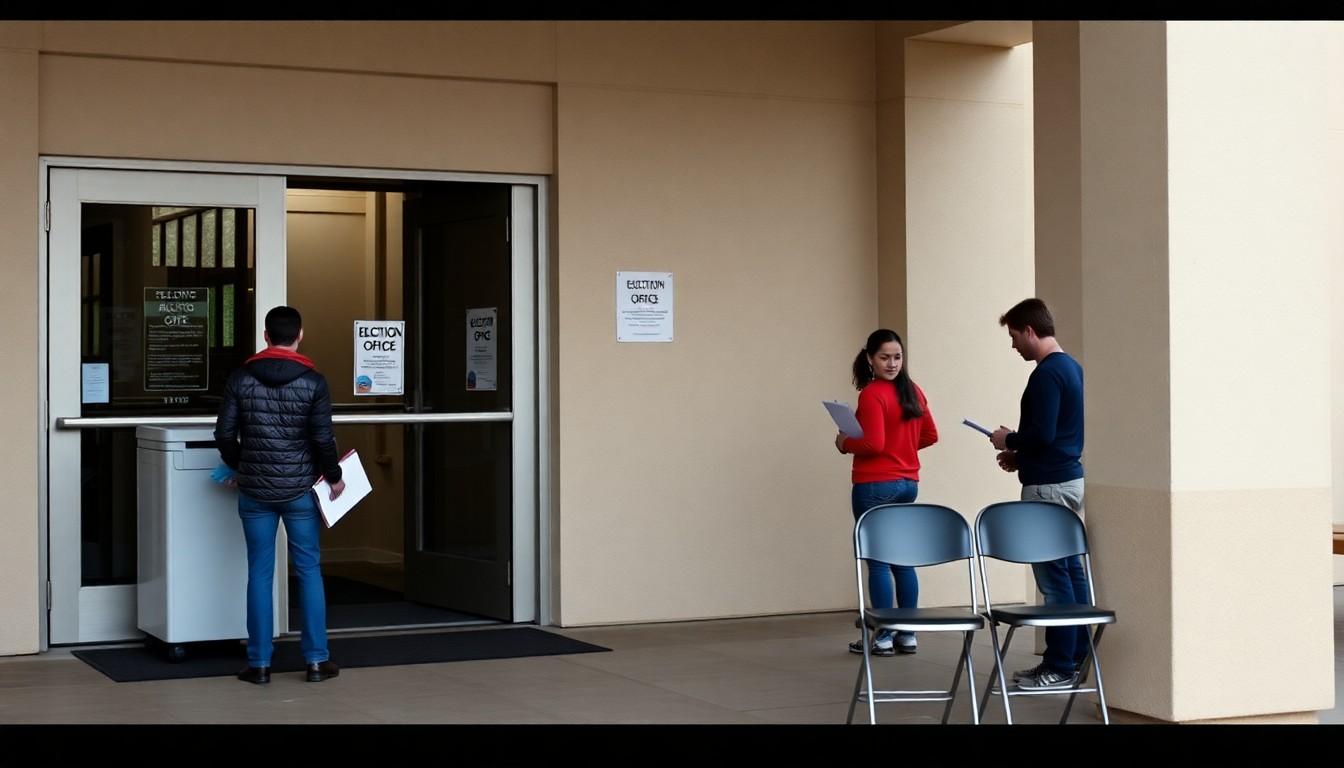
Voters across the United States faced ballot questions affecting transgender people, but the results weren’t one simple national verdict. Some measures passed and others failed, while transgender and nonbinary candidates won historic seats. The pattern offers a more complicated picture of public opinion, and a reminder that long-term change can take more than one election.
Essential Takeaways
- Results varied: Transgender-related measures appeared alongside many other issues, and voters’ decisions differed by state and proposal.
- Missouri’s Amendment 3 failed: The measure combined abortion restrictions with provisions concerning gender-transition procedures for minors.
- Personal outreach continues: PROMO says it is pursuing long-term voter conversations to build support for transgender Missourians.
- Representation grew: Transgender and nonbinary candidates won offices in the 2026 elections, including historic firsts.
The ballot picture is more complicated than a win or loss
The sharpest takeaway from the election isn’t a single result, but the contrast between ballot measures, state to state. Ballotpedia’s national overview lists transgender-related questions on topics including sports eligibility and medical procedures for transgender minors, among a much wider range of issues.
That broader view matters. A ballot question about sports, a proposal affecting healthcare and a candidate’s campaign are different contests, even when they’re folded into the same national debate. Treating them as one uniform vote can obscure what voters were actually deciding.
Missouri’s combined proposal was rejected
Missouri Amendment 3 joined restrictions on abortion with provisions concerning gender-transition procedures for minors. Ballotpedia’s measure summary sets out the proposal and its result, helping separate what it would have changed from the claims made during the campaign.
Assigned Media reported on PROMO’s outreach before the vote, including canvassers’ conversations with residents about transgender people and youth healthcare. The organisation’s approach was aimed at more than one election: it described deep canvassing as sustained, personal conversations intended to challenge assumptions and build support over time.
That distinction is worth keeping in mind. A reported result tells us what voters decided; it doesn’t, on its own, prove why they voted that way or how much a particular campaign influenced them.
Personal conversations are part of the longer game
PROMO’s voter outreach points to a slower, less headline-friendly side of politics: talking with people directly and returning to those conversations over time. The strategy is designed to make room for personal experience, rather than relying only on campaign messages or statistics.
For readers trying to make sense of the result, it’s useful to separate the proposal’s subject matter, the campaign arguments and explanations of voter behaviour. Ballotpedia provides an account of the measure and its outcome, while Assigned Media’s reporting explores the canvassing work before election day. Each answers a different question.
Historic wins offer another measure of change
While ballot measures produced mixed outcomes, transgender and nonbinary candidates also made electoral gains. The 19th reported on candidates whose victories marked firsts in their states or jurisdictions, placing those wins within the wider story of representation in public life.
A candidate’s victory isn’t the same thing as a ballot measure passing, and neither tells the whole story alone. Still, seeing candidates break through offers a human counterpoint to a debate often reduced to campaign slogans: public office is also about who gets to take part in making decisions.
The past offers context, not a forecast
Ballotpedia’s history of same-sex marriage ballot measures records 13 state measures in 2004 seeking to define marriage as between a man and a woman. That history gives a useful reference point for how ballot campaigns around LGBTQ+ rights have unfolded, but it can’t predict the outcome of today’s contests.
The practical lesson is to look closely at each measure, its wording and its result, rather than assuming every state is moving in lockstep. And when campaign tactics or voter motivations are discussed, it’s worth asking whether the source provides election data, on-the-ground reporting or an attributed interpretation. Those are different kinds of evidence, and the distinction helps keep a complicated story in focus.
The clearest picture comes from looking at each vote, each campaign and each candidate on its own terms.
Source Reference Map
Story idea inspired by: [1]
Sources by paragraph: