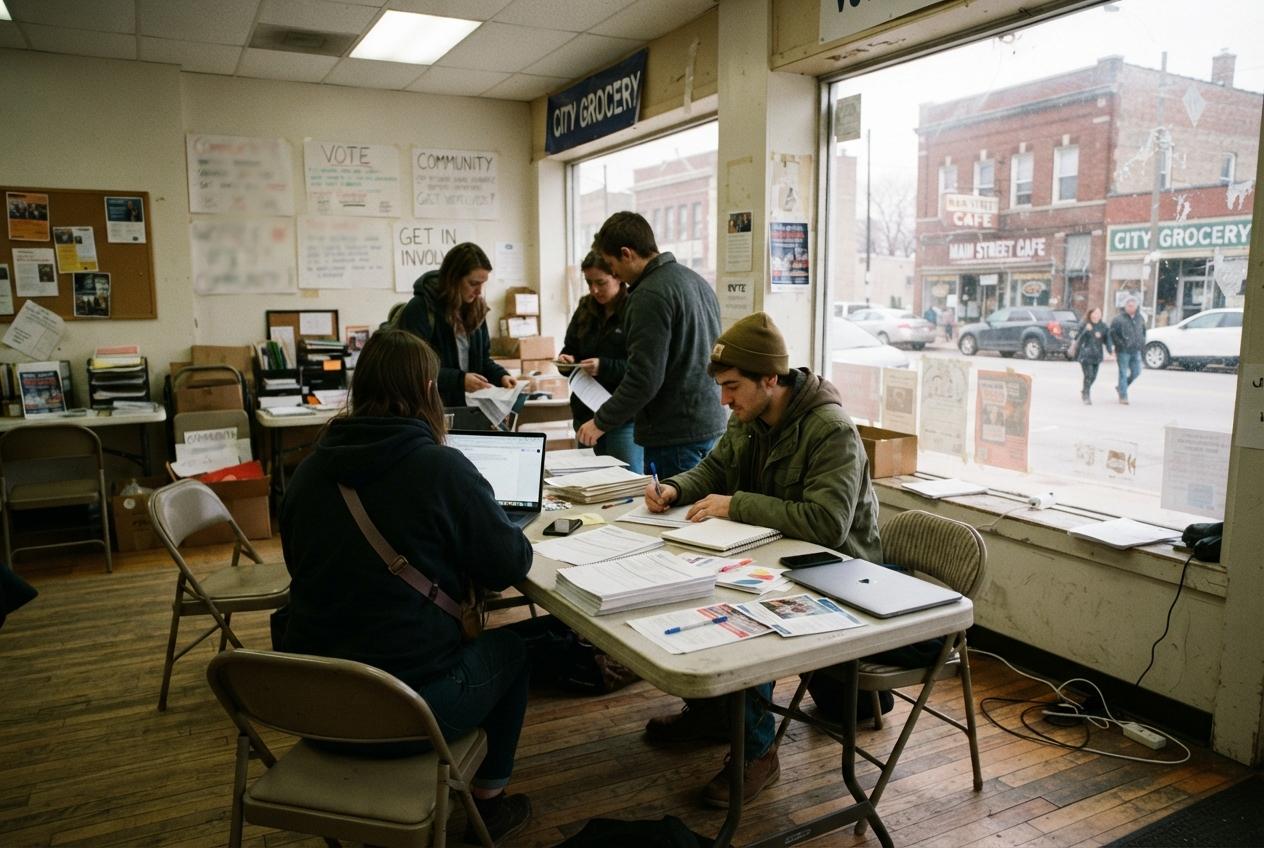
Young LGBTQ+ voters helped make election night feel like more than a set of results. OutVote says its youth-led outreach registered thousands of new voters and reached millions online, while pro-LGBTQ+ candidates won in three key congressional districts. Here’s what the group did, what the results show, and why peer-to-peer organising matters.
Essential Takeaways
- OutVote’s reported reach: The group says it helped register more than 6,000 voters and its online content reached over 2.6 million people.
- Three district wins: Christina Bohannan, Will Lawrence and Jamie Ager won congressional races in Iowa, Michigan and North Carolina.
- A youth-led approach: OutVote uses young organisers and peer networks to share voting information and encourage civic participation.
- A bigger ambition: Executive director Isaac James says the group plans to keep investing in youth-led organising and consider expanding into other states.
OutVote’s election-night high came after months of work
For Isaac James, the results brought a rush of excitement and something more personal: vindication. OutVote’s executive director watched election night unfold with supporters in Washington, DC, after months of voter outreach in swing districts across Iowa, Michigan and North Carolina.
The Advocate reported that more than 100 people joined the group’s watch party. James said the atmosphere felt unlike anything he’d seen before, a striking moment for a team whose work had focused on getting young people involved long before the votes were counted.
Three pro-LGBTQ+ candidates won key races
Christina Bohannan won Iowa’s 1st Congressional District, Will Lawrence won Michigan’s 7th, and Jamie Ager won North Carolina’s 11th. Independent election reporting from KCRG, Michigan Public and the Associated Press confirmed the three results.
Those wins offer a clear measure of what happened at the ballot box, but they don’t by themselves establish what drove each outcome. The Advocate’s account describes OutVote’s organising effort and James’s view of young voters’ influence; the election reports confirm the winners, not the campaign’s effect on the results.
What OutVote says its youth voter outreach achieved
According to The Advocate, OutVote says it helped register more than 6,000 new voters during the election and reached over 2.6 million people through online content. James said the team included 22 fellows and 12 local organisers, working to connect with young voters in the districts it had targeted.
The group’s wider model is built around young people reaching their peers. OutVote says its fellowship trains LGBTQ+ and allied young organisers to share voting information, register voters and bring civic engagement into their communities. Its website describes trusted relationships as central to that work, with young LGBTQ+ people helping peers navigate participation.
Why peer-to-peer organising matters
OutVote was founded in 2024 after co-founders Isaac James and Ranen Miao became concerned that young queer and trans people were losing faith in electoral politics, according to the organisation’s own account. Its early work tested how peer networks and digital organising could help bring young LGBTQ+ voters into civic life.
That approach also pushes back against the idea that young people are simply uninterested in politics. James told The Advocate that the aim was to show LGBTQ+ young people would participate when given the opportunity, including around issues such as LGBTQ+ rights, healthcare and affordability.
What comes next for OutVote?
The 2026 general election was OutVote’s first with a full staff, James told The Advocate. He said the experience strengthened the case for local, peer-to-peer organising, and that the group intends to keep investing in a youth-led model while exploring other states where it could expand.
OutVote’s own website describes its mission as building civic engagement among Gen Z LGBTQ+ people. Its current homepage lists different impact figures from those reported for the election campaign, so those totals shouldn’t be treated as interchangeable. What’s consistent is the focus on helping young people feel informed, connected and able to take part.
Election wins are easy to count; the influence behind them is harder to pin down. Still, for young voters who can feel overlooked, seeing their peers organise offers a reminder that participation can begin close to home.
It's a small step from a conversation with a friend to showing up at the ballot box, but OutVote is betting that those connections can add up.
Source Reference Map
Story idea inspired by: [1]
Sources by paragraph: