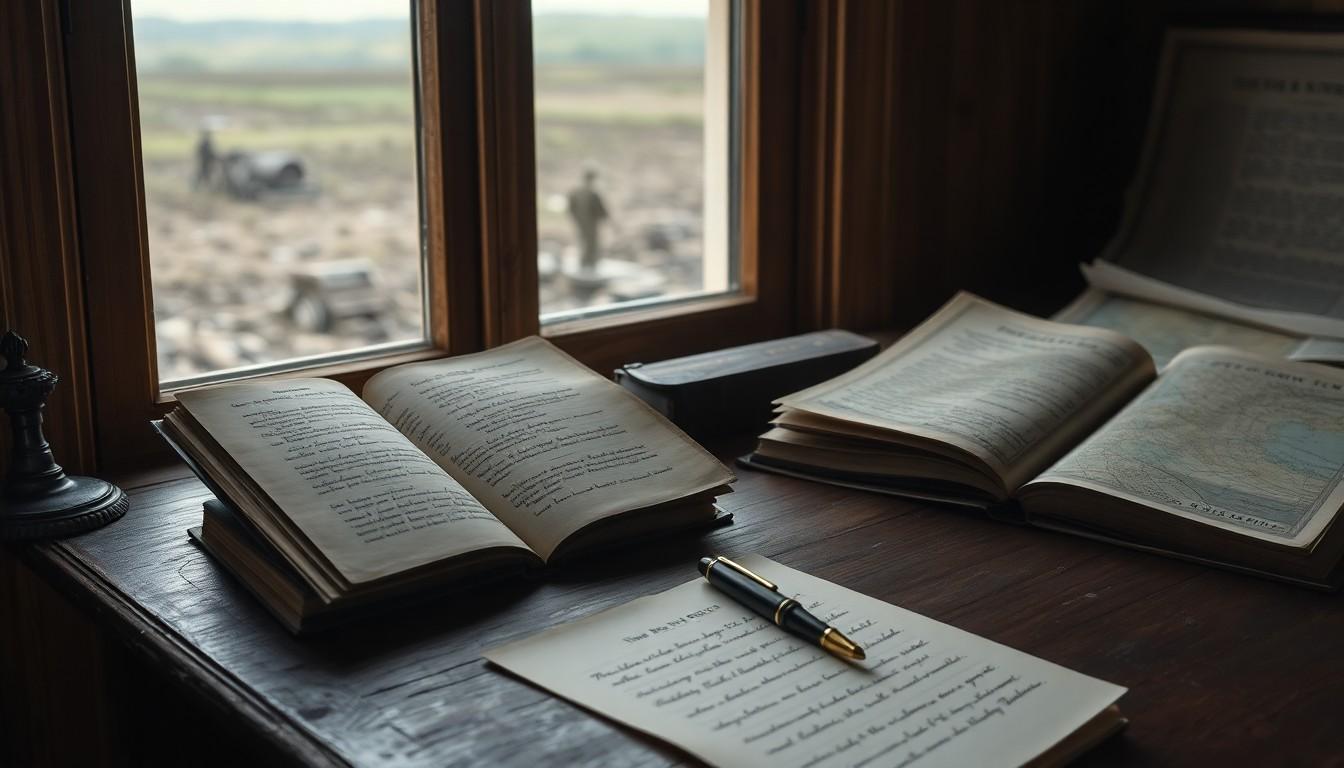
The First World War produced poems that still shape how we remember its dead. Rupert Brooke, John McCrae and Wilfred Owen offer sharply different perspectives: idealistic sacrifice, elegy for fallen soldiers and the brutal reality of combat. Read together, their work reveals why remembrance is more complicated than a single stirring verse.
Three poems, three views of the First World War
Rupert Brooke's "The Soldier" imagines a death overseas as a lasting gift to England. Its measured, patriotic voice is strikingly composed, offering readers an image of home carried into foreign soil. The Poetry Foundation's biography places Brooke among the writers whose work became closely associated with the early war years. [3], [4]
John McCrae's "In Flanders Fields" turns towards the dead and those left behind. Its poppies and battlefield setting make remembrance vivid, while its address to the living gives the poem an urgent, almost ceremonial quality. McCrae was a Canadian doctor and soldier, a life that lends particular weight to his writing about wartime loss. [5]
From patriotic ideal to battlefield horror
The contrast becomes stark in Wilfred Owen's "Dulce et Decorum Est". Rather than presenting war as noble sacrifice, Owen writes about exhausted soldiers and a gas attack, bringing readers close to the physical terror of the front. The Poetry Foundation's text makes the poem's challenge to romantic ideas of war unmistakable. [6]
These aren't simply three poems saying different things about the same conflict. They reflect different emotional registers: Brooke's idealism, McCrae's act of remembrance and Owen's protest against the cost of combat. Read side by side, they make a more honest account of wartime experience than any one poem could offer. [3], [4], [5], [6]
Why these poems still shape remembrance
Remembrance ceremonies often rely on poetry because a few carefully chosen lines can make history feel personal. "In Flanders Fields", in particular, has become closely linked with commemorations in Canada and other Commonwealth countries. History.com traces the development of Veterans Day in the United States, offering a useful reminder that different countries mark military service through their own traditions. [5], [7]
The poems also show how remembrance can hold conflicting feelings at once. Honouring those who served needn't mean turning war into a beautiful story; Owen's work, especially, insists that grief and horror belong in the picture too. [4], [6]
A simple way to read the poems together
Start with "The Soldier", then read "In Flanders Fields" and finish with "Dulce et Decorum Est". Notice what each poem asks of its reader: admiration, remembrance or a hard look at suffering. That sequence makes the shift in tone clear without needing a long introduction. [4], [5], [6]
It can also help to read a short biography alongside each poem. Brooke's reputation, McCrae's medical and military service, and Owen's writing about combat give readers context, while the poems themselves remain the centre of attention. [3], [5], [6]
The enduring power of a complicated history
A century on, these poems remain powerful partly because they don't speak with one voice. Their differences resist a neat, comforting summary of the Great War, and that's precisely what makes them worth returning to. [3], [4], [5], [6]
For readers approaching wartime poetry, the most useful starting point may be to let each poem complicate the one before it. [3], [4], [5], [6]
Remembering the Great War well means making room for both honour and horror.
Source Reference Map
Story idea inspired by: [1]
Sources by paragraph: