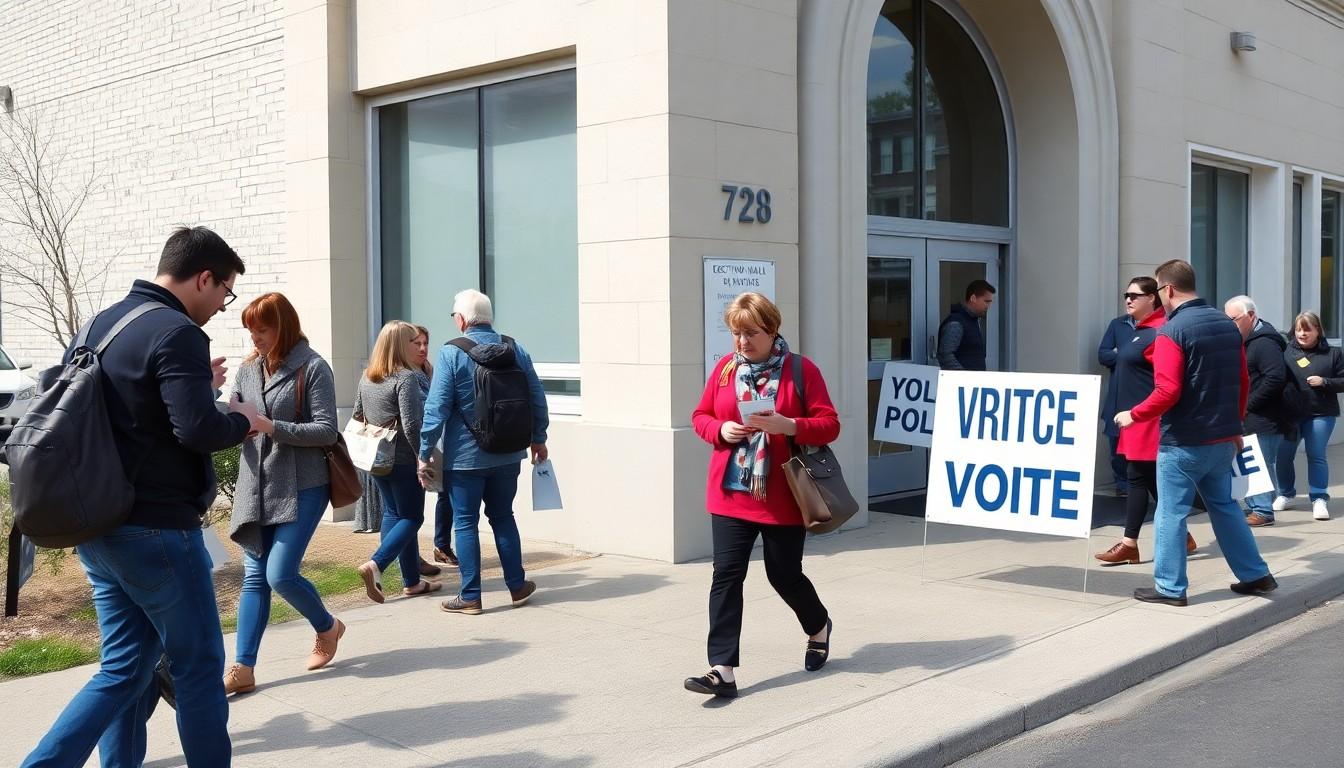
Voters across the United States handed Democrats major midterm wins, while costly Republican attacks on transgender rights struggled to cut through. The contrast points to a campaign shaped more by everyday concerns, including living costs and political performance, than by culture-war messaging. But ballot measures restricting trans rights also passed, leaving a more complicated picture for advocates and candidates alike.
Essential Takeaways
- Big Democratic gains: Democrats won control of Congress and made significant gains in state legislatures and governor's offices.
- A costly message: Republican groups spent heavily on anti-trans advertising, but the strategy didn't appear to deliver the hoped-for electoral boost.
- Voters had other priorities: Affordability, corruption and the economy competed for attention in a closely watched election.
- The results were mixed: Democrats won in states where ballot measures limiting trans rights also passed.
- Campaign advice: Advocates urged candidates to answer attacks in their own voices, then return to issues voters care about.
A loud campaign message met a different set of priorities
Republicans poured money into anti-trans advertising during the midterms, but the message didn't dominate voters' choices. The 19th reported that the Human Rights Campaign estimated spending on such ads reached $400 million across the election cycle. Political scientist Don Haider-Markel said the scale of the spending made its apparent lack of impact all the more striking.
Instead, voters were focused on the cost of living, corruption and the governing party's record. The Associated Press described the election as a contest in which cultural issues struggled to displace economic concerns. It's a familiar campaign lesson: the loudest message isn't always the one people take home with them.
Democratic wins sharpen the contrast
The results were significant. Democrats flipped more than 40 congressional districts, won control of both chambers of Congress and made gains in state governments, according to the 19th and election coverage from Roll Call and CBS News.
That wider pattern helps explain why political leaders from opposite sides could agree that anti-trans attacks hadn't proved decisive. Democratic Rep. Sarah McBride criticised a politics she said offered little help with costs or corruption, while Republican Florida Gov. Ron DeSantis also questioned the party's focus on transgender-related ads. Their agreement on the campaign's limits doesn't mean they share a view on LGBTQ+ rights; it does show how the strategy became a point of political debate.
Why the same message landed differently
The context had changed since the previous presidential election. Republican strategists had seen anti-trans messaging gain attention in 2024, but analysts told The 19th that repeating the approach couldn't make it a substitute for a broader offer on the economy and other concerns.
Some Democrats also found ways to respond without letting the campaign revolve around the attack. Candidates such as Abdul El-Sayed and Christina Bohannan connected their positions to personal values and wider ideas about rights and fairness, then redirected attention to other issues. That approach isn't a magic formula, but it can help a candidate answer a difficult question without allowing opponents to set the whole agenda.
Ballot measures tell a more complicated story
Democratic victories didn't translate into a clean sweep for LGBTQ+ advocates. Voters in several states backed, or appeared likely to back, measures restricting trans students' participation in sports or access to gender-affirming care, even as Democrats won important races.
State-level election coverage from the Associated Press documented Democratic gains in Arizona and wider shifts in legislative control. The contrast is a reminder that voters can make different choices on different parts of the ballot: they may reject a party's overall campaign pitch while still supporting a specific restriction.
What candidates can learn before the next campaign
For candidates, the practical lesson is to prepare a clear, personal response rather than simply ignore an attack or let it dominate the conversation. LGBTQ+ advocates advised Democrats to speak honestly about their values, address questions about fairness and safety, and then bring voters back to issues such as household costs and government performance.
That will matter well beyond this election. The 19th reported that advocates see the midterms as a test of how anti-trans messaging might fare in 2028, while the split between election results and ballot measures shows that the politics remain unsettled. A message can fall flat in one race and still find support in another.
The midterms showed that campaign noise doesn't always match voters' priorities, but the ballot results make clear that the debate is far from over.
Source Reference Map
Story idea inspired by: [1]
Sources by paragraph: