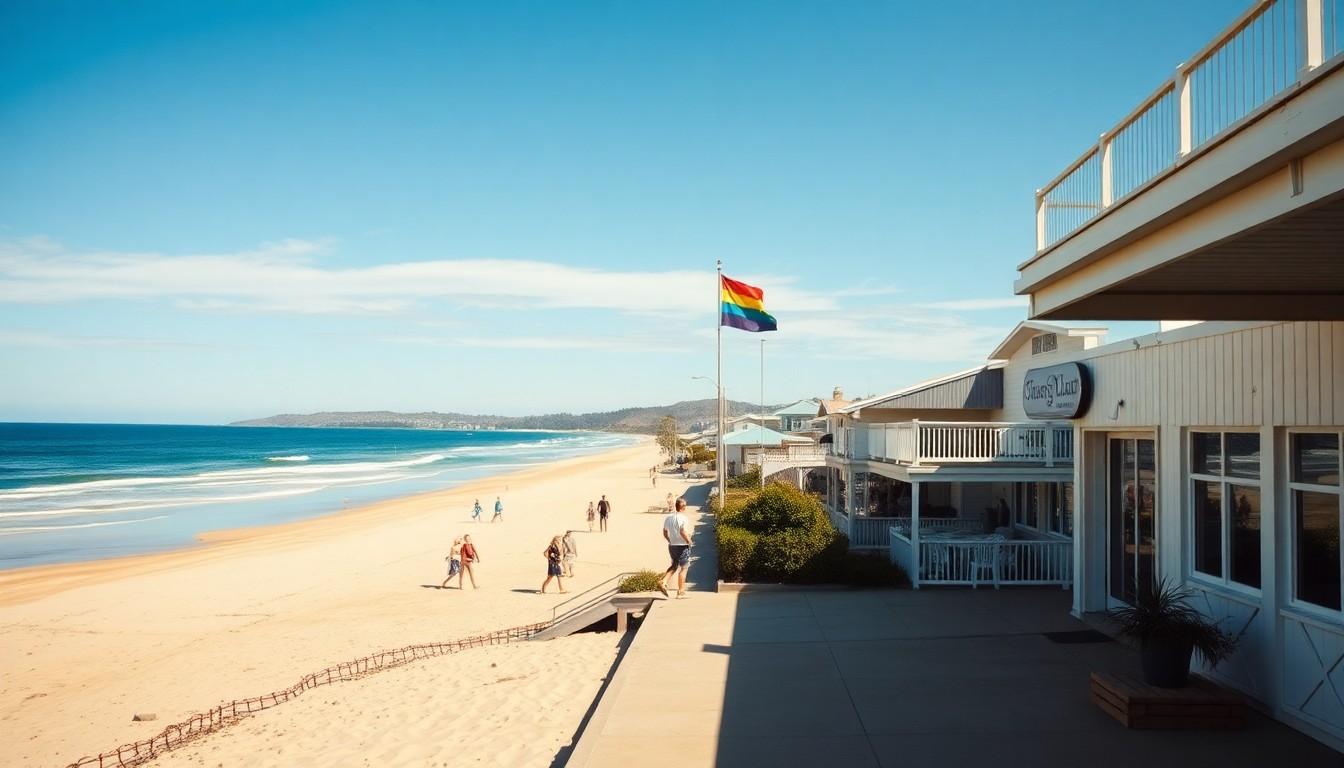
A familiar Australian soap is under renewed scrutiny over its lack of queer characters. At the launch of his book on Australian television’s LGBTQ+ history, TV historian Andrew Mercado argued that Home and Away could tell richer, more recognisable stories by bringing queer lives into Summer Bay. The debate also points to how much representation on screen has changed, and how much hasn’t.
Home and Away's queer gap is back in focus
A sunlit beach, a close-knit town and years of romantic turmoil: Summer Bay has long had room for plenty of drama, but TV historian Andrew Mercado says it still has no openly queer regular characters. Speaking at the launch of his book Outrageous: The Queer History of Australian TV, he challenged the show to reflect a more varied Australia. [2], [6]
Mercado’s point isn’t simply that a soap should add a character to meet a quota. He argues that queer characters can open up fresh storylines and give viewers something more truthful to recognise in the lives unfolding on screen. [2], [6]
Australian television once took bigger risks
The history of Australian television includes programmes that put LGBTQ+ characters at the centre of popular storytelling. The National Film and Sound Archive’s LGBTQIA+ collection documents that history, while its entry on Number 96 offers a closer look at one of the series associated with queer representation. [3], [4]
Mercado recalled the boldness of shows such as Number 96, The Box and Prisoner, whose LGBTQ+ characters became memorable to audiences. His wider argument is that mainstream television has sometimes helped viewers encounter experiences beyond their own, rather than simply reflecting what’s already familiar. [2], [3], [4], [6]
Why soap operas can make representation matter
A continuing drama has an unusual advantage: viewers spend years with its characters. That gives writers time to show relationships evolving, families reacting and people making complicated choices, rather than squeezing a whole life into a single episode. [2], [6]
Mercado contrasted Home and Away with A Country Practice, which he described as taking on social issues in consultation with health authorities. It’s a reminder that entertainment and public understanding don’t have to be rivals; a story can be engaging and still leave viewers thinking. [2]
Queer characters can bring new stories, not fewer
One concern raised about adding queer characters is that writers might quickly run out of romantic possibilities. Mercado pushed back, suggesting that bisexual characters could bring wider relationship choices and unexpected turns to a soap’s familiar mix of love, heartbreak and surprise. [2]
There’s a practical lesson here for drama-makers: representation works best when characters have ambitions, flaws and relationships beyond a single label. That approach can make a story feel less like a box-ticking exercise and more like part of the town’s everyday life. [2], [6]
The audience has moved on, so will Summer Bay?
Australian television’s queer history isn’t confined to one era. The NFSA’s collection preserves a range of LGBTQIA+ screen material, while research from RMIT’s Australian Film and Television Research Centre provides a broader resource for exploring representation in local media. [3], [5]
Meanwhile, Home and Away remains a prominent long-running soap, and Mercado’s criticism poses a simple question: what might the show gain by taking a creative risk? A more varied Summer Bay could feel not only more inclusive, but also more interesting to watch. [2], [7]
It's a small-screen change that could make Summer Bay feel more like the real world.
Source Reference Map
Story idea inspired by: [1]
Sources by paragraph: