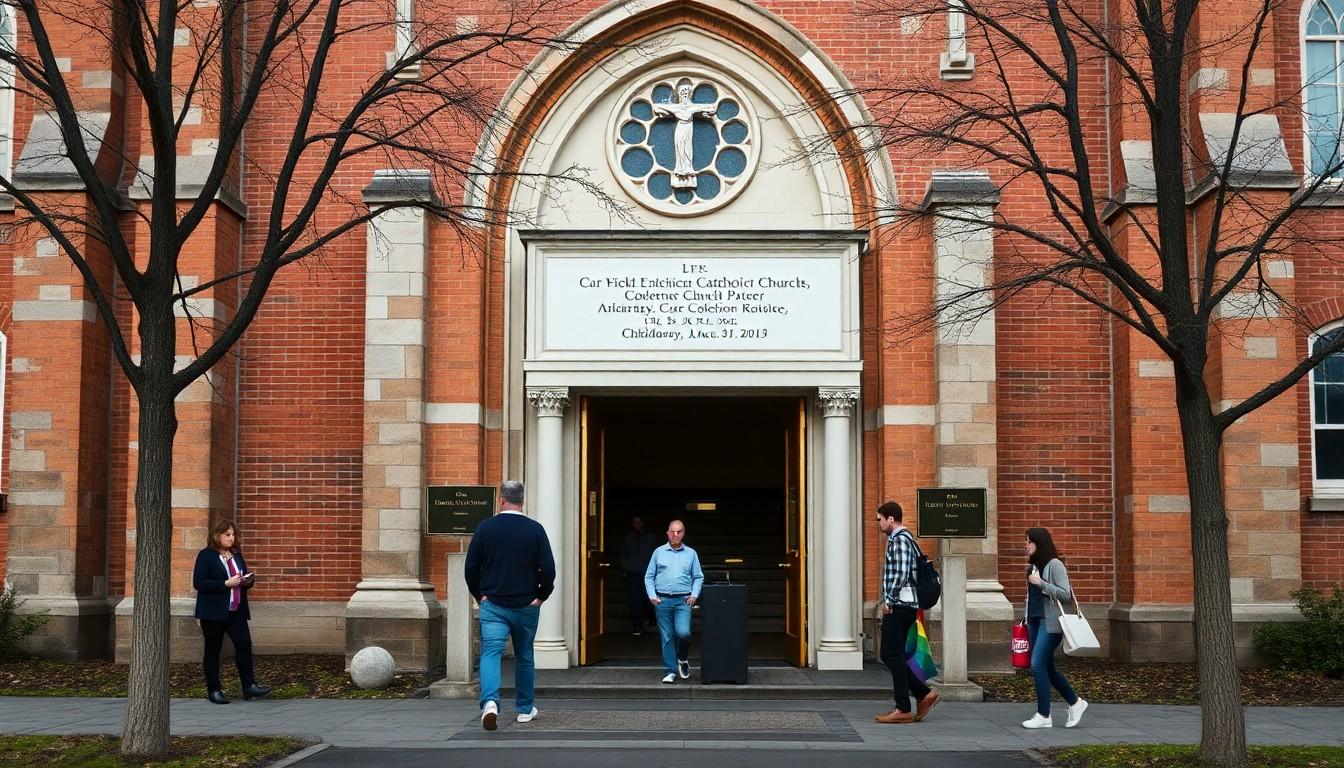
Shoppers aren't the only ones seeking clear answers: Catholics and LGBTQ people are looking for a fuller picture of the Church's teaching, beyond a few frequently quoted lines of the Catechism. Church documents set out formal doctrine, while the words and actions of popes, bishops and local communities also shape pastoral practice. Understanding the difference helps make sense of both the tensions and the signs of welcome.
Essential Takeaways
- Human dignity comes first: Catholic teaching affirms that every person is created and loved by God.
- The Catechism's language is specific: It calls for people who experience same-sex attraction to be treated with respect, compassion and sensitivity, while maintaining its teaching on sexual activity.
- Pastoral practice varies: The approach to LGBTQ people, particularly transgender people, differs across dioceses and countries.
- Blessings aren't marriage ceremonies: Vatican guidance permits some spontaneous pastoral blessings for same-sex couples, but says they must not resemble a wedding.
- Context matters: Scripture, Church documents and informal statements don't all carry the same authority or serve the same purpose.
The starting point is human dignity
The Catholic Church's teaching on LGBTQ people can't be summed up by pulling a few lines from the Catechism and calling it a day. Its formal teaching, biblical interpretation and pastoral practice sit alongside one another, and they don't always sound like one neat, uninterrupted statement. That complexity can feel frustrating, but it matters when discussing a subject that touches people's families, faith and sense of belonging. (Sources: Outreach.faith; Vatican's Dignitas Infinita) [2], [4]
The Church's basic claim is that every human being is created and loved by God, with dignity that isn't erased by failure, humiliation or exclusion. That principle is broader than debates about sexuality or gender, but it has particular weight for people who have been made to feel unwelcome in religious settings. It's also a useful starting point before turning to the more contested details. (Sources: Outreach.faith; Vatican's Dignitas Infinita) [2], [4]
What does the Catechism actually say?
The Catechism asks Catholics to treat people who experience same-sex attraction with respect, compassion and sensitivity. At the same time, it distinguishes between the person and sexual acts, and maintains its teaching that sexual activity belongs within marriage between a man and a woman. Those positions can be difficult to reconcile for LGBTQ Catholics and their loved ones; pretending otherwise doesn't make the tension disappear. (Sources: Vatican Catechism; Outreach.faith) [2], [3]
That distinction is important. The Catechism's wording does not say that a person's identity alone is sinful, but its moral teaching on same-sex sexual relationships remains restrictive. So when people describe the Church's position as simply welcoming or simply condemning, they're usually leaving out a significant part of the picture. (Sources: Vatican Catechism; Outreach.faith) [2], [3]
Scripture needs more than a quick reading
The lead article argues that biblical passages often cited in discussions of homosexuality need to be read in their historical and textual context. It notes that Jesus does not address homosexuality explicitly in the Gospel accounts, while his encounters with people at the margins offer a pastoral example of attention and respect. That is an interpretation of the texts, not a replacement for official Church teaching. (Sources: Outreach.faith; US Conference of Catholic Bishops) [2], [7]
The practical lesson is to ask what kind of source you're reading. Scripture, a Catechism passage, a Vatican declaration and an individual bishop's comments don't all have the same status. The US Conference of Catholic Bishops, for instance, outlines different levels of Church teaching, a useful reminder that a striking quote from a church leader isn't automatically a change in doctrine. (Sources: US Conference of Catholic Bishops; Outreach.faith) [2], [7]
Same-sex blessings aren't a change to marriage teaching
Vatican guidance issued in Fiducia Supplicans allows certain spontaneous blessings for same-sex couples, while drawing a clear line against making them resemble a wedding ceremony. The document presents these blessings as pastoral gestures, not as a change to the Church's teaching on marriage. That distinction explains why the guidance has been welcomed by some and met with resistance by others. (Sources: Vatican's Fiducia Supplicans; Outreach.faith) [2], [5]
For couples and families trying to understand what might happen in practice, the key detail is that local responses can vary. The Vatican document sets out a framework, but reactions among church leaders and communities have differed. A conversation with a local priest or diocese is likely to give a clearer picture than assuming every parish will respond in the same way. (Sources: Vatican's Fiducia Supplicans; Outreach.faith) [2], [5]
Transgender pastoral care remains uneven
Church discussion of transgender people is especially complex, and pastoral approaches vary between dioceses. A Vatican education document from 2019 criticised some approaches to gender theory while also calling for dialogue and listening. Its stated focus included Catholic education, but its language has contributed to wider debate over how schools and parishes should respond. (Sources: Vatican education document; Outreach.faith) [2], [6]
There are also examples of differing local practices, including guidance on whether transgender people may serve as godparents or marriage witnesses. That variation can make the experience of Catholic life feel very different from one place to another. For anyone seeking support, the most useful next step is often to ask directly about a parish or diocese's pastoral approach, rather than rely on a broad assumption about the whole Church. (Sources: Outreach.faith; Vatican education document) [2], [6]
The bigger picture is a Church holding formal moral teaching alongside calls for dignity, respect and pastoral care. For LGBTQ Catholics and their families, that can be a complicated reality; for everyone else, it is a reason to listen carefully and avoid turning a person's life into an abstract debate. (Sources: Outreach.faith; Vatican Catechism) [2], [3]
The clearest place to begin is with dignity, honest questions and a willingness to listen.
Source Reference Map
Story idea inspired by: [1]
Sources by paragraph: