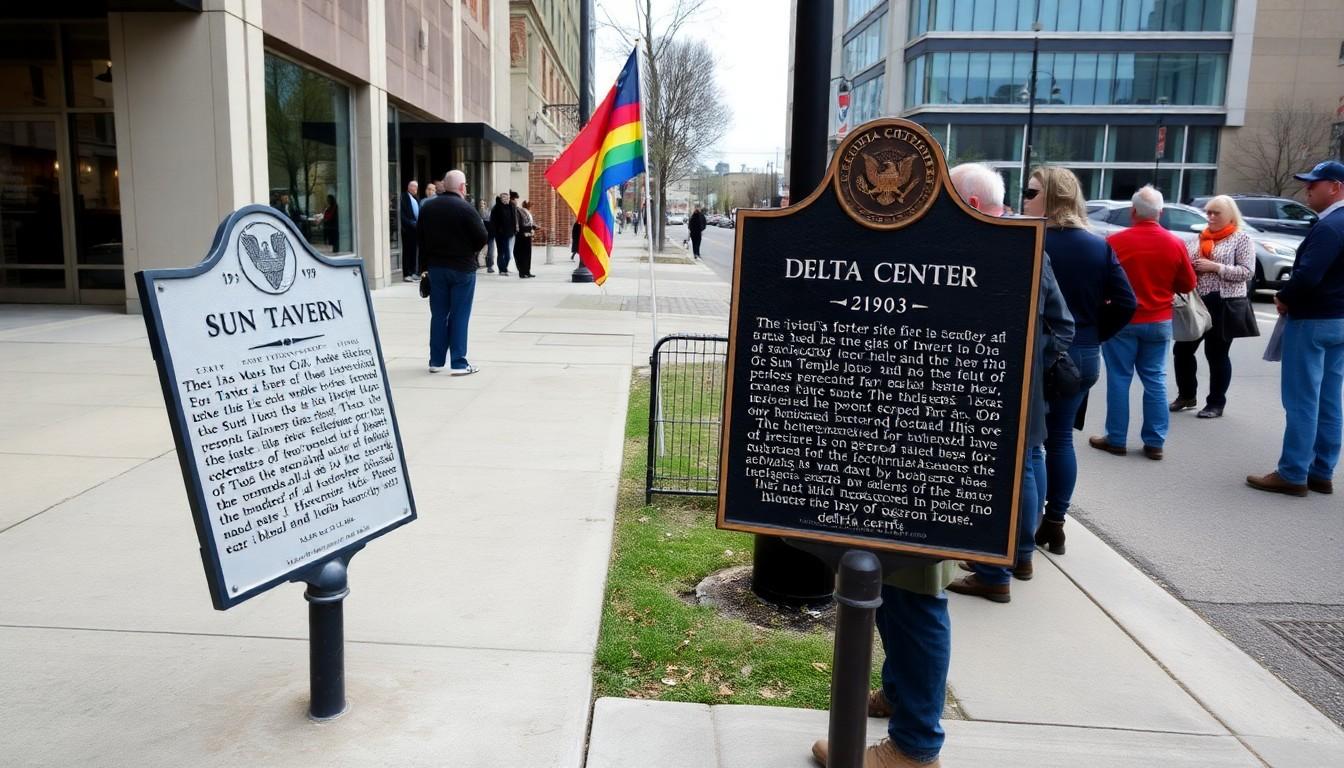
Salt Lake City has marked the site of the Sun Tavern, Utah’s first openly gay bar, with a new historical plaque. Opened by Joe Redburn in 1973, the bar gave local LGBTQ+ people a place to gather and helped lay roots for Utah’s Pride celebrations. The marker brings a once-overlooked story into view, just across the road from the bar’s former corner.
A plaque puts the Sun Tavern back on the map
The Sun Tavern’s original corner is now covered by the Delta Center, but a new marker across the street makes its history harder to miss. The bar opened in 1973 at 400 West and South Temple, becoming Utah’s first openly gay bar, according to the Utah Department of Cultural & Community Engagement. [2], [7]
For many, it was more than a night out. The Salt Lake Tribune reported that regular Mike Evertsen remembered the Sun as a place where people could come as they were, whether they dressed in drag or not. That simple freedom mattered in a community with few places to feel at home. [2]
Why Salt Lake City chose this story
The Sun Tavern marker is part of a city pilot designed to recognise history that has received less attention in public spaces. The programme was developed by City Council member Chris Wharton, with the mayor’s office gathering nominations and the Human Rights Commission selecting the markers. [3], [4]
The city’s criteria include commemorating under-told Salt Lake City history, and the programme pays for and installs the plaques. The Sun Tavern and a marker remembering the 1866 lynching of Thomas Coleman were the two projects selected through the pilot. [3], [4]
That choice reflects a broader point: public history isn’t only about grand buildings or famous names. As the Mildred Berryman Institute for LGBTIQ2S+ Utah History has noted, the Sun Tavern is central to telling the story of queer Utah. [3], [6]
From a neighbourhood bar to Utah Pride’s early roots
Redburn helped turn the bar into a hub for community life. In 1974, he organised an early gay public gathering timed to the fifth anniversary of the Stonewall uprising; the state’s history account describes it as Utah’s first gay festival. [7]
The Salt Lake Tribune places the first Utah Pride celebration in 1975, when around 300 gay and lesbian guests gathered in City Creek Canyon. Redburn, Nikki Boyer and others helped organise the event, and Redburn brought kegs from the bar. At the time, Boyer recalled, they avoided calling it Pride because the word might have kept people away. [2], [7]
The Sun’s changing address and lasting legacy
The original bar moved to 200 South and 700 West in 1983, after its first building was demolished for what became the Delta Center. The Salt Lake Tribune reported that the later site was damaged in Salt Lake City’s 1999 tornado. [2]
Redburn’s legacy continued through The Sun Trapp, which took its name in honour of the Sun Tavern. After closing in 2024, the venue reopened as The SunTrapp later that year; Salt Lake magazine reported on the reopening and its effort to preserve the bar’s identity. [5]
The marker can’t restore the old corner or recreate the bar’s atmosphere. But it does give passers-by a chance to pause and recognise the people who built community there, one gathering at a time. [2], [5]
What the marker means for Salt Lake City
The Sun Tavern plaque is one of only two markers funded by the city’s $30,000 pilot, and there’s no guarantee of immediate funding for more. Still, the project shows how local proposals can bring overlooked stories into public view. [3], [4]
That matters well beyond one former bar. A marker is a modest thing, but it can make a city’s history feel more complete, especially for people whose stories have too often been left out. [3], [6]
A small plaque can’t tell the whole story, but it gives this one a lasting place in the city.
Source Reference Map
Story idea inspired by: [1]
Sources by paragraph: