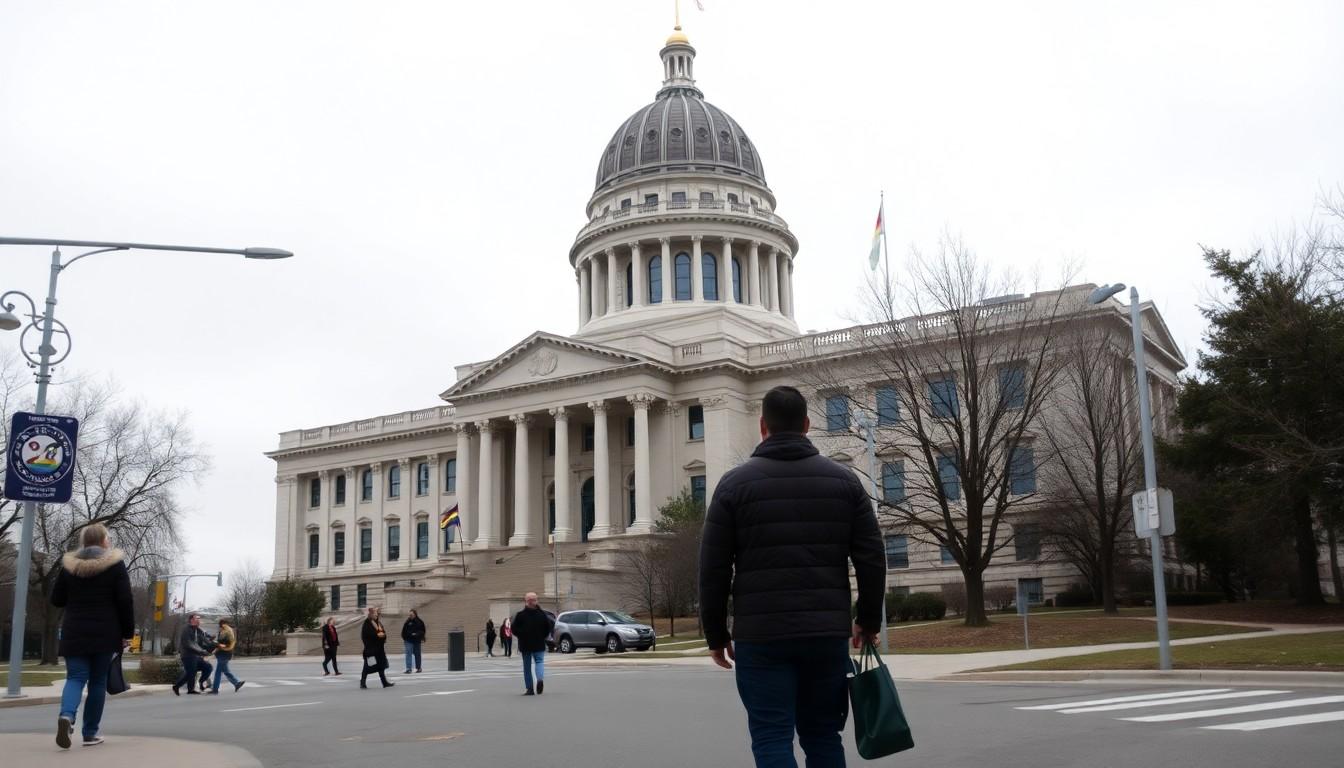
Colorado's LGBTQ+ rights history is a story of hard-won progress, fierce opposition and community resilience. From Denver's first Pride celebrations in the 1970s to today's protections for gender-affirming care, decades of activism have reshaped the state's laws and public life. Here's how key milestones connect, and why the journey is far from over.
Essential Takeaways
- Community roots: Colorado activists built support networks and organised Pride events during the 1970s.
- A defining setback: Voters passed Amendment 2 in 1992, prompting a major legal fight.
- A landmark ruling: The US Supreme Court struck down Amendment 2 in Romer v. Evans in 1996.
- Rights expanded: Colorado later adopted protections against discrimination and recognised same-sex relationships.
- New frontiers: Recent debates include transgender healthcare, while a 2023 state law set out protections for providers and patients.
Colorado's movement began with visibility and practical support
Colorado's LGBTQ+ rights story isn't simply a steady march towards progress. It began with people making themselves visible in public and creating services their communities couldn't reliably find elsewhere. Denver's first organised Pride parade and rally took place in 1976, while activists also worked to establish the Gay Community Center of Colorado, now known as The Center on Colfax.
Those early efforts were about more than a day of celebration. A community centre could offer social connection, information and practical support, while Pride brought LGBTQ+ residents into public spaces from which they'd often been excluded. The organisation now known as The Center on Colfax traces its history to this period of community-building. (OUT FRONT; The Center on Colfax)
And the legal landscape was already contested. Boulder County Clerk Clela Rorex issued marriage licences to same-sex couples in 1975, a move that drew sharp opposition and was followed by efforts to prevent such licences from being issued. The episode foreshadowed a recurring pattern: local acts of recognition met resistance, then prompted wider organising. (OUT FRONT)
Amendment 2 turned Colorado into a national battleground
The most consequential setback came in 1992, when voters approved Amendment 2. It barred state and local authorities from adopting or enforcing protections based on sexual orientation, including measures already introduced by some municipalities. The amendment turned a local debate over civil rights into a high-stakes constitutional case. (OUT FRONT)
The measure also brought Colorado intense national scrutiny. But the response wasn't only political or legal; residents and advocates challenged the amendment in court, arguing that it singled out LGBTQ+ people for unequal treatment. In 1996, the US Supreme Court agreed. Its ruling in Romer v. Evans found Amendment 2 incompatible with the US Constitution's equal protection guarantee. (OUT FRONT; US Supreme Court)
That decision mattered well beyond Colorado. It established that a state couldn't use its constitution to impose a sweeping legal disadvantage on one group simply because that group was unpopular. The court fight was a painful chapter, but it also became a foundation for later arguments about equal treatment. (US Supreme Court)
Protections grew, but progress came in stages
After Romer, advocates turned towards building stronger protections into state law. Colorado expanded its anti-discrimination framework, while campaigns for legal recognition of same-sex relationships continued. Civil unions became law in 2013, followed by marriage equality in Colorado in 2014 and nationwide after the Supreme Court's 2015 Obergefell v. Hodges ruling. (OUT FRONT; US Supreme Court)
The sequence matters: court victories can remove legal barriers, but they don't automatically settle every question about access, treatment or public acceptance. Marriage recognition, workplace protections and protection from discrimination each required their own political and legal work. That's less dramatic than a single landmark decision, perhaps, but it's often how lasting change is built. (OUT FRONT)
Today's debates centre on safety and healthcare
Recent years have brought new challenges. The 2022 mass shooting at Club Q in Colorado Springs killed five people and injured others, a devastating reminder that legal recognition doesn't, on its own, guarantee safety. The FBI described the attack as a shooting at the LGBTQ+ nightclub; the loss was felt across the state and beyond. (FBI)
Healthcare has become another major focus. Colorado's Senate Bill 23-188, signed in 2023, established protections related to reproductive and gender-affirming care, including legal safeguards for people providing or seeking care in the state. The law reflects a broader shift in the debate, from whether LGBTQ+ people should be recognised to how their rights and access to services can be protected amid changing laws elsewhere. (Colorado General Assembly)
For anyone trying to understand the state's current position, it's useful to separate what a law actually says from the political language around it. Read the legislation itself, check who it covers and look for the date it took effect. In a fast-moving area, the details can matter as much as the headline. (Colorado General Assembly)
The story is still being written
The arc of Colorado's LGBTQ+ rights movement runs from the community services and Pride gatherings of the 1970s through Amendment 2, court victories, relationship recognition and newer healthcare protections. At each stage, progress has depended on people organising, documenting events and challenging decisions that excluded them. (OUT FRONT; The Center on Colfax)
That history offers a useful caution as well as a reason for hope: rights can advance, but they can also be contested. Colorado's record isn't a finished story of victory. It's a reminder that civil rights are sustained through continued attention, community support and the willingness to defend protections already won. (OUT FRONT; Colorado General Assembly)
Colorado's history shows that progress is built by communities, then protected through persistent work.
Source Reference Map
Story idea inspired by: [1]
Sources by paragraph: