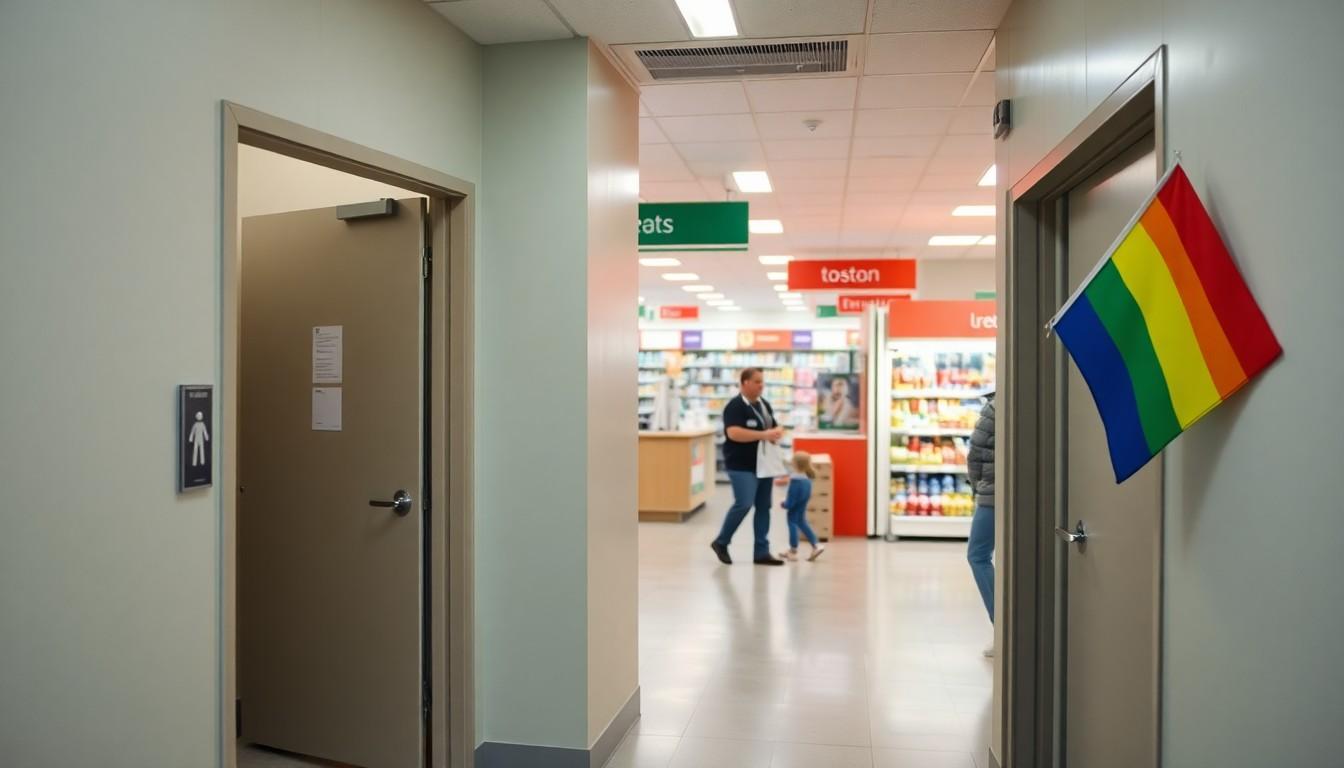
A pub toilet encounter left singer Cat Burns stunned, while Gateshead woman Helen Rowlands says she was challenged by a Tesco staff member because of her appearance. Their experiences have brought fresh attention to single-sex spaces guidance, and to the risks of asking people to prove they belong in a public toilet.
Two ordinary trips, unsettling encounters
For Cat Burns, a quick pub visit turned uncomfortable when an older woman questioned whether she belonged in the women’s toilet. The singer said she was taken aback, then angry, and described the moment in a social media video. (Attitude)
Rowlands had a similarly distressing experience at Tesco Extra in Trinity Square, Gateshead. She told Chronicle Live that a cleaner challenged her as she left the women’s toilet, leaving her feeling humiliated and in tears. (Chronicle Live)
The incidents involved two different women and two different settings, but they point to the same uneasy question: what happens when someone decides another person doesn’t look as though they belong? (Attitude; Chronicle Live)
What does the guidance say about checking?
The Equality and Human Rights Commission’s draft code of practice addresses how service providers should apply equality law following the Supreme Court’s 2025 ruling on the meaning of “woman” in the Equality Act. (EHRC; UK Supreme Court)
The draft guidance says it is unlikely to be practical or appropriate to question an individual about their sex when they use facilities such as toilets. That matters because a policy intended to manage access can become a public confrontation when applied through guesswork about someone’s appearance. (EHRC draft code)
The EHRC says its updated draft code is intended to give organisations clearer guidance on implementing equality law. The code was published for consultation, so it should be understood as draft guidance rather than a final code. (EHRC; GOV.UK)
Why appearance-based assumptions can affect anyone
Burns said the challenge showed why trans rights matter to everyone, including cisgender women. Her point was that suspicion aimed at trans people can also lead to other women being questioned about their appearance. (Attitude)
Rowlands has alopecia, a condition that causes hair loss. She said the staff member appeared to assume she was in the wrong toilet, then mentioned that men had been in the facility the previous week. (Chronicle Live)
Neither account is a small matter for the person on the receiving end. A quick trip to the loo shouldn't leave someone feeling watched, exposed or forced to explain their body to a stranger. (Attitude; Chronicle Live)
What should shops and pubs do instead?
The draft code's warning about individual enquiries offers a practical steer for service providers: avoid treating appearance as proof of someone’s sex. Clear, consistent procedures can help staff handle genuine facility concerns without singling out customers on instinct. (EHRC draft code; EHRC)
For customers, there may be little to say in the moment beyond calmly stating that they’re using the facility. But the responsibility for applying policy fairly belongs to the organisation, not to people who are simply trying to use a public toilet. (EHRC draft code)
In Rowlands’ case, her husband raised the matter with a store manager, and the store reportedly apologised. That response may help address one incident, but clear staff training is a better way to reduce the chances of another. (Chronicle Live; Attitude)
A test of how guidance works in real life
The Supreme Court ruling and the draft code set a legal and policy backdrop; Burns’ and Rowlands’ accounts show how decisions made on the ground can feel. The distinction matters: guidance for organisations is one thing, while a customer being challenged by a stranger is another. (UK Supreme Court; EHRC draft code; Attitude; Chronicle Live)
The draft code has been published for consultation, and the EHRC says it is meant to help organisations apply equality law. How that guidance is translated into staff practice will shape whether public facilities feel ordinary and accessible, or become places where people worry about being challenged. (GOV.UK; EHRC)
A toilet should be the least complicated stop of anyone’s day. Clear rules and thoughtful staff can help keep it that way. (Attitude; Chronicle Live)
Source Reference Map
Story idea inspired by: [1]
Sources by paragraph:
- Paragraph 1: [2]
- Paragraph 2: [3]
- Paragraph 3: [2], [3]
- Paragraph 4: [4], [6]
- Paragraph 5: [4]
- Paragraph 6: [5], [7]
- Paragraph 7: [2]
- Paragraph 8: [3]
- Paragraph 9: [2], [3]
- Paragraph 10: [4], [5]
- Paragraph 11: [4]
- Paragraph 12: [2], [3]
- Paragraph 13: [4], [6], [2], [3]
- Paragraph 14: [5], [7]
- Paragraph 15: [2], [3]