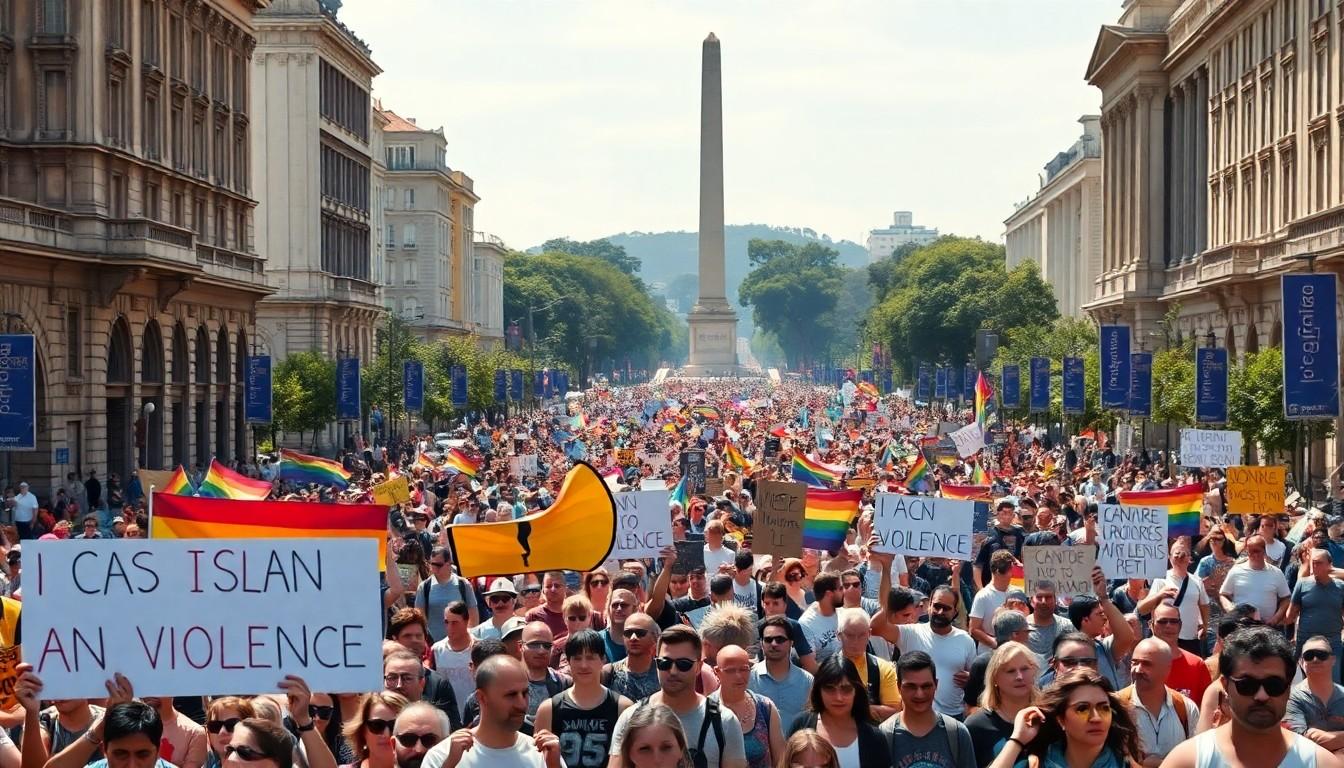
Buenos Aires Pride saw nearly three million people take to the streets for its biggest march yet, bringing colour, music and a clear message of solidarity. The gathering came after a violent attack on trans sex workers and amid a sharp rise in reported anti-LGBTQ+ hate crimes, making celebration and protest inseparable.
Essential Takeaways
- Record turnout: Organisers described the 35th Buenos Aires Pride March as the largest in its history, with nearly three million people attending.
- A stark backdrop: Six trans women were injured in a group attack in Palermo shortly before the march.
- Hate crimes are rising: Argentina recorded 227 anti-LGBTQ+ hate crimes in 2025, up 62 per cent on 2024.
- The march joined protest with celebration: Music, performances and joyful self-expression shared the streets with calls for justice and safety.
Buenos Aires Pride turned out in record numbers
Nearly three million people filled central Buenos Aires for the 35th Pride March, moving along Avenida de Mayo between the city’s main avenue and Congress. Organisers called it the biggest edition yet, a striking show of visibility in a city where many LGBTQ+ people say daily life has become more tense. [2], [3]
For younger attendees, that visibility mattered in personal ways. Two teenagers at the march described it as a place where they could dress as they liked and feel accepted, without the self-consciousness they sometimes experience at school or around relatives. A large crowd can feel daunting, but it can also offer a rare sense of room to breathe. [2]
A violent attack sharpened the march’s message
The gathering took place days after a group of young men attacked trans sex workers in Palermo. Reports said the assailants filmed and shared the violence online; six trans women were injured, and several needed hospital care. The incident drew wider attention to violence that trans people and advocates say is not confined to one night or one neighbourhood. [3], [5], [6]
That recent attack gave the march a particularly urgent edge. Participants called for justice and accountability, while also making a broader demand: that trans people should be able to live and work without being targeted. The message was not simply to mourn what had happened, but to insist that it must not be treated as normal. [2], [3], [5]
The figures show a worsening picture
Argentina’s National Observatory of LGBT+ Hate Crimes recorded 227 cases in 2025, a 62 per cent increase on the previous year and the highest total in its series since 2016. The observatory’s annual report documents the scale of violence, while coverage by Chequeado explains the rise and its implications. [4], [7]
The lead report also cited 263 cases in the first 11 months of 2026, describing that total as a new record. These figures provide a sobering counterpoint to the march’s exuberant atmosphere, and help explain why many people saw attendance as a form of public resistance as well as celebration. [2], [3]
Pride made space for joy as well as protest
The march combined political demands with the familiar pleasures of Pride: bright outfits, dancing, music and performances across two stages. Artists including María Becerra appeared during the event, while crowds moved to music and waved fans in the warm evening air. [2]
That mix is part of what makes Pride powerful. Celebration doesn’t dilute the call for rights; it can make community visible, and help people feel less alone. For some attendees, being able to show up openly, surrounded by others doing the same, was a meaningful contrast with the caution they described in everyday settings. [2], [3]
What this march says about safety and visibility
A Pride march can create a temporary sense of safety, but it can’t solve the conditions that make people fear harassment or violence outside its route. The stories shared in Buenos Aires pointed to a wider concern: some people are finding it harder to show affection in public or to feel at ease in spaces where they once felt welcome. [2], [3]
That’s why the crowd’s size mattered beyond the headline number. It showed how many people were willing to gather in support, while keeping attention on the need for justice and lasting protection. The most hopeful part may be that the march held both truths at once: the joy of being together, and the reason so many people still need to take to the streets. [2], [3]
Pride can be a celebration, a protest and a reminder that safety should never be seasonal. [2], [3]
Source Reference Map
Story idea inspired by: [1]
Sources by paragraph: