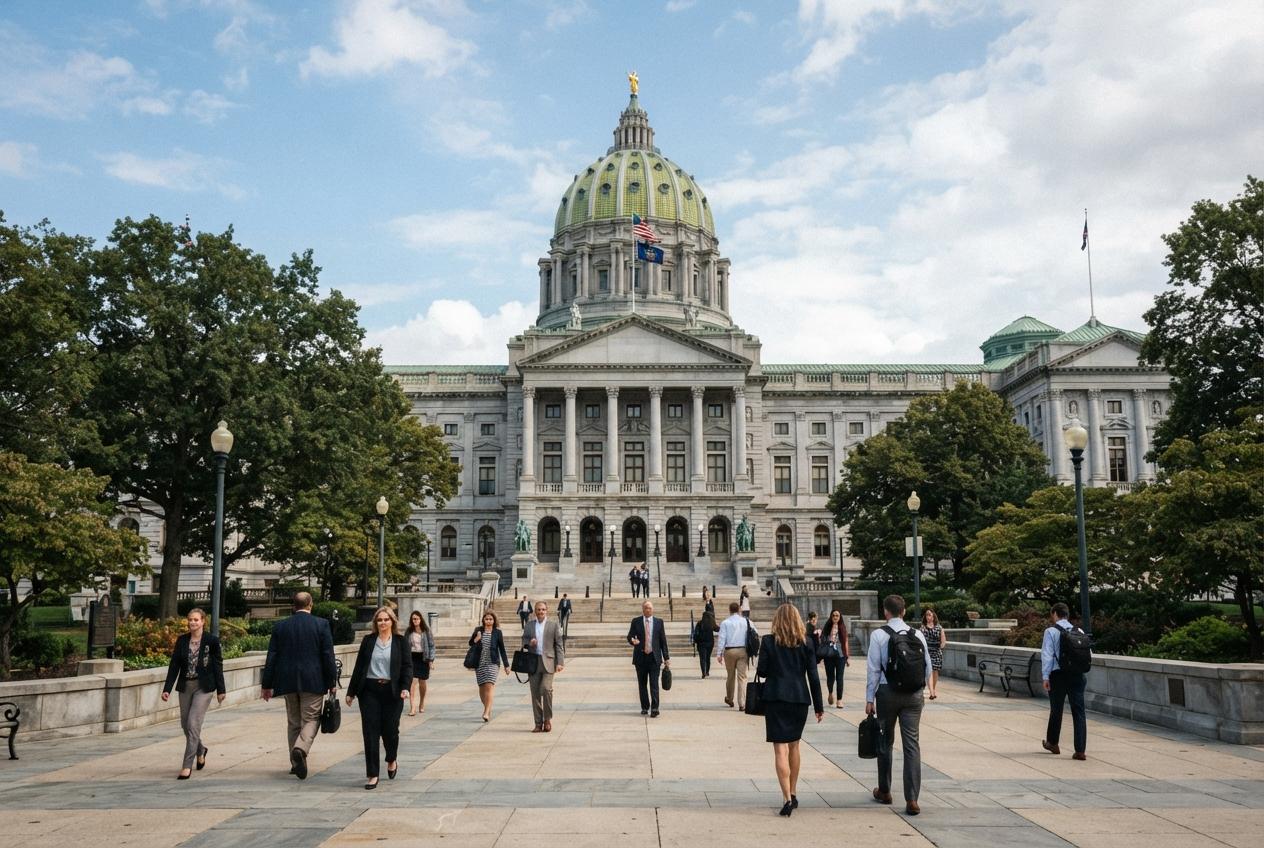
Pennsylvania’s election results have opened a fresh window for LGBTQ legislation, with Democrats holding the governorship and winning both chambers of the General Assembly. The stakes reach well beyond party politics: protections for housing and jobs, marriage rights, healthcare and family security remain uneven or incomplete across the state. Here’s what advocates want lawmakers to tackle next.
Pennsylvania’s election creates a chance to act
The election has put Democrats in control of Pennsylvania’s governorship, House and Senate, creating a rare opportunity to move LGBTQ priorities through the legislature. For advocates, the result is more than a political headline: it could put long-stalled protections back on the agenda.
One immediate concern is statewide nondiscrimination protection. Pennsylvania’s Senate Democrats describe their proposed Fairness Act as a measure to protect people from discrimination based on sexual orientation, gender identity or expression in areas including employment, housing and public accommodation. That would establish a consistent baseline across the state, rather than leaving protections to local rules. (Sources: Pennsylvania Senate Democrats, Pennsylvania House of Representatives)
A patchwork of protections leaves people exposed
The lead article says roughly 30 per cent of Pennsylvanians live or work in communities with LGBTQ protections, leaving many residents without them. That patchwork can be difficult to grasp until it becomes personal: a person’s security at work or at home may depend on which local boundary they happen to cross. (Sources: Pennsylvania Senate Democrats, Movement Advancement Project)
Nondiscrimination is only one part of the picture. Philadelphia District Attorney Larry Krasner has called for comprehensive hate-crime legislation and stronger protections, highlighting gaps in the state’s approach to crimes motivated by bias. The details matter because a law’s coverage determines which people and communities are protected. (Sources: Philadelphia District Attorney’s Office)
Marriage and family protections need firmer footing
Pennsylvania’s old marriage law remains on the books despite being invalidated by court decisions, according to the lead article. Advocates want lawmakers to repeal it and protect marriage equality in state law, while also considering options such as domestic partnerships and safeguards for couples whose benefits could be affected by marriage.
Family law also needs to keep pace with how people build families. The lead article notes that second-parent adoption has been recognised through a court decision but not codified by the legislature, and argues that clearer parentage rules could offer children and parents more certainty. (Sources: Pennsylvania House of Representatives, Movement Advancement Project)
Trans rights involve healthcare, privacy and everyday life
For trans and nonbinary Pennsylvanians, advocates point to practical protections as well as broad statements of support. These include access to medically necessary care, privacy for sensitive records, simpler processes for updating identity documents and protection from discrimination in public places, housing and work. (Sources: Williams Institute, Movement Advancement Project)
Shield laws are another part of that conversation. The Williams Institute explains that such laws can limit cooperation with out-of-state investigations or legal actions connected to gender-affirming care that is lawful in the state. The specifics vary, so the question for Pennsylvania lawmakers is how to protect patients and providers while respecting the state’s own legal framework. (Sources: Williams Institute, Pennsylvania Youth Congress)
The next step is turning priorities into legislation
The election doesn’t automatically change the law; bills still need attention, debate and votes. Pennsylvania’s youth legislation tracker and the Movement Advancement Project’s equality map offer readers useful ways to follow proposals and compare protections across states. (Sources: Pennsylvania Youth Congress, Movement Advancement Project)
The lead article also identifies other priorities, including modernising HIV laws, banning conversion therapy and ending the use of the so-called LGBTQ panic defence. Together, these proposals show how broad the agenda is. The challenge now is not simply choosing which communities deserve protection, but finding the political will to advance several measures at once. (Sources: Pennsylvania Youth Congress, Movement Advancement Project)
It's a moment of possibility, but lasting protections depend on lawmakers turning that promise into action.
Source Reference Map
Story idea inspired by: [1]
Sources by paragraph: