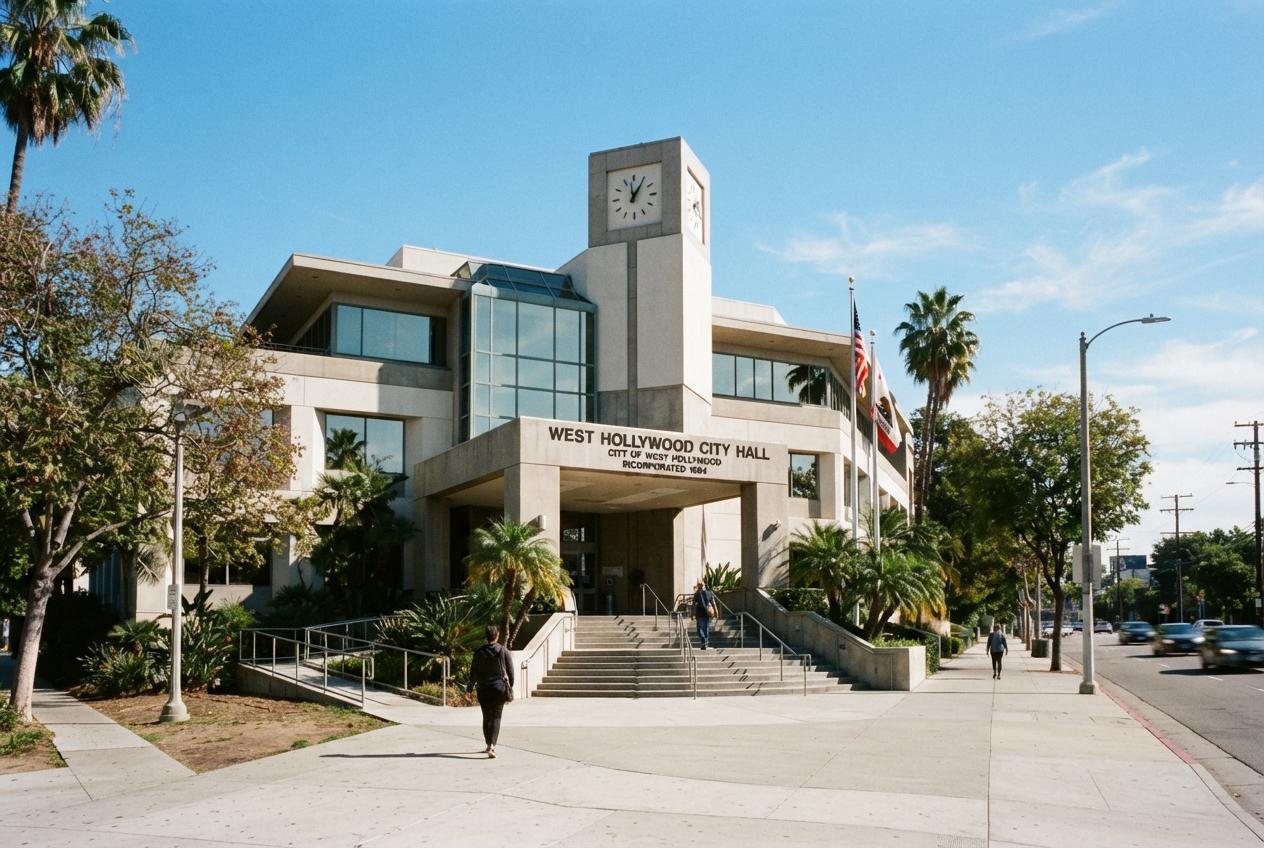
West Hollywood has approved a new way for adults in consensual, multi-partner relationships to register their households, prompting both support and sharp criticism from faith leaders. The unanimous council vote offers limited protections rather than marriage rights, but it could make everyday matters such as housing and hospital visits easier for people in these families.
Essential Takeaways
- Unanimous vote: West Hollywood’s City Council approved the ordinance 5-0.
- Registration is open to groups: Three or more adults can apply, provided everyone consents and none are related by blood.
- Protections are limited: The measure recognises domestic relationships for certain purposes, but doesn’t confer the same rights as marriage.
- The debate is spreading: Berkeley and Oakland have considered similar measures, while other US communities already have related ordinances.
West Hollywood’s new relationship rules are now on the books
A five-to-zero vote has made West Hollywood one of the latest US cities to recognise multi-partner domestic relationships. The ordinance allows three or more consenting adults to register their relationship, giving the change a practical edge beyond its headline-grabbing subject. [2], [4]
It isn’t a route to group marriage. Instead, the city’s measure provides protections in areas including housing and hospital access, while stopping short of the legal status and rights attached to marriage. That distinction matters: recognition can make some everyday situations less uncertain without rewriting family law. [2], [7]
Who can register, and what does it involve?
The rules require every adult in the relationship to agree to registration, and participants can’t be related by blood. The arrangement can include more than three people, and the ordinance allows people who live outside West Hollywood to have their relationship recognised under the city’s rules. [2], [7]
That makes consent central to the process, rather than treating a household as a private arrangement with no formal standing. The city’s approach reflects a broader effort to make local services and protections work for households that don’t fit a two-person template. [3], [7]
The ordinance has supporters - and vocal critics
Councilmember Chelsea Lee Byers, who introduced the measure, argued that people with diverse lifestyles shouldn’t be denied access to protections. Supporters have framed the ordinance as a way for residents to feel recognised and to make practical plans for their families. [2], [3]
Some faith leaders and social-media commenters responded with condemnation, invoking biblical references and criticising polyamory. The heated reaction shows how a local administrative change can quickly become part of a much larger argument about religion, sexuality and public policy. [3], [4]
West Hollywood is part of a wider shift
West Hollywood isn’t acting in isolation. Other US communities have adopted ordinances concerning multi-partner relationships, though the details and level of protection differ, and Berkeley and Oakland have also explored similar approaches. [5], [6]
The wider trend suggests local governments are testing ways to recognise households that may otherwise fall between existing legal categories. But city rules are not a substitute for state or federal law, so the protections people receive can depend heavily on where they live. [6], [7]
What residents should check before relying on registration
Anyone considering registration should read the ordinance itself and check which situations it covers. A city-level recognition may help with particular local matters, but it doesn’t automatically settle questions involving marriage, inheritance, tax, medical decision-making or rules beyond the city’s reach. [2], [7]
It’s also worth checking whether a service provider, landlord or institution has its own procedures for recognising registered partners. The ordinance creates a new option, but understanding its limits is just as important as knowing that it exists. [4], [7]
For households affected, the measure may offer a little more clarity, even as the debate around it continues.
Source Reference Map
Story idea inspired by: [1]
Sources by paragraph: