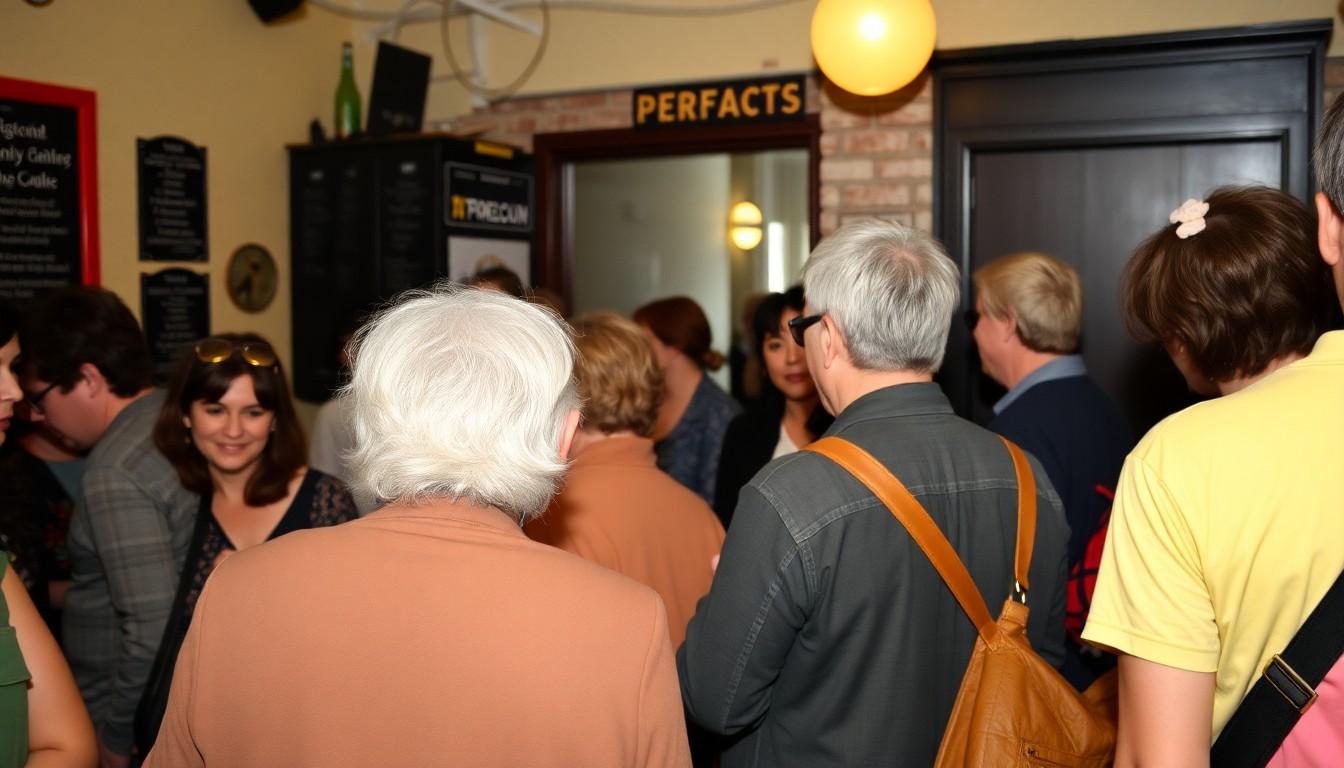
Sydney’s queer community has given activist Barry Charles, better known as Troughman, an extraordinary public tribute. The Order of Perpetual Indulgence canonised him at a Harbour City Bears gathering in Newtown, recognising both his decades of LGBTQ+ rights work and the unapologetic sexual expression that became part of his legend.
A Newtown gathering crowned a familiar face
Barry Charles has been a vivid presence in Sydney queer folklore for decades. The activist, known as Troughman, was canonised by the Sydney Order of Perpetual Indulgence at a Harbour City Bears gathering in Newtown, in recognition of his community work and distinctive place in the city’s LGBTQ+ history. QNews also reported the honour, describing him as a gay community icon. [2]
The title is the Order’s highest recognition, and the ceremony brought together two parts of Charles’s public life: his advocacy and the flamboyant persona that made him famous. It’s a reminder that queer history hasn’t always been neat, polite or easy to fit into a commemorative plaque. [2], [7]
The story behind the Troughman legend
Charles’s nickname grew from his conspicuous exploration of urolagnia at Sydney Mardi Gras after-parties, where he was said to lie in urinals from the late 1970s into the early 2000s. That provocative reputation became inseparable from a broader story about sexual freedom and refusing to treat queer desire as something to hide. [1], [7]
But the legend is only part of the picture. Charles is also recognised as a proud 78er, a former leader of the Gay Rights Lobby and a longtime campaigner for LGBTQ+ rights. The New South Wales Police Force has published a statement from him through its LGBTQIA+ community material, while the State Library of New South Wales holds an archival audio record connected with his story. [1], [4], [5]
Why sexual radicals belong in queer history
The Order’s tribute made a pointed argument: the community’s history should include people who pushed beyond the boundaries of respectability, not just those whose lives were easiest for the mainstream to accept. Charles’s sexual expression, in this telling, wasn’t an amusing footnote to his activism; it was part of his insistence on living openly. [1]
That perspective sits alongside broader accounts of LGBTQ+ history in Australia, including Pride History Australia’s material on the Pink Triangle period. Together, these histories show why remembering the less comfortable chapters matters: progress was shaped by people who challenged shame as well as discrimination. [6]
His work continues beyond the ceremony
Charles has also hosted queer living-history walks in Newtown, helping keep community stories, struggles and victories in circulation. It’s hands-on heritage, with the person telling the story connected to the history itself, rather than leaving the past to gather dust in a display case. [1]
For anyone interested in Sydney’s queer past, these walks offer a useful way to connect names and milestones with the streets where community life unfolded. The State Library’s archival collection and Pride History Australia’s historical resources can add further context for those who want to explore beyond the walk. [5], [6]
A bold tribute with a serious message
The Order’s canonisation celebrates Charles’s warmth, generosity and long record of activism, as well as his willingness to be gloriously unconventional. It’s a playful honour, but its message is serious: queer history belongs to its radicals, too. [1], [2]
And perhaps that’s why the tribute feels so fitting. A community that remembers only its most respectable figures risks losing the people who made freedom feel possible in the first place. [2], [6]
It's a spirited reminder that queer history is at its richest when every chapter is remembered.
Source Reference Map
Story idea inspired by: [1]
Sources by paragraph: