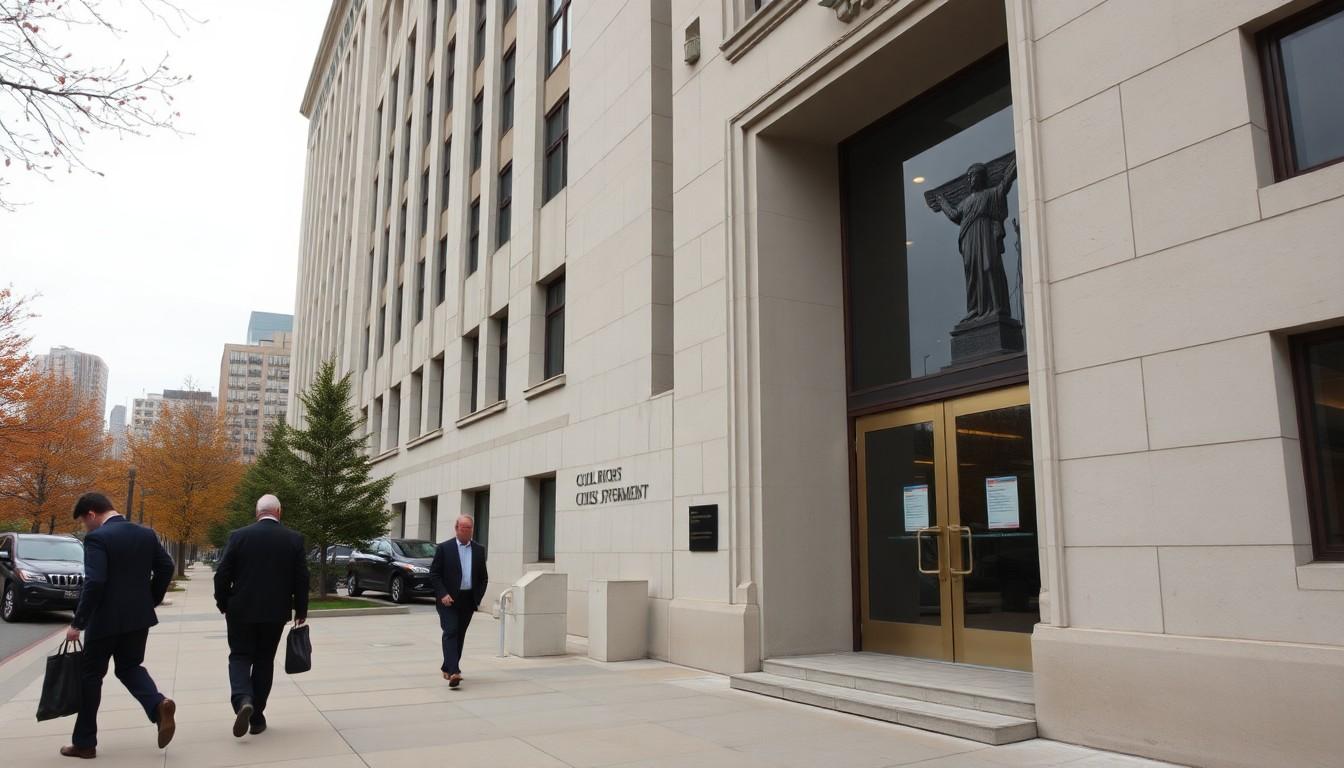
A senior Justice Department official whose tenure reshaped the Civil Rights Division has resigned, drawing sharply different reactions from supporters and LGBTQ+ advocates. Harmeet Dhillon’s departure comes after a turbulent 18 months marked by staff losses and contentious action involving schools and gender identity. What happens next matters for the division’s ability to carry out its civil rights mission.
Dhillon’s exit closes a turbulent chapter
Harmeet Dhillon has resigned as head of the US Justice Department’s Civil Rights Division, following an 18-month tenure that brought major changes to the agency and drew strong criticism from civil rights advocates. Attorney General Todd Blanche announced that he had accepted her resignation. The Associated Press also reported her departure. [2]
Dhillon said on social media that serving as assistant attorney general had been a great honour, and pointed to the administration’s actions on diversity programmes and women’s sport. Her supporters have praised her approach, while critics say it shifted the division away from protecting vulnerable communities. [2]
A division with a broad civil rights remit
The Civil Rights Division was established in 1957 to enforce federal laws protecting people from discrimination and uphold civil and constitutional rights. Its remit spans areas including education, housing, employment and access to public services. [3]
During Dhillon’s tenure, the division underwent a sweeping staffing shake-up. Reporting by Georgia Public Broadcasting described a mass departure of lawyers amid changes to the division’s priorities, raising questions about how staff losses could affect its capacity and institutional expertise. [6]
School disputes brought the conflict into focus
The Justice Department sued Kansas City, Kansas Public Schools over its policies on students’ gender identity and parental notification. The department said the district’s practices breached federal law; the case marked an unusual and contentious use of federal authority in a dispute over transgender students’ privacy and parental rights. [4]
Separately, the department announced investigations into 36 Illinois school districts over classroom material related to sexual orientation and gender identity. Together, the actions placed schools at the centre of a wider national debate over student privacy, parental involvement and how civil rights law applies to LGBTQ+ pupils. [5]
What Dhillon’s resignation may mean
Her departure doesn’t automatically reverse the division’s policy changes or bring back lawyers who have left. Rebuilding staff capacity, reviewing ongoing cases and clarifying enforcement priorities could all shape what comes next. The division’s stated mission remains broad, but its practical reach depends on people and resources as much as formal authority. [3] [6]
Advocacy groups have welcomed Dhillon’s exit while warning that the consequences of her tenure may linger. Meanwhile, scrutiny of the department’s treatment of journalists has also prompted concern from press-freedom organisations. The next leader will inherit a division whose direction is being watched well beyond Washington. [2] [7]
The next appointment will matter
For LGBTQ+ communities, schools and civil rights advocates, the change at the top offers a moment to assess what the division does next, rather than assume a new name means a new direction. Its cases, staffing and enforcement choices will provide the clearest signs of whether its approach is changing. [3] [4] [5]
The real test will be whether the division can rebuild trust while enforcing civil rights law consistently. [2] [3]
Source Reference Map
Story idea inspired by: [1]
Sources by paragraph: