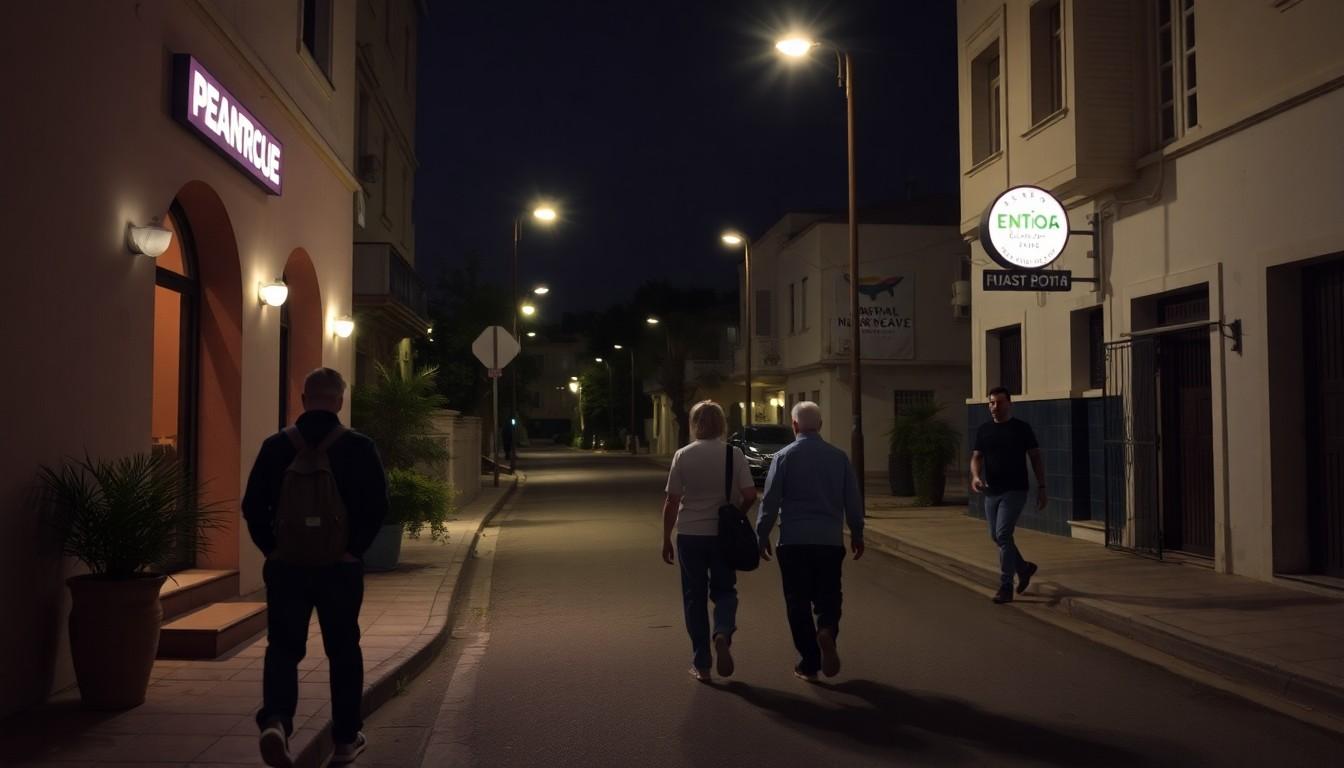
A welcoming club can offer a rare sense of ease, but the journey home may still feel tense. In Cyprus, a discussion at Nicosia venue S//IP explored what safer spaces mean for LGBTQ+ people and others facing harassment, and why care, clear boundaries and practical support matter both inside the venue and on the walk to the car.
Essential takeaways
- Safety takes ongoing work: A venue's rules matter, but no space can promise everyone feels safe all the time.
- Small gestures help: A check-in, a glass of water or walking alongside someone can make a difference.
- Ask before stepping in: Checking what someone wants can prevent well-meant help from becoming intrusive.
- History still matters: The idea of safer spaces is rooted in movements that created room for people facing exclusion.
- The route home counts: A supportive night out shouldn't end at the entrance.
A safer club can't fix an unsafe journey home
The walk from a late-night venue to a car park can take only a few minutes, yet for some people it means keys ready, phone in hand and a quick glance over the shoulder. That contrast was at the heart of a discussion at S//IP in Nicosia: a venue may work hard to welcome people, while the street outside remains uncertain.
The conversation brought together people involved in LGBTQ+ organisations, S//IP's safer-spaces team, cultural groups and academia. The point wasn't to declare any place perfectly safe. It was to ask who feels comfortable there, who has to stay alert, and what support can look like in practice.
That question reaches well beyond queer nightlife. Anyone who's ever texted a friend to say they've arrived home knows how a few minutes on a dark street can feel much longer. [2]
From Stonewall to today's safer spaces
The idea of a safer gathering place has a history. On 28 June 1969, police raided the Stonewall Inn in New York, prompting resistance that became a landmark in the modern LGBTQ+ rights movement. For people pushed to the margins, bars, community rooms and other gathering places could offer space to meet and speak more freely. [2]
The story is also visible in queer ballroom culture, where Black and Latino LGBTQ+ people built chosen families and communities. The documentary Paris Is Burning brought that world to a wider audience, while also showing how community and self-expression can thrive in the face of exclusion. [4]
In Cyprus, progress has had its own long timeline. The European Court of Human Rights ruled against Cyprus in the 1993 Modinos v. Cyprus case over the criminalisation of consensual same-sex relations; homosexuality was decriminalised in 1998. The country's first Pride march was held in Nicosia in 2014, a reminder that rights and public visibility can change, but rarely overnight. [3]
What safer nightlife can look like in practice
At S//IP, the approach starts before anyone reaches the dancefloor. Guests see the venue's conduct rules, and staff at the entrance explain that racist, sexist and homophobic behaviour isn't welcome. Inside, a team member wearing a "vibe control" badge helps keep an eye on how the night is unfolding.
Support doesn't always need to be dramatic. Offering water to someone who's had too much, asking if they're all right, or checking whether they want help can make a room feel more considerate. Crucially, asking first matters: what looks troubling from across a busy club may not be what it seems up close.
A venue also needs to be clear about boundaries. Staff can explain why someone is being asked to leave, but a person who feels unsafe shouldn't have to justify their identity or prove that they deserve respect. [5]
Why the word "safer" matters
No single set of rules can guarantee that everyone will feel secure. That's why some people prefer "safer space": the word leaves room for improvement, rather than suggesting the work is finished. It also points to a wider tension: a welcoming club is valuable, but it can't become a substitute for inclusion in public life.
Making events accessible matters, too. The discussion raised the role of cost, including the possibility of free tickets for people who can't afford entry. A space may be welcoming in principle, yet remain out of reach if the price of getting in shuts people out.
There isn't a choice between changing everyday culture and pushing institutions to act. Both matter. Cyprus's legal history shows that official change can take years, while community spaces can offer support in the meantime. [3], [5]
Take the care outside, too
For one trans participant at the S//IP discussion, the walk through Nicosia's old town after a night out could feel frightening without a friend alongside them. It was a plain, powerful reminder that safety doesn't stop when the music does.
So ask who is heading in the same direction. Wait while a friend gets into their car or reaches home, and check in rather than assuming they want help. If you're organising an event, clear rules and a visible support team can make it easier for guests to raise concerns.
A club can't make every street safe. But it can help build habits of care that travel beyond the door. [5]
A safer night out starts with the room, but it shouldn't end at the exit.
Source Reference Map
Story idea inspired by: [1]
Sources by paragraph: