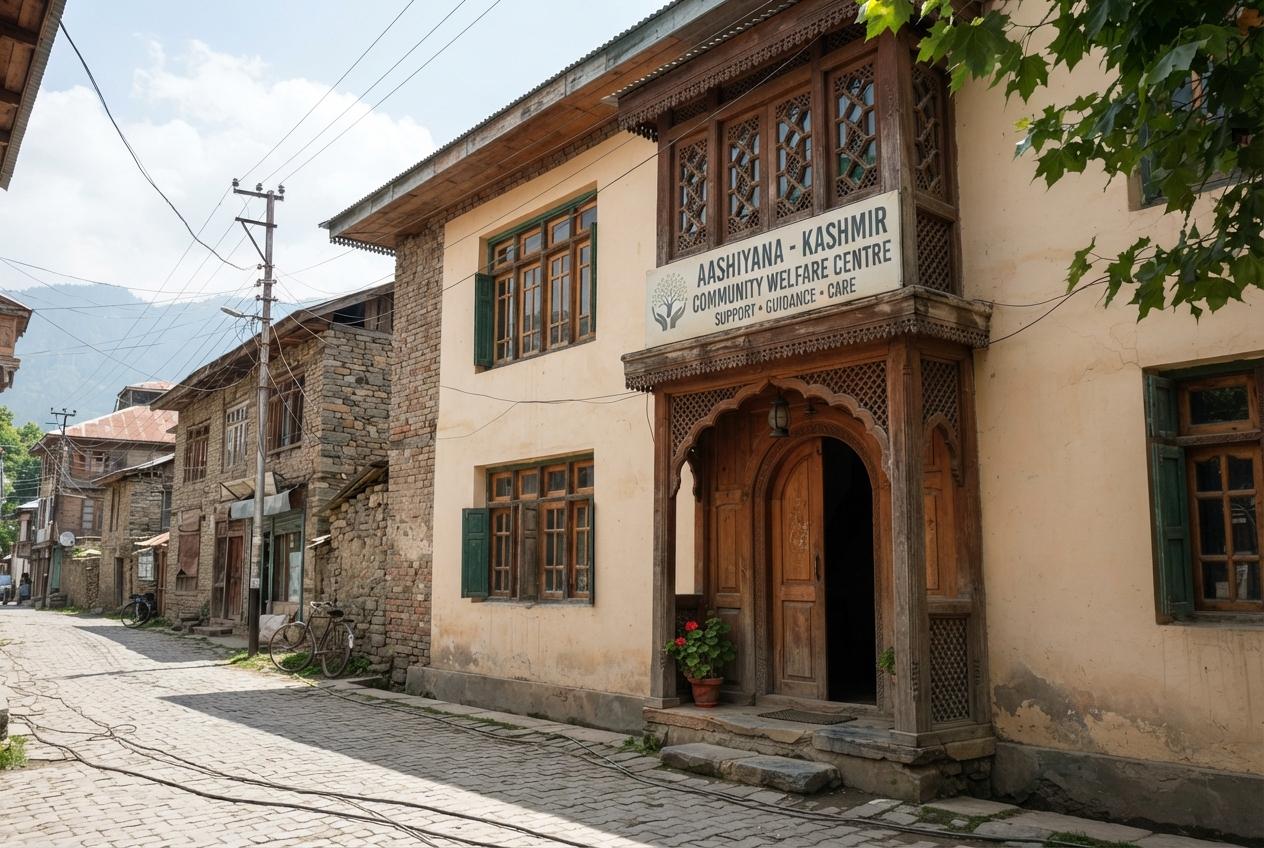
Queer Kashmiris are building support networks in one of India's most conservative and heavily monitored regions, where speaking openly can carry real risks. A new study and community work are bringing their experiences into view, while showing why discreet safe spaces, mental-health support and careful advocacy matter so much.
Essential Takeaways
- Quiet visibility is growing: Community organisers are making LGBTQIA+ experiences harder to dismiss, even as public exposure can attract abuse.
- Discrimination remains widespread: Families, schools, religious settings and police interactions can all present serious challenges.
- Trans people face sharp inequality: Low educational attainment, unemployment and limited access to welfare continue to shape daily life.
- Digital spaces offer refuge: Anonymous testimonies and private support networks help people connect without immediately revealing who they are.
- Coming out isn't risk-free: Activists stress that personal safety must come before visibility, especially where surveillance and social conservatism overlap.
A hidden community is stepping into view
The most striking detail isn't simply that LGBTQIA+ people live in Kashmir. It's that many have had to prove their existence while remaining exceptionally careful about being seen.
According to The Hindu, a report by Sonzal Welfare Trust, supported by the Marivala Health Initiative, drew on interviews with 60 people, including 44 members of the LGBTQIA+ community. Its findings capture a region where identity, family honour, religious conservatism and political tension can collide in intensely personal ways.
For queer Kashmiris, visibility isn't an uncomplicated victory. A public post, an unguarded conversation or a hostile person with access to private information can turn into a safety concern. That makes every small act of openness feel significant.
The study records pressure at home and school
The research describes family responses ranging from silence and monitoring to emotional coercion and violence. India Today reported that participants also spoke about rejection and pressure to conform, though some families are gradually moving towards concern and conversation rather than immediate disowning.
Schools and colleges can be difficult territory too. Participants described verbal abuse, isolation and intimidation, while teachers were sometimes said to ignore the behaviour or reinforce conventional ideas about gender and sexuality. For a young person already weighing whether to confide in anyone, that kind of atmosphere can make education feel less like an escape and more like another risk.
Religious spaces were also identified as a source of exclusion. The Kashmir Reader reported that queer and transgender people can face barriers in accessing mosques and other community settings, adding another layer to the question of where someone can feel safe.
Militarisation adds another layer of fear
In Kashmir, the wider environment matters. Surveillance and frequent anxiety around authority can make interactions with police particularly frightening for people whose identities are already stigmatised.
Kashmir Observer reported allegations from participants involving harassment, extortion, detention, violence and forced outing. Whether the encounter begins with a complaint, an identity check or an attempt to seek help, the fear of being exposed can discourage people from approaching authorities at all.
That isn't just a legal problem. It affects health, housing, employment and mental wellbeing, because people may avoid services that others take for granted. The result is a damaging double bind: staying hidden can be lonely and unsafe, while being visible can invite fresh danger.
Trans Kashmiris face steep barriers to work and education
Transgender people interviewed in the region described exclusion from school, employment and public life. The Greater Kashmir report highlighted research from the University of Kashmir suggesting that around 70% of transgender people surveyed were illiterate or had limited qualifications, while roughly 75% were unemployed.
Those figures point to more than prejudice in individual encounters. They suggest a cycle in which bullying disrupts education, poor access to qualifications narrows employment options, and economic insecurity makes it harder to leave hostile homes or seek specialist support.
One of the clearest themes is the desire for ordinary dignity. Trans people aren't asking to be treated as symbols or curiosities; they're asking for work, education, safety and the freedom to make decisions about their own lives. That sounds basic, but the evidence shows how far it remains from reality for many.
Safe spaces are growing, carefully
Sonzal Welfare Trust has become an important point of connection by offering mental-health support, community assistance and a place for anonymous voices. Its social-media presence has had to evolve cautiously, because greater reach can also bring hate, threats and attempts to expose people.
According to Kashmir Reader, the organisation's decision to become more visible online followed a wave of interest after an activist publicly challenged the claim that LGBTQIA+ people don't exist in Kashmir. The response showed that many people were looking not only for information, but for reassurance that they weren't alone.
That balance between openness and protection remains crucial. A private message, a masked testimony or a carefully moderated online group may not look dramatic from the outside, but it can be a lifeline to someone who has nowhere else to speak. As this work continues, the most meaningful progress may be measured not by how loudly a community is seen, but by how safely its members can live.
Visibility matters, but safety matters first.
Source Reference Map
Story idea inspired by: [1]
Sources by paragraph:
- Paragraph 1: [3], [4]
- Paragraph 2: [5], [6]
- Paragraph 3: [7], [4]
- Paragraph 4: [3], [5]
- Paragraph 5: [6], [7]
- Paragraph 6: [4], [6]
- Paragraph 7: [5], [7]
- Paragraph 8: [3], [4]
- Paragraph 9: [6], [7]
- Paragraph 10: [5], [6]
- Paragraph 11: [3], [7]
- Paragraph 12: [4], [5]
- Paragraph 13: [6], [7]
- Paragraph 14: [3], [5]
- Paragraph 15: [4], [6]
- Paragraph 16: [5], [7]
- Paragraph 17: [3], [4]