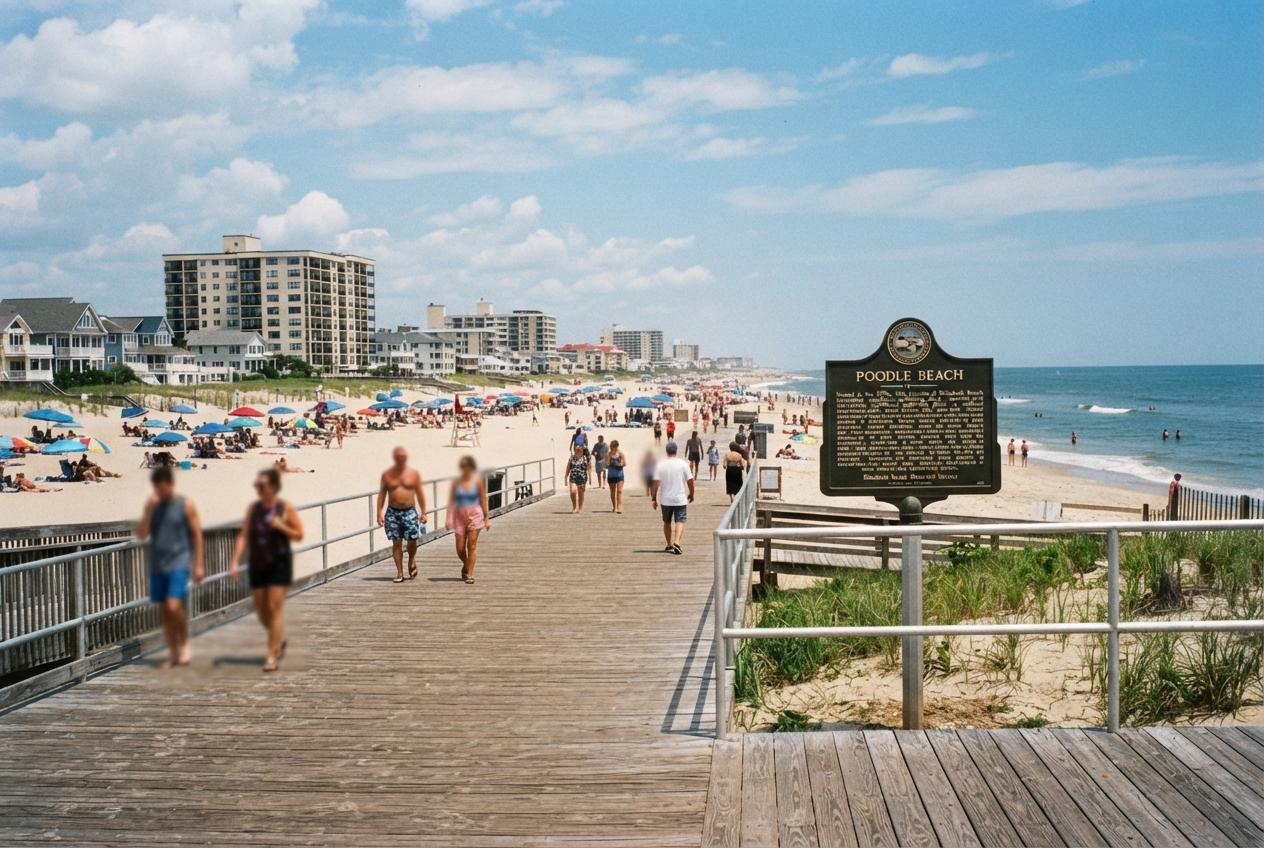
Visitors and residents gathered on Rehoboth Beach’s boardwalk in Delaware to celebrate a new historical marker for Poodle Beach, a long-standing LGBTQ gathering place. The dedication recognises the shoreline’s role in building community, visibility and belonging, while highlighting why this welcoming corner of the resort remains so meaningful to generations of beachgoers.
Essential Takeaways
- A public recognition: Delaware has dedicated a historical marker to Poodle Beach’s LGBTQ cultural significance.
- A cherished location: The beach sits at the southern end of Rehoboth’s boardwalk, away from the busiest central stretch.
- A lively tradition: Drag volleyball matches drew crowds for around three decades.
- A lasting community: Poodle Beach remains a popular destination for LGBTQ visitors and residents.
- A notable first: The marker is the only Delaware historical marker positioned directly on a boardwalk.
Poodle Beach’s history is finally on the boardwalk
Under a clear blue sky, a crowd gathered at 11am for the unveiling of the new Poodle Beach historical marker. The setting was fitting: directly on the Rehoboth Beach boardwalk, with the sand, sea air and steady rhythm of a resort town providing the backdrop.
The marker acknowledges something visitors have understood for decades. Poodle Beach became a place where LGBTQ people could meet, relax and enjoy themselves with fewer of the curious looks and social restrictions found elsewhere. Delaware Public Media and other outlets reported that the site has played an important role in Rehoboth Beach’s social history.
That public recognition matters because LGBTQ history is often preserved through memories, photographs and local traditions rather than grand buildings. A small sign beside the ocean can make those stories visible to everyone passing by.
Why this stretch of sand became so important
Poodle Beach lies at the southern end of the boardwalk, a little removed from the town’s busiest centre. That distance helped it become a comfortable meeting point for LGBTQ visitors, particularly during periods when openly claiming space could feel risky.
For many beachgoers, it offered more than a pleasant place to swim or sunbathe. It became a social hub, a familiar landmark and a kind of informal welcome mat for people arriving in Rehoboth. Coverage from the Washington Blade and CBS News highlighted the beach’s enduring reputation as a gathering place.
The atmosphere was not always quiet. Drag volleyball matches became one of the area’s best-known traditions, drawing spectators and participants for roughly 30 years. It’s easy to picture the scene: bright costumes, competitive serves and plenty of laughter beside the water.
Rehoboth’s LGBTQ identity has shaped the town
At the dedication, Rehoboth Mayor Susan Stewart said the city’s character had been built over generations by people who came, stayed and made it home. Her remarks connected Poodle Beach with the wider development of Rehoboth as a place where LGBTQ residents are not merely tolerated, but visibly part of civic life.
Stewart is the city’s first openly gay mayor, another sign of how much the community has changed. State Representative Claire Snyder-Hall also said Rehoboth had moved beyond simple acceptance, with LGBTQ people helping drive the town’s appeal to visitors and new residents.
That shift is worth noting. Beach towns often trade on ideas of escape and freedom, but those promises feel more convincing when local communities can see themselves reflected in public life. Here, the beach is both a holiday destination and a piece of living history.
What the new marker means for visitors
The marker is the only Delaware historical marker located directly on a boardwalk, according to reports from Delaware Public Media and the New York Times. Its position should make it difficult to miss, whether visitors are heading towards the beach, strolling after dinner or simply taking in the view.
For first-time visitors, it offers useful context for a place that might otherwise look like any other stretch of sand. It also provides a respectful reminder that the atmosphere people enjoy today was created through years of regular visits, friendships, activism and local commitment.
If you’re visiting Rehoboth Beach, the best approach is simple: take a moment to read the marker, enjoy the shoreline and remember that this remains a community space, not just a photo opportunity. The sea may be the headline, but the people and stories give the place its character.
A small sign with a lasting message
The unveiling brought together elected officials, former leaders, archivists and the person who applied for the marker, Frank Cooper. Their presence reflected a broad effort to preserve Poodle Beach’s story rather than leave it to fade into local folklore.
There’s something quietly powerful about commemorating LGBTQ history in such an open, everyday setting. The marker isn’t tucked away in a museum; it stands where generations of visitors gathered, played, flirted, celebrated and found a sense of belonging.
As Rehoboth continues to attract LGBTQ residents and travellers from across the United States, Poodle Beach is likely to remain both a destination and a point of connection. Its new marker simply gives that long-running story a permanent place in the landscape.
Poodle Beach is a reminder that belonging can be built, one summer and one shared tradition at a time.
Source Reference Map
Story idea inspired by: [1]
Sources by paragraph: