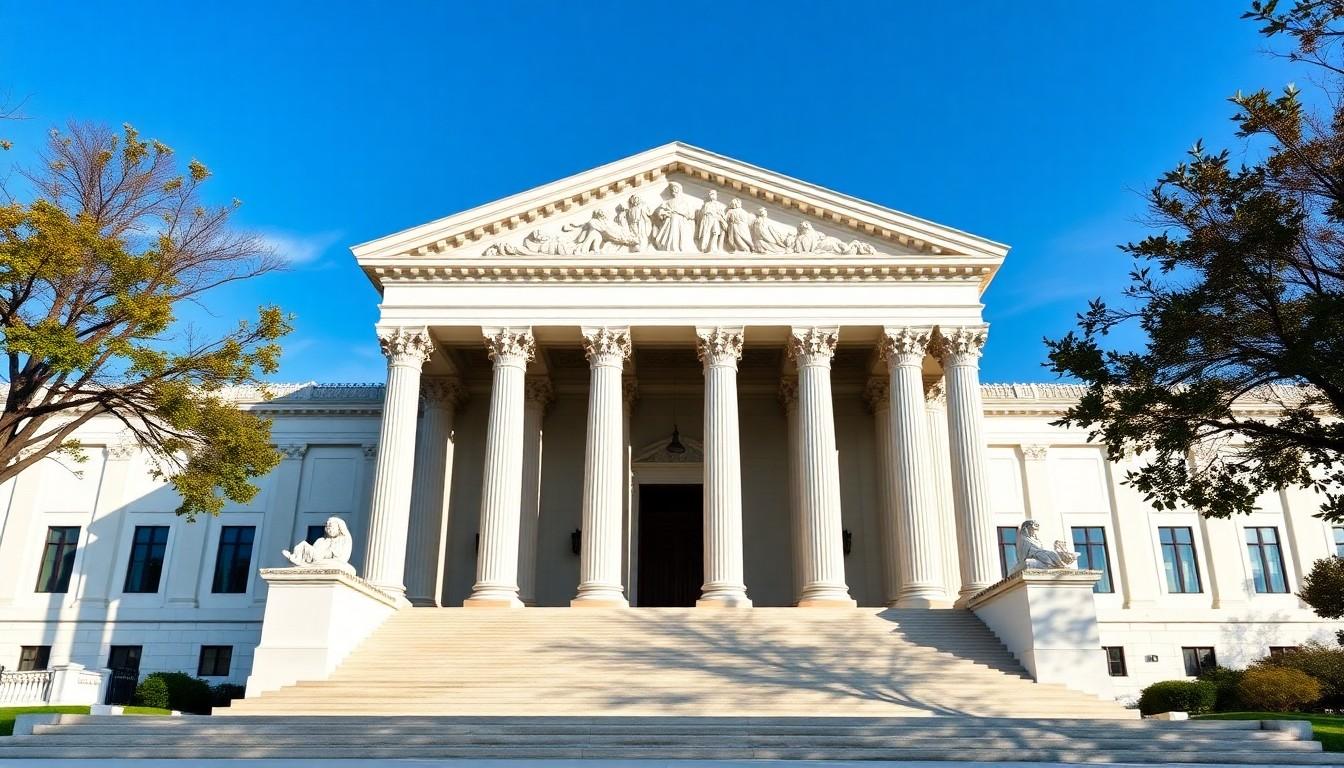
The US Supreme Court's next term is shaping up to be a significant one for LGBTQ rights, with disputes over religious schools, prison healthcare and transgender participation in school sport. Here's what each case could mean, and why the legal arguments reach far beyond the courtroom.
Three disputes, one unusually high-stakes term
The court's LGBTQ-related docket spans education, healthcare and religious freedom, making it relevant to families, schools and people in custody alike. At the centre is St. Mary Catholic Parish v. Roy, a Colorado dispute over whether a faith-based preschool can receive public funding while refusing equal access to children from same-sex families. Court records and case summaries confirm that the justices are due to hear the appeal in November. [2], [4]
Meanwhile, two applications on the court's emergency docket could affect transgender prisoners and school athletes before the justices issue any final ruling. That makes the term feel less like a single headline case and more like a running legal argument about how far states and public institutions may go. [7]
Colorado preschool case puts religious freedom under the microscope
St. Mary Catholic Parish participates in Colorado's publicly funded universal preschool scheme, but it objects to the programme's equal-access rules. The policy bars participating providers from discriminating on grounds including race, religion, sexual orientation, gender identity, income and disability. The parish says applying that requirement to it would clash with its religious teaching on marriage. [5], [6]
Colorado, by contrast, argues that the rule applies across the programme and doesn't single out religious schools. The state's position is that public money shouldn't support a preschool that excludes eligible children, even where the provider frames the exclusion as a matter of faith. The 10th US Circuit Court of Appeals agreed with Colorado, leaving the Supreme Court to weigh the competing principles. [5]
Why an old free-exercise precedent matters
The parish is asking the justices to apply strict scrutiny, the toughest form of constitutional review, partly because Colorado allows some targeted admissions preferences. Its lawyers say those exceptions make the state's policy less neutral than officials claim. The dispute also invokes Carson v. Makin, a decision that restricted the exclusion of religious schools from a public tuition programme. [2], [4]
The case could therefore become a test of where the court draws the line between equal-treatment rules and religious exemptions. It also arrives as several justices have shown interest in revisiting Employment Division v. Smith, the 1991 decision that generally allows neutral laws of general application to burden religious practice. Even if that broader precedent isn't formally on the question presented, the arguments may still expose its fault lines. [3], [4]
Prison healthcare ruling offers a temporary reprieve
On the emergency docket, the justices declined to pause a lower court order protecting gender-affirming care for transgender federal prisoners while litigation continues. The challenge followed a Bureau of Prisons policy change that threatened hormone treatment and certain arrangements concerning dress, grooming and housing. [7]
That decision doesn't settle the case, but it preserves the existing position for now. Lower courts have repeatedly treated gender dysphoria as a potentially serious medical condition, particularly where prisoners depend entirely on the state for healthcare. Stopping established treatment abruptly could have severe physical and emotional consequences, which is why the injunction matters in practical terms. [7]
School sport case could reshape Title IX arguments
A separate emergency application concerns Washington's policy allowing transgender girls to compete in school sport in line with their gender identity. The case was brought by a mother and her daughter after the daughter lost a wrestling bout to a transgender competitor. They argue that the policy is unfair and conflicts with Title IX, the federal law prohibiting sex discrimination in education. [1], [7]
The lower courts declined to block the policy while the appeal proceeds. The applicants have asked the Supreme Court to intervene and potentially take up the wider question, arguing that similar disputes are appearing across the country. For schools and families, the uncertainty is awkwardly immediate: a decision about an injunction can affect the next fixture long before a definitive ruling arrives. [7]
What happens next for LGBTQ rights?
The St. Mary case is scheduled for oral argument on November 3, although a final opinion may take time, particularly if the justices split sharply. The prison-care dispute remains focused on whether the lower court's protection should stay in place, while the Washington athletics application could be referred to the full court for action. [2], [4]
Taken together, these cases show how LGBTQ rights are increasingly being tested through different legal routes. Some questions concern direct discrimination, others involve religious objections or access to medical care, but the practical stakes are remarkably personal. For parents, pupils, prisoners and schools, a procedural order from the court can change daily life before the legal dust has settled. [5], [6]
It's a term worth watching closely, because the biggest consequences may arrive in small interim orders as well as landmark judgments.
Source Reference Map
Story idea inspired by: [1]
Sources by paragraph: