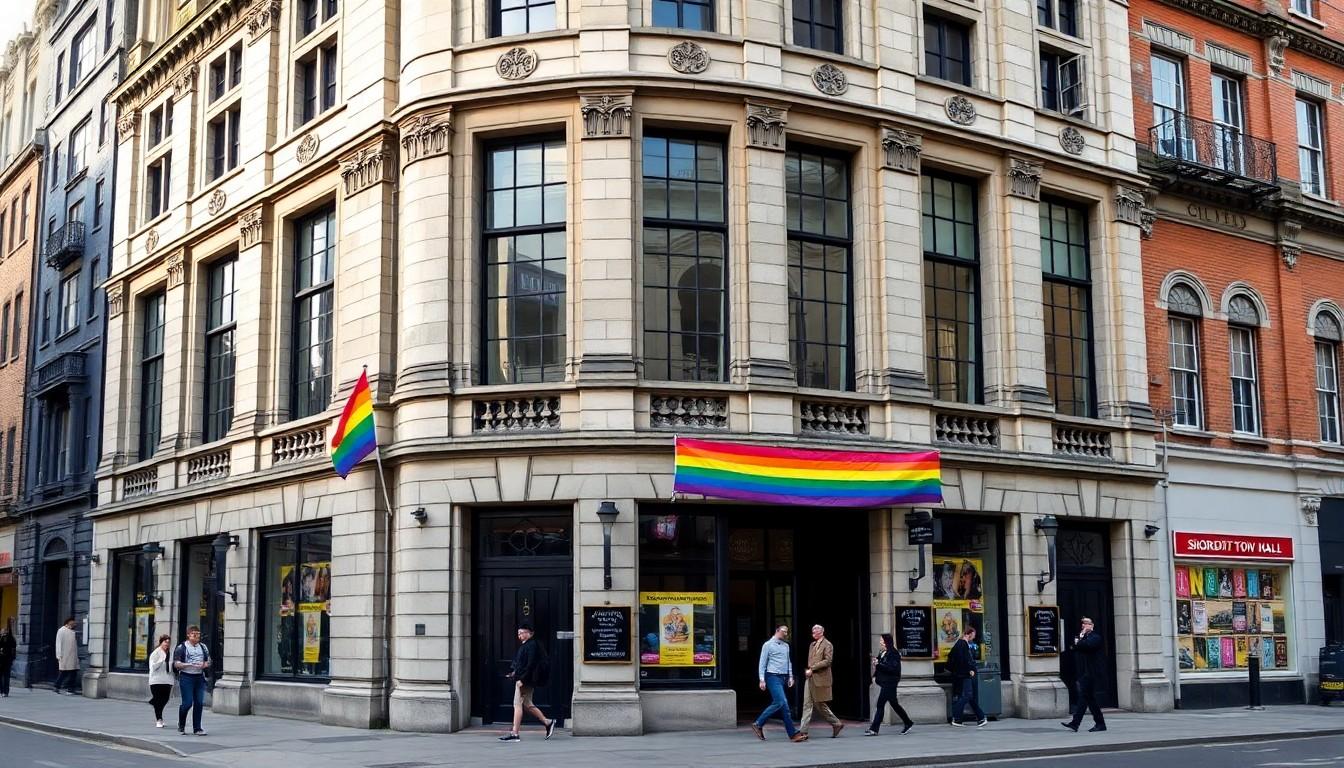
Visitors are being invited into Shoreditch Town Hall’s lively 160th-anniversary programme, where queer performers, experimental artists and community events are giving a historic East London venue fresh energy. The celebration connects the building’s unconventional past with its present role as a welcoming cultural space for LGBTQIA+ audiences and artists.
Essential Takeaways
- A landmark birthday: Shoreditch Town Hall is marking 160 years since its completion.
- Queer-led celebration: The 16 Acts programme brings LGBTQIA+ performers into the spotlight.
- A long performance history: The building once hosted Music Hall entertainment ranging from drag to clog dancing.
- Support beyond one night: Its programme includes development opportunities for emerging queer artists.
- More community events ahead: Queer Family Story Time is planned as a monthly event for young children and their families.
A grand old building with a restless spirit
Shoreditch Town Hall has always been more than an impressive facade. Completed in 1866, the East London building was created as a civic gathering place, and its history has included inventive public services as well as performance and entertainment. The venue’s old motto, “More Light, More Power”, feels particularly apt for its current cultural life. According to the town hall’s history materials, its past is closely tied to Shoreditch’s tradition of innovation. [2]
That sense of experimentation is still easy to imagine inside the building. There’s the scale and ceremony of a Victorian civic hall, but also the buzz of a modern arts venue, where a drag act, a cabaret performance or an unconventional live show can feel perfectly at home. It’s an appealing contrast: grand surroundings, spirited programming and audiences ready to be surprised. [4]
Why 16 Acts puts queer performance centre stage
The 160th-anniversary event, 16 Acts, brings together a broad selection of artists, including The Cocoa Butter Club’s NTC., Travis Alabanza and Pecs Drag Kings’ Sigi Moonlight. The programme’s variety reflects the building’s earlier Music Hall identity, when audiences could encounter an eclectic mix of acts under one roof. The event details describe a celebration shaped by performance, community and creative risk. [3]
Ellie Browning, who programmes and produces live performance at Shoreditch Town Hall, says the connection feels natural rather than symbolic. In a conversation with DIVA, she links the event’s queer line-up to the venue’s historic role as a place where different forms of entertainment could meet. That gives 16 Acts a pleasing sense of continuity, rather than making it feel like a one-off birthday gesture. [5]
From club stages to bigger rooms
Shoreditch Town Hall’s support for LGBTQIA+ artists extends beyond anniversary programming. Its Summer In The Ditch series, now in its third year, offers a platform for emerging and experimental performers, while the wider venue has helped artists develop work beyond the club circuit. For performers ready to move from short sets into fuller productions, that kind of support can be a meaningful step. [6]
The shift matters because queer performance often grows through informal spaces first: clubs, cabaret nights and community events. A venue with the resources and visibility of a historic town hall can help artists keep the intimacy of those beginnings while reaching a larger audience. As industry coverage of 16 Acts suggests, the programme is as much about creative opportunity as it is about celebration. [4]
A queer welcome for families, too
The venue’s community ambitions aren’t limited to late-night shows. Queer Family Story Time is due to launch in February 2027 as part of Hackney’s PRIDE365 programme, with monthly Sunday sessions for children aged two to six. Stories, music and games will focus on queer families and offer a relaxed way for younger audiences to see their lives reflected in a cultural setting. [5]
That may sound like a small addition beside a major anniversary performance, but it says a lot about the venue’s direction. A rainbow flag on the door is a visible welcome, while regular family programming makes that welcome practical. The result is a building that feels less like somewhere people simply visit for an event and more like somewhere they can return to. [6]
What comes next for Shoreditch Town Hall?
Browning’s hope is that the building remains a community-owned-in-spirit cultural space, with local people having a greater say in its future. That idea gives the anniversary a useful sense of perspective. Celebrating 160 years is impressive, but the more interesting question is how a historic venue keeps changing without losing its purpose. [2]
For now, Shoreditch Town Hall appears to be answering that question through openness: ambitious performance, emerging artists, family events and a clearly queer identity. There’s something reassuring about seeing an old civic building remain relevant by making room for more people, not fewer. [3]
It's a small but powerful reminder that historic spaces stay alive by welcoming new voices.
Source Reference Map
Story idea inspired by: [1]
Sources by paragraph: