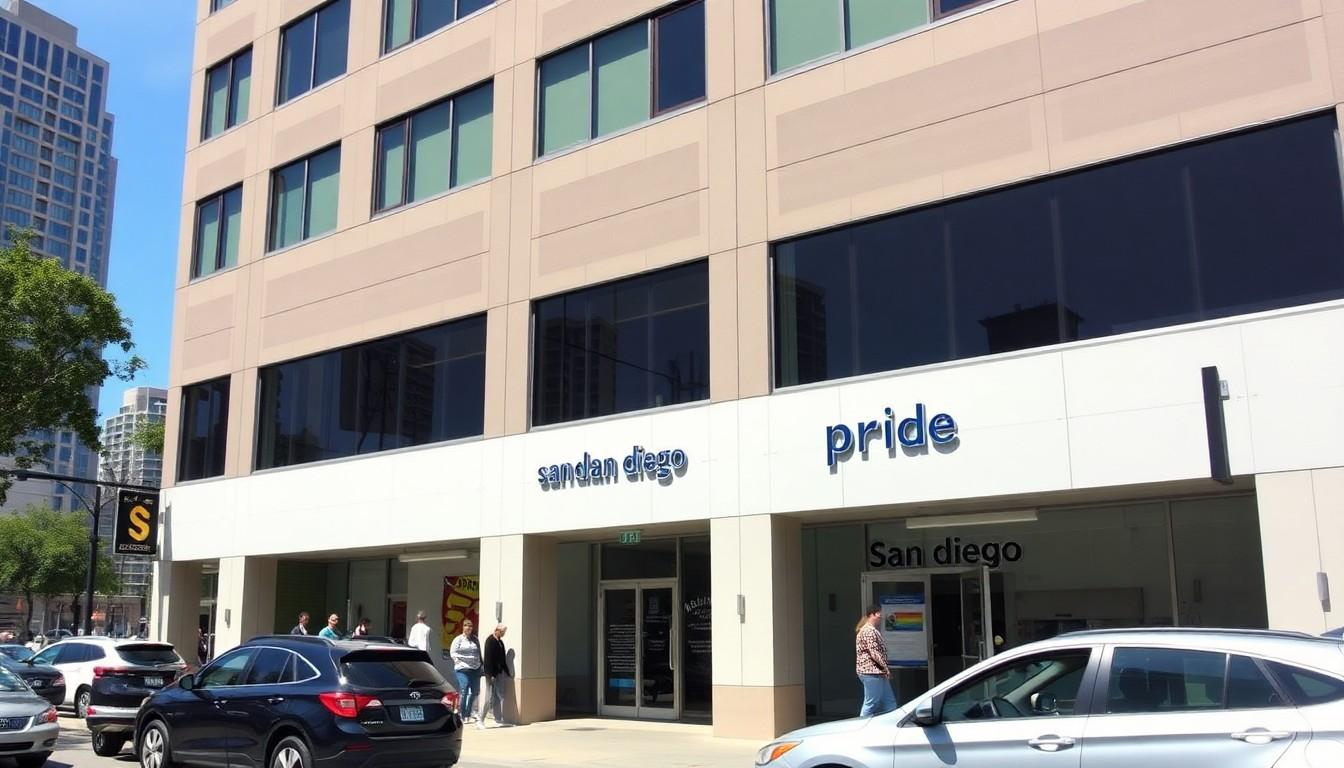
San Diego Pride is preparing for a significant reset after executive director KishaLynn Elliott announced her resignation amid a six-figure shortfall. The organisation says rising security costs, weaker sponsorships and uncertain grant funding have forced difficult choices, leaving its parade, staff and future leadership model under review.
Essential Takeaways
- Leadership change: Elliott is due to leave in November, while the board considers a new structure.
- Six-figure deficit: She linked the shortfall to falling sponsorships, higher security spending and less reliable grants.
- Staff cuts expected: Significant reductions could affect employees, events and year-round programmes.
- The parade will continue: San Diego Pride says its long-running parade is expected to return in 2027, although it may look different.
- Community input matters: A listening session was scheduled as supporters sought clarity about the organisation's next chapter.
San Diego Pride is confronting a painful financial reality
The warning signs are stark: San Diego Pride is facing a six-figure deficit, and its executive director is stepping down as the organisation attempts to stabilise its finances. Elliott described the situation as serious while speaking to local television, pointing to a combination of reduced income and rising costs.
The pressure isn't simply about putting on one busy weekend. Pride supports a broader calendar of programmes, grants and community activity, all of which require staff, planning and dependable funding. According to ABC 10News, the organisation said its financial challenges had made difficult decisions about structure and operations unavoidable.
The numbers offer some context. San Diego Pride reported roughly $5.36 million in income and $5.33 million in spending for 2024, according to figures highlighted through ProPublica's Nonprofit Explorer. A near-balanced year can still leave a charity exposed when sponsorships, grants or event costs shift suddenly.
Why sponsorships, grants and security costs are colliding
Elliott identified several pressures behind the deficit, including fewer corporate sponsors, higher security expenses and less predictable support from government and philanthropic sources. That mix is especially difficult for a high-profile public event, where safety planning can become more complex even as income weakens.
The organisation has also been operating against a turbulent backdrop. Times of San Diego reported that staffing had already fallen sharply and that grants distributed to other LGBTQ+ organisations had declined in 2025. For a community group, that can create a frustrating double bind: demand for services rises just as the money available to meet it becomes harder to forecast.
Security is another unavoidable cost. Threats against LGBTQ+ people and events have made protection a central part of Pride planning, rather than a background operational detail. It may not be the most visible part of the parade, but it can be among the most expensive.
Elliott's departure follows a period of leadership upheaval
Elliott took the top job after a difficult stretch for San Diego Pride, following a succession of executive and interim leaders. She had previously served as chief operating officer of the Monarch School Project and described the appointment as a deeply meaningful opportunity.
Her tenure was also significant historically. KPBS reported that she was the first Black lesbian to lead San Diego Pride in its 50-year history, giving her appointment particular importance within the organisation and the wider San Diego LGBTQ+ community.
But the role came with heavy baggage. A letter from current and former staff, board members and volunteers alleged systemic dysfunction, while reporting from Axios San Diego said the organisation had seen its full-time workforce fall from more than 30 people to fewer than 10. Elliott's decision to take on the job was therefore less a smooth handover than an attempt to steady a moving ship.
What will happen to the parade and programmes?
The immediate concern for many supporters is whether the parade and festival can continue at anything like their familiar scale. Elliott said the parade is expected to go ahead in 2027, but warned that it could look substantially different as the organisation searches for a sustainable model.
That might mean changes to staffing, programming, fundraising or the wider event operation. According to 10News, the review is expected to cover the festival, parade and year-round activity, with significant staff cuts likely in November.
San Diego Pride has launched a fundraising appeal and is also asking for volunteers. For supporters, that creates a practical way to help, although donations and volunteer time can't instantly replace the expertise lost when an organisation shrinks. The next version of Pride may need to be leaner, more collaborative and more dependent on community participation.
The board now has to rebuild trust as well as balance the books
The board is working on a new leadership structure and has sought community feedback through a listening session. That step matters because the crisis is about more than accounting. People want to know who is making decisions, how the organisation will protect its mission and whether its future remains connected to the communities it represents.
The San Diego LGBT Community Center called Elliott's exit a loss and directed questions about Pride's future to its board. It also noted that many organisations are facing financial strain, changing philanthropy and unstable government funding, according to CBS 8.
There is no quick fix here. Still, a transparent reset could give San Diego Pride room to rebuild, especially if the board communicates clearly about finances, staffing and priorities. The parade's history may be long, but its next chapter will depend on choices made now.
A leaner Pride can still be a meaningful one, provided the community can see where it is going.
Source Reference Map
Story idea inspired by: [1]
Sources by paragraph:
- Paragraph 1: [5], [6]
- Paragraph 2: [2], [5]
- Paragraph 3: [3], [5]
- Paragraph 4: [2], [7]
- Paragraph 5: [5], [6]
- Paragraph 6: [3], [7]
- Paragraph 7: [4], [5]
- Paragraph 8: [2], [7]
- Paragraph 9: [5], [6]
- Paragraph 10: [4], [7]
- Paragraph 11: [2], [5]
- Paragraph 12: [3], [5]
- Paragraph 13: [4], [6]
- Paragraph 14: [5], [7]
- Paragraph 15: [2], [4]
- Paragraph 16: [5], [6]