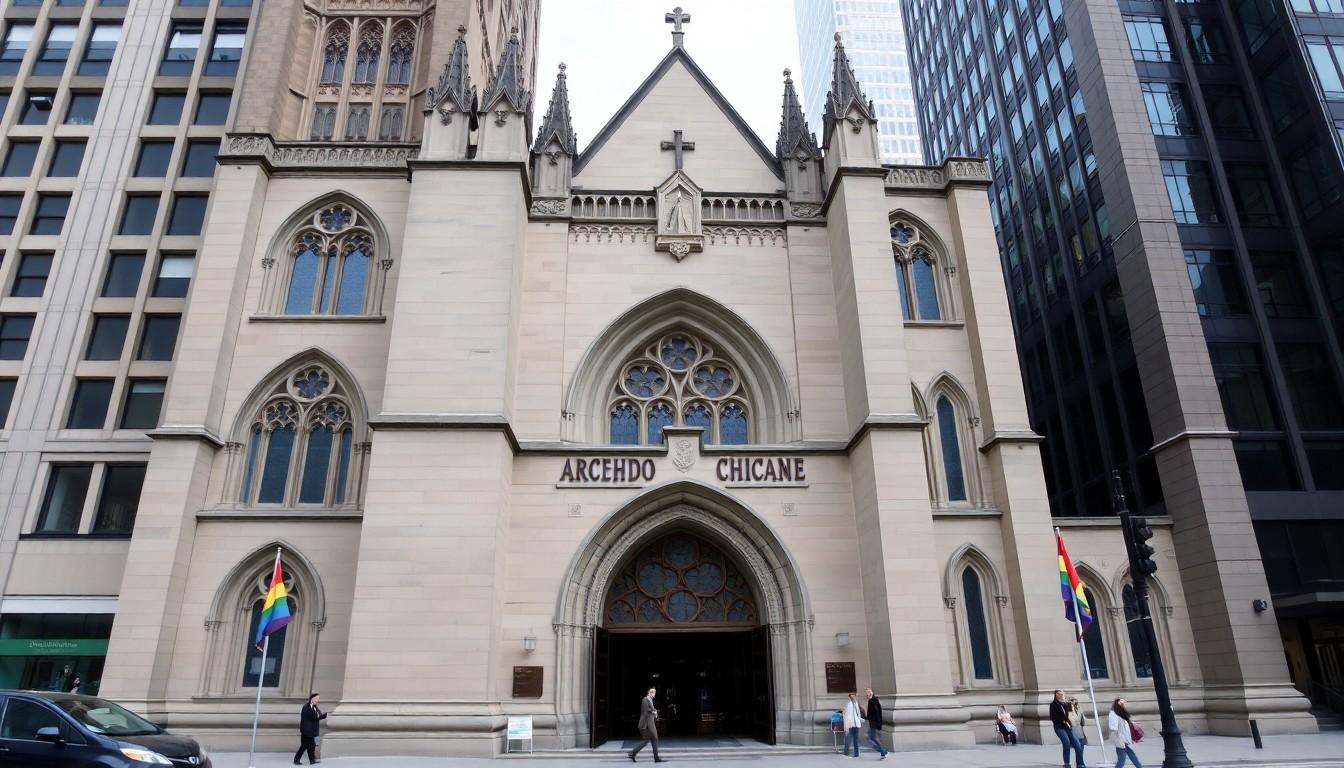
A Chicago archdiocese award to Kathie Nash, a leader of the One in Love ministry, has reignited debate over how pastoral welcome, Catholic teaching and LGBTQ outreach should fit together. The recognition highlights listening and accompaniment, while critics say the public messaging leaves out the Church's teaching on chastity.
Essential Takeaways
- Award recognised service: Cardinal Blase Cupich presented Kathie Nash with a Christifideles Laici award for her work with LGBTQ Catholics and their families.
- Ministry focuses on welcome: One in Love promotes pastoral accompaniment, listening circles and what it calls a sanctuary of radical hospitality.
- A disputed omission: Critics argue the ministry's public descriptions don't clearly mention the Church's teaching on chastity or sexual ethics.
- Different models exist: Courage International presents a more explicitly traditional approach, combining fellowship with a call to chastity.
- The argument is longstanding: Cardinal Cupich's approach to LGBTQ pastoral care has prompted criticism and clarification in Catholic media.
An award puts pastoral language under the spotlight
The award ceremony was warmly framed, with praise for Nash's gentle leadership and her efforts to create a welcoming space for LGBTQ Catholics, relatives and friends. The message was one of belonging, dignity and patient accompaniment, themes that have become increasingly prominent in Catholic discussions about pastoral care.
According to LifeSiteNews, Nash was described as an AGLOChicago partner ministry leader. The Archdiocese of Chicago's Christifideles Laici awards recognise lay Catholics for notable service to the Church, making the honour a significant public endorsement of her work rather than a routine community mention.
That distinction matters because awards don't just celebrate individuals. They also signal which forms of ministry a diocese wants to encourage, and how it understands the balance between welcome and doctrine.
What does One in Love actually do?
AGLOChicago describes itself as the Archdiocese of Chicago's official ministry to LGBTQ Catholics. Its public language centres on helping people experience Catholic life without feeling forced to set aside their identity, while One in Love is presented as a space for conversation, support and spiritual companionship.
The ministry's emphasis on listening circles reflects a wider shift in Church life towards dialogue-based pastoral work. For many families, that softer approach can feel more human and less intimidating than a debate conducted through formal statements. A quiet room and a patient listener can sometimes achieve what a stern leaflet cannot.
Yet the wording has also prompted criticism. LifeSiteNews reported that neither the award announcement nor the public descriptions of One in Love clearly referred to the Church's call for people experiencing same-sex attraction to live chastely. Critics see that silence as more than a communications choice, arguing that pastoral care should include the full shape of Catholic teaching.
Chicago's LGBTQ outreach has a complicated history
AGLOChicago was founded in 1988 and has long occupied a visible place in the archdiocese's pastoral landscape. Its activities have included support for LGBTQ Catholics and participation in public events, including Pride-related initiatives, which has placed the ministry at the centre of arguments about Catholic identity and public witness.
The controversy is also tied to Cardinal Cupich's broader record. Catholic News Agency has covered his previous statements and pastoral approach on LGBTQ issues, including his emphasis on listening, dialogue and the pastoral needs of people who often feel excluded from Church life.
Supporters of that approach see it as an attempt to keep people connected to the sacraments and the wider Catholic community. Opponents worry that the language of inclusion can become detached from the obligation to challenge every Catholic, whatever their circumstances, to live according to Church teaching.
Two competing ideas of accompaniment
The disagreement becomes clearer when One in Love is compared with Courage International. Courage also offers fellowship, prayer and support, but its stated mission explicitly includes helping Catholics with same-sex attraction live in accordance with Catholic teaching on chastity.
Catholic News Agency has reported on the different strands of debate surrounding Cardinal Cupich's pastoral letters and public comments. The recurring issue is not whether people should be treated with dignity. Catholic teaching insists on that point. The argument is about whether dignity is best expressed through unconditional affirmation, or through welcome joined to a direct call for moral conversion.
That distinction can sound abstract, but it affects real parish life. It shapes what ministers say in meetings, what resources are offered, how relationships are discussed and whether people leave feeling both accepted and challenged. For someone looking for help, clarity can be as important as kindness.
Why the debate will continue
The Chicago award is unlikely to settle the argument. If anything, it shows how sharply Catholic communities are divided over the meaning of pastoral accompaniment, particularly when public language focuses on dignity but says little about sexual ethics.
There is a genuine pastoral need here. LGBTQ Catholics and their families may encounter loneliness, confusion or hostility, and a parish should not respond with contempt. At the same time, critics argue that compassion loses its Catholic character if it avoids difficult teachings altogether.
The practical question for dioceses is therefore straightforward, even if the answer isn't: can a ministry offer a warm welcome while explaining clearly what the Church believes? Many Catholics will be watching to see whether future statements move beyond listening alone and articulate both sides of that promise.
A welcoming ministry is strongest when its kindness and convictions are equally clear.
Source Reference Map
Story idea inspired by: [1]
Sources by paragraph:
- Paragraph 1: [2], [3]
- Paragraph 2: [2], [4]
- Paragraph 3: [3], [5]
- Paragraph 4: [2], [3]
- Paragraph 5: [3], [4]
- Paragraph 6: [2], [5]
- Paragraph 7: [3], [5]
- Paragraph 8: [2], [6]
- Paragraph 9: [5], [7]
- Paragraph 10: [2], [3]
- Paragraph 11: [5], [6]
- Paragraph 12: [3], [4]
- Paragraph 13: [2], [5]
- Paragraph 14: [3], [7]
- Paragraph 15: [5], [6]
- Paragraph 16: [2], [3]