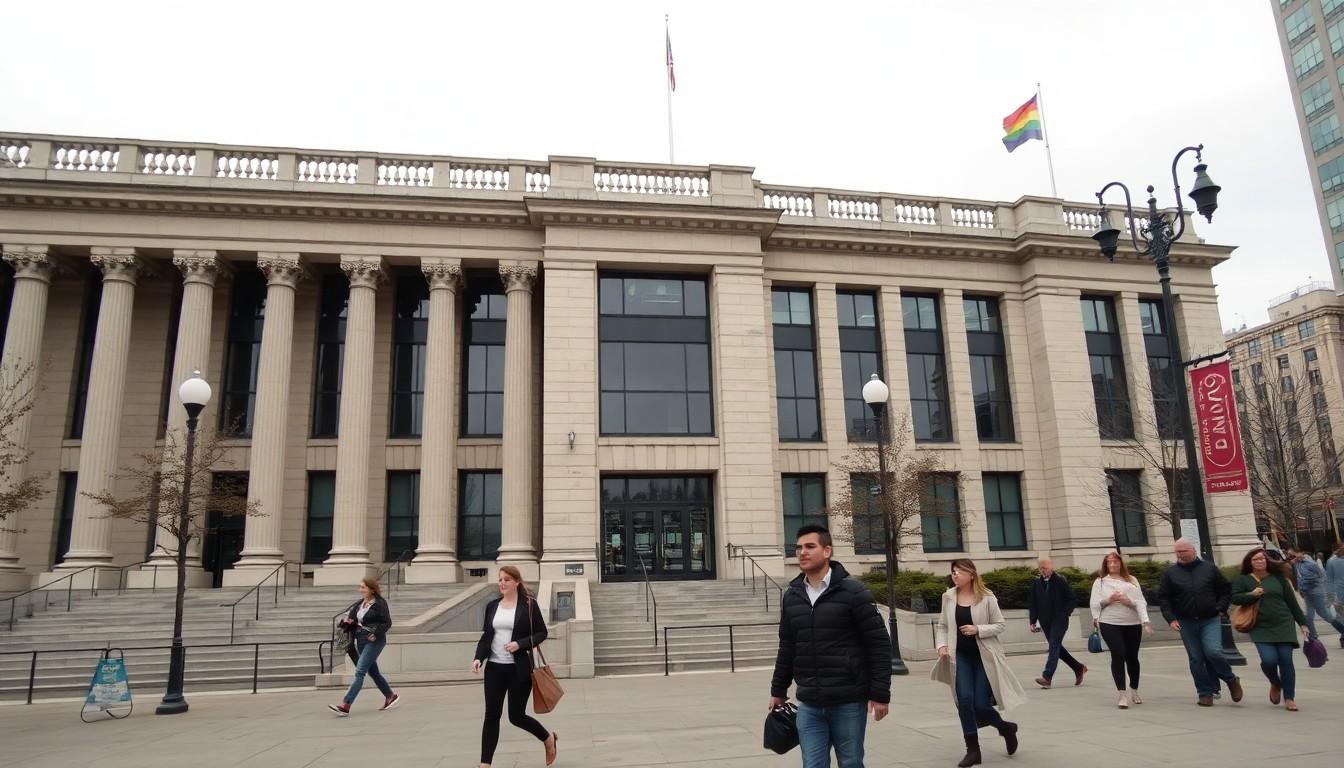
LGBTQ+ campaigners in Birmingham are challenging a proposed High Court injunction over unauthorised flags and posters, warning that a city-wide ban could catch peaceful Pride displays alongside alleged intimidation. The dispute matters because it puts public safety, civic expression and the limits of council powers on the same legal tightrope.
Essential Takeaways
- The proposed order: Birmingham City Council wants to restrict unauthorised flags, posters and other attachments on public infrastructure.
- Why campaigners object: Five gay men and allies say the wording could criminalise peaceful LGBTQ+ expression.
- The council's concern: Officials are targeting alleged obstruction, nuisance and intimidating conduct linked to a flagging campaign.
- The next step: The High Court hearing is expected to resume in November.
- The central question: Can authorities curb disruptive behaviour without sweeping up legitimate protest and identity displays?
A flag dispute that has become much bigger
What began as a fight over flags on Birmingham's streets has now become a test of where public-order powers should stop. Five men who identify as gay or LGBTQ+ allies have stepped forward because they fear a broad injunction could treat a rainbow flag in the same way as a display linked to alleged harassment or obstruction.
That concern has an unmistakably personal edge. For people who remember when homosexuality was criminalised, public visibility isn't decorative window dressing. A Pride flag on a bridge may be temporary and unofficial, but it can still carry the quiet force of a statement: we are here.
Legal reporting by LocalGov and Birmingham Standard indicates that the council's application is aimed principally at the Raise the Colours movement, which has placed Union flags and St George's Cross flags around the city without permission. The wider wording, however, could apply to people who aren't connected to that campaign at all.
Why the council wants a High Court order
Birmingham City Council says the issue isn't about suppressing a message. Its case centres on unauthorised attachments to highways and public property, alongside allegations of obstruction, nuisance and intimidating behaviour by some campaign participants.
That distinction is important. Councils have ordinary powers to remove items, enforce highway rules and respond to public-safety problems. But the council is seeking an injunction that would also cover unidentified future individuals, a legal category commonly described as "persons unknown". Local Government Lawyer reported that the application includes flags and other attachments placed on highway infrastructure.
For officials, a court order may appear to offer a clearer and faster route than repeatedly removing flags or pursuing separate enforcement action. For critics, it risks turning a targeted response into a city-wide net. Nobody wants a bridge blocked or pedestrians put at risk, but a rule written too broadly can create its own trouble.
LGBTQ+ activists say the wording goes too far
The five objectors say they don't support the alleged conduct at the heart of the council's case. Their argument is narrower and more practical: a content-neutral ban could still catch peaceful Pride displays, gay-rights posters and other forms of civic expression.
They have told the court that they may display LGBTQ+ flags at public events or as expressions of identity and civil rights. Birmingham Mail reported that they fear the proposed order could attach severe consequences, including the possibility of imprisonment or financial penalties, to conduct that is peaceful but unauthorised.
That is why their challenge matters beyond this particular dispute. A council may be right to tackle intimidation, yet still need to show that its remedy is proportionate. LocalGov's coverage highlights the tension between protecting public highways and avoiding an order that indiscriminately affects different kinds of protest.
The difficult line between protest and obstruction
Public infrastructure is not a blank canvas. Lamp posts, bridges and railings belong to the working city, and attachments can create maintenance, visibility or safety problems. Even a well-meaning display can become hazardous if it falls into a road or obstructs a sign.
The challenge is separating the physical act from the message. A rainbow flag, a campaign poster and a political banner may all be attached in the same place, but they can have very different public effects. The council's proposed approach appears designed to avoid judging content, while campaigners argue that the same broad rule could silence minority expression in practice.
For residents, the sensible question is not simply whether a flag is popular. It's whether the display causes a real obstruction, creates a safety risk or remains after a reasonable request to remove it. Local authority law coverage suggests that the court will have to weigh those practical concerns against the exceptional reach of the requested order.
What happens when the hearing resumes?
The five men have been allowed to put their case as people who could be affected by the proposed order, despite not being connected to the named flagging group. The hearing has been paused and is due to continue in November, when the court will consider the competing arguments in more detail.
The outcome could shape how Birmingham handles unauthorised street displays, but it may also attract attention from other councils facing disputes over flags, banners and protest infrastructure. A narrowly drawn order could focus on obstruction and intimidation. A sweeping one could prompt fresh arguments about free expression and equality.
There is a human point beneath all the legal language. For someone who once felt forced to hide who they were, a rainbow flag isn't just another piece of material attached to a lamp post. The court's task is to protect a safe, usable city without making visibility feel risky again.
It's a small-looking street dispute with unusually large questions behind it.
Source Reference Map
Story idea inspired by: [1]
Sources by paragraph:
- Paragraph 1: [2], [4]
- Paragraph 2: [3], [5]
- Paragraph 3: [4], [6]
- Paragraph 4: [5], [7]
- Paragraph 5: [2], [4]
- Paragraph 6: [3], [5]
- Paragraph 7: [4], [6]
- Paragraph 8: [5], [7]
- Paragraph 9: [2], [4]
- Paragraph 10: [3], [6]
- Paragraph 11: [5], [7]
- Paragraph 12: [2], [4]
- Paragraph 13: [3], [5]
- Paragraph 14: [4], [6]
- Paragraph 15: [5], [7]
- Paragraph 16: [2], [4]