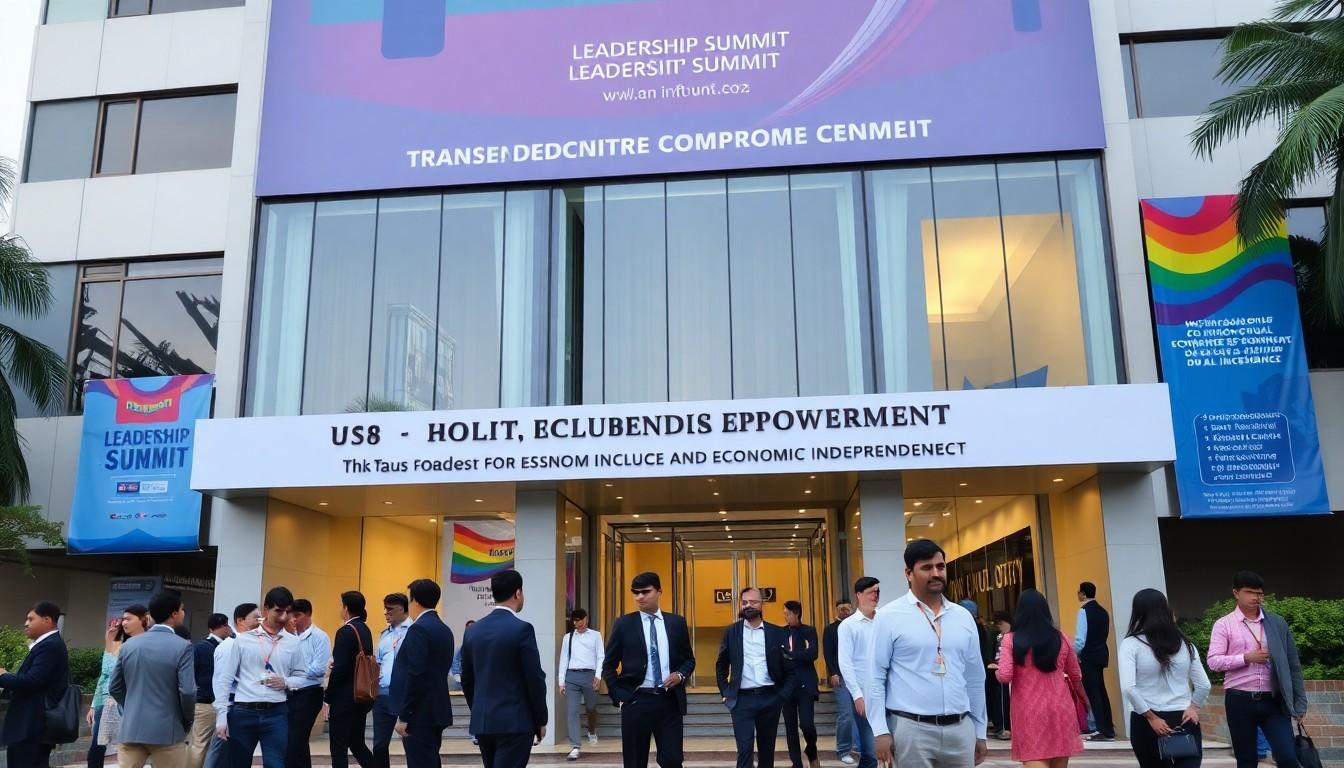
Community leaders, businesses and allies gathered in Mumbai for a two-day Trans Leadership Summit focused on transgender inclusion, economic empowerment and dignity. The event recognised organisations supporting careers, skills and enterprise, while spotlighting a broader shift from symbolic visibility towards practical opportunities and lasting partnerships.
Essential Takeaways
- Economic access took centre stage: The summit highlighted jobs, enterprise and financial independence alongside representation.
- Businesses were recognised: Tata Steel, Deutsche Bank, Adobe and PhillipCapital received honours for inclusion initiatives.
- Skills can change prospects: Training, mentoring and livelihood programmes were presented as practical routes to independence.
- Community leadership remained central: Activists, performers and advocates were celebrated for their work across public life.
- Inclusion needs continuity: Speakers stressed that meaningful progress requires partnerships that last beyond one event.
Mumbai summit puts economic empowerment first
The strongest message from Mumbai's Trans Leadership Summit was refreshingly practical: visibility matters, but independence matters too. Over two days, community leaders, corporate representatives, artists, advocates and allies discussed how transgender people can gain fairer access to work, enterprise and decision-making.
The summit formed part of the fifth Pride in Power edition and concluded with the National Transgender Persons Awards. Held at a suburban hotel and inaugurated by Union Minister of State for Social Justice and Empowerment Ramdas Athawale, it brought together voices from politics, business, culture and the judiciary.
That mix is significant. A panel can celebrate identity, but a workplace, bank or training programme can change someone's daily life. The Pride Business Network Foundation's work sits firmly in that more practical space, according to its impact and initiatives material.
Corporate recognition signals a wider workplace shift
Tata Steel, Deutsche Bank, Adobe and PhillipCapital were among the organisations recognised for widening economic access and developing career pathways for transgender people. The awards acknowledged efforts that go beyond a colourful logo during Pride season, focusing instead on employment, enterprise and participation.
The Villoo Poonawalla Foundation received the Saarthi Samman for work linked to essential skills, sustainable livelihoods and community development. Durex's The Birds and Bees Talk initiative was also honoured for encouraging conversations around safety, dignity and identity.
These initiatives reflect a wider change in how inclusion is discussed. The question is no longer simply whether transgender people are visible, but whether they can enter, remain and progress within institutions on fair terms. That is the difference between an awareness campaign and a useful opportunity.
From recognition to real routes into work
Training and mentorship were recurring themes, with The Trans Cafe cited as an example of how targeted support can help people develop financial independence. Such programmes can offer more than technical skills. They may also build confidence, networks and the everyday familiarity that makes professional spaces feel less closed off.
Pride Business Network Foundation's published initiatives place emphasis on community development, partnerships and opportunities designed to produce longer-term impact. Meanwhile, Mumbai's queer community organisations continue to create spaces for connection, advocacy and collective action, as their public programmes show.
For employers, the practical lesson is straightforward. Recruitment should be matched with accessible policies, respectful management, safe reporting channels and clear progression routes. Hiring someone is a start, not the finish line.
Community leaders ask for freedom, not favours
Dr Laxmi Narayan Tripathi said inclusion should be understood as freedom, while Zainab Patel argued that the focus must move beyond visibility towards economic independence. Their comments gave the summit a firm sense of purpose: celebration should lead somewhere.
Harish Iyer described equality as a fundamental right rather than a favour and called on allies to help create a barrier-free world. That language matters because it places responsibility on institutions and supporters, rather than asking transgender people to repeatedly prove their worth.
The awards also recognised cultural and activist contributions. Actor Kiran Kumar, performer Rani Kohenur, activists Harish Iyer and Ranjita Nayak, and Chandni Haji were among those honoured across the event's different categories. It was a reminder that community leadership isn't confined to one profession or one kind of public service.
Why sustained partnerships matter
The summit's most useful idea may be its emphasis on collaboration. Long-term progress depends on businesses, foundations, community groups and policymakers sharing responsibility, rather than passing the issue from one organisation to another.
Mumbai's queer cultural and community calendar already shows how advocacy can be combined with public events, creative work and safe social spaces. That ecosystem helps keep conversations visible between major summits, which is where real momentum is either built or lost.
For readers and employers wondering what meaningful allyship looks like, the answer is less dramatic than it sounds: listen to community-led organisations, fund practical programmes, review workplace barriers and measure outcomes. Small, consistent improvements can feel more valuable than a grand statement that disappears after the applause.
Inclusive workplaces become stronger when opportunity lasts beyond the headline.
Source Reference Map
Story idea inspired by: [1]
Sources by paragraph:
- Paragraph 1: [2], [3]
- Paragraph 2: [2], [4]
- Paragraph 3: [3], [4]
- Paragraph 4: [2], [5]
- Paragraph 5: [2], [4]
- Paragraph 6: [3], [4]
- Paragraph 7: [4], [5]
- Paragraph 8: [2], [5]
- Paragraph 9: [2], [4]
- Paragraph 10: [3], [4]
- Paragraph 11: [2], [5]
- Paragraph 12: [2], [6]
- Paragraph 13: [3], [4]
- Paragraph 14: [5], [6]
- Paragraph 15: [2], [3]
- Paragraph 16: [4], [5]
- Paragraph 17: [3], [4]
- Paragraph 18: [5], [6]
- Paragraph 19: [2], [3]
- Paragraph 20: [4], [5]
- Paragraph 21: [3], [4]
- Paragraph 22: [5], [6]
- Paragraph 23: [3], [4]