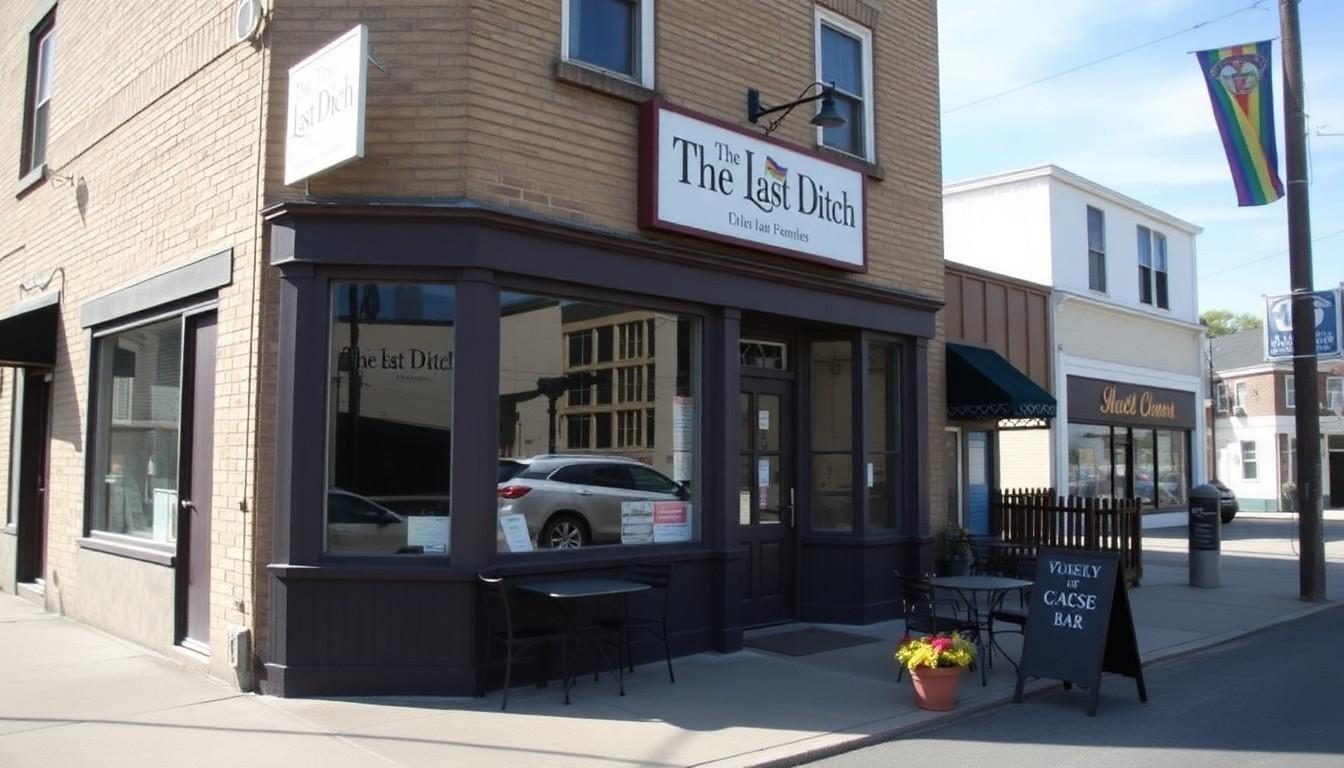
Readers are watching a Massachusetts bar’s final chapter unfold after The Last Ditch, a highly specialised LGBTQ+ venue in Greenfield, announced plans to close while seeking new leadership. Its story has travelled far beyond western Massachusetts, raising uncomfortable questions about community spaces, financial reality and who ultimately keeps a struggling business alive.
Essential Takeaways
- The Last Ditch is closing: The Greenfield venue has announced a soft closure while exploring new ownership or leadership.
- It served a narrow audience: The bar positioned itself around LGBTQ+ customers, including people seeking strong health precautions.
- Community support wasn't enough: Reports describe a venue facing financial strain despite significant emotional commitment from its organisers.
- The story became a media sensation: Coverage drew unusually high attention and reportedly delivered a major readership boost for The Boston Globe.
- The wider lesson is practical: A mission-led venue still needs paying customers, realistic pricing and sustainable staffing.
A tiny bar became a national story
The Last Ditch was never an ordinary neighbourhood pub. It was created as a welcoming space for LGBTQ+ customers, with particularly careful arrangements for immunocompromised guests. Masks and high-grade filtration were central to its identity, making the venue feel less like a conventional bar and more like a protected social room.
That unusual model helped turn a local closure into a much bigger conversation. Boston.com, The Guardian and other outlets reported that the Greenfield venue was preparing to shut while calling for fresh leadership. Suddenly, a small bar in western Massachusetts was being discussed across the country.
There was something almost cinematic about the contrast. The setting was intimate, the customer base was highly specific and the problems were painfully familiar: rising pressure, limited income and a business struggling to reconcile its purpose with its costs.
The mission was clear, but the numbers were harder
According to reporting from The Boston Globe, the venue combined its bar operation with community-minded features, including free goods and harm-reduction supplies. Drinks could be offered on a flexible payment basis, while people facing hardship were welcomed without the same expectation of spending as ordinary customers.
Those choices may have made the venue feel generous and humane, but they also created a formidable commercial challenge. Rent, wages, stock, utilities and licensing bills don't disappear because a business has a compelling social mission. In hospitality, goodwill is valuable, but it doesn't settle the till.
The reported strain became personal, too. Boston.com and Western Mass News described a venue seeking new leadership after its founders and staff encountered serious pressure. For small operators, that can mean unpaid labour, outside jobs and a level of emotional responsibility that would exhaust even a well-funded team.
The masking dispute exposed a deeper divide
The immediate flashpoint was a proposal to relax the venue's masking rules on one night each week. To many customers, that appeared to be a modest attempt to widen attendance and bring in more revenue. To others, it represented a serious retreat from the principles that made The Last Ditch feel safe.
The dispute became especially heated during a community meeting, according to coverage from The Boston Globe and The Guardian. What might have been a straightforward discussion about opening hours and income instead became a clash over disability, public health, responsibility and privilege.
That matters because community businesses often depend on their customers feeling ownership. But shared ownership can become complicated when customers expect influence without being able, or willing, to provide the money needed to keep the doors open. A venue can be deeply valued and still not have enough regular trade to survive.
Why the coverage attracted so much attention
The Boston Globe's feature struck a nerve because it captured a broader tension between idealism and practicality. Readers weren't simply being asked to choose between one bar policy and another. They were watching a group attempt to build a commercial space around values that were difficult to fund.
Mediaite reported that the story became one of the newspaper's most-read pieces and generated a substantial wave of new subscriptions. That is an extraordinary outcome for a local hospitality story, and it underlines how quickly a niche dispute can become a national spectacle when it touches on familiar cultural arguments.
Still, the attention cuts both ways. Publicity can bring donations, customers and potential new operators, but it can also flatten a complicated situation into an easy punchline. The people involved may have made questionable commercial decisions, yet they were also trying to create something their community clearly wanted in principle.
What struggling community venues can learn
The clearest lesson is that a specialist business needs a specialist financial plan. Before launching, operators should work out how many paying customers they need each week, which services can be free and where the business will draw a firm line. A sliding-scale model can work, but only when enough customers pay above the minimum to cover those who can't.
Size and speed matter as well. A venue serving immunocompromised guests may need better ventilation, stricter cleaning and more careful capacity planning than a conventional bar. Those costs should be visible in the pricing, rather than quietly absorbed by already-stretched owners and staff.
The Last Ditch's future remains uncertain, but the search for new leadership offers one final possibility. A better-funded team might preserve the venue's social purpose while introducing clearer prices, reliable fundraising and more realistic operating rules. As Western Mass News reported, finding that balance could decide whether the concept disappears or gets a second life.
A community can love a place fiercely. The harder question is whether it can support that place consistently, not just defend it during a crisis.
A meaningful mission still needs a sustainable business behind it.
Source Reference Map
Story idea inspired by: [1]
Sources by paragraph:
- Paragraph 1: [2], [3]
- Paragraph 2: [4], [5]
- Paragraph 3: [7], [3]
- Paragraph 4: [2], [5]
- Paragraph 5: [4], [6]
- Paragraph 6: [7], [3]
- Paragraph 7: [2], [4]
- Paragraph 8: [7], [3]
- Paragraph 9: [2], [5]
- Paragraph 10: [4], [6]
- Paragraph 11: [2], [5]
- Paragraph 12: [3], [7]
- Paragraph 13: [4], [5]
- Paragraph 14: [2], [6]
- Paragraph 15: [5], [7]