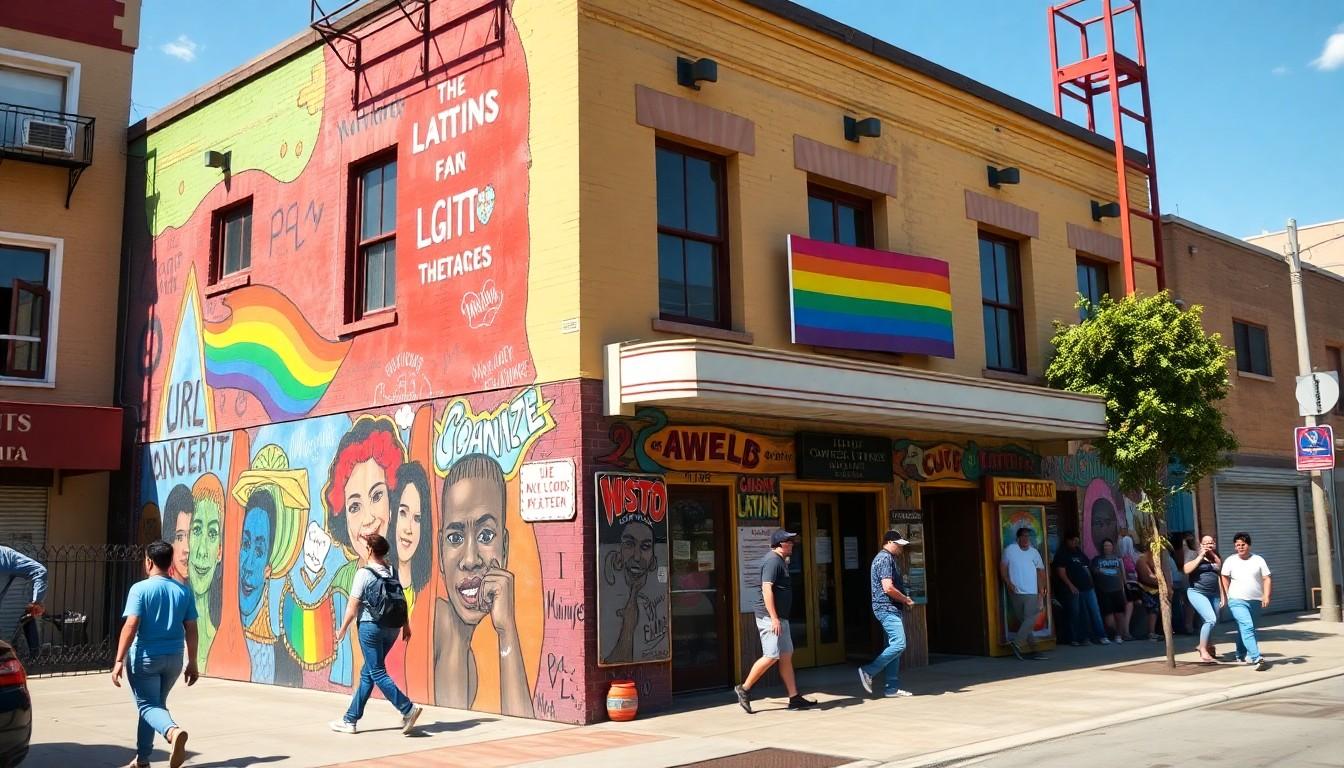
Artists and audiences are making more room for queer Latine and Caribbean stories in musical theatre, from intimate identity-led work to bigger conversations about who gets seen on stage. Their experiences reveal why representation matters, how creative communities sustain new voices, and what a broader musical theatre canon could look like.
Essential Takeaways
- Visibility is personal: Artists draw on migration, family, race, sexuality and gender to shape their work.
- Theatre can be a testing ground: Roles and performance spaces may help people explore identity safely.
- Representation isn't one-size-fits-all: Queer and Latine experiences span a wide, richly varied spectrum.
- Community opens doors: Mentors, teachers, peers and grassroots scenes often create opportunities where institutions fall short.
- The canon is expanding: New writing, archives and productions are helping overlooked musical traditions become easier to find.
Musical theatre is finding new voices
Musical theatre has always turned memory into something physical: a voice rising in a dark room, a familiar rhythm shaking loose an old family story, a lyric that suddenly feels like a conversation with an ancestor. Yet the people given centre stage haven't always reflected the full range of audiences watching.
A recent HowlRound conversation brought together CQ Quintana, Janelle Lawrence, Krystal Ortiz and Maiga Vidal, with Rula A. Munoz moderating, to explore how queer Latine and Caribbean artists are reshaping the form. Their reflections make one thing clear: this isn't simply a request for inclusion. These artists are already creating the work, communities and characters that a wider musical theatre culture needs.
The wider conversation around queer musical theatre supports that shift. Queer Musicals' character-focused resource, for instance, reflects growing interest in tracing trans and non-binary representation across the form. It also shows why visibility needs detail, not just a token name on a list.
Family, migration and identity become creative fuel
For these artists, identity isn't a marketing label added after the script is finished. It's closer to a pair of glasses through which every conflict, joke and relationship comes into focus.
Lawrence describes a Dominican and Haitian lineage, while Quintana draws on Cuban American identity and a Catholic upbringing. Vidal's work holds together Chilean roots, Los Angeles, bilingual life, bisexuality and the experience of moving from undocumented status to citizenship. Those intersections don't flatten into a single storyline. Instead, they create the friction and emotional movement that musicals handle so well.
That complexity matters because mainstream storytelling has often treated Latine identity as a single, tidy category. The interviews gathered by HowlRound push against that habit, showing how queer Latine musical theatre can hold contradiction, humour, family tension and joy in the same frame. As related conversations about identity-led music, including We Plug Good Music's interview with Villano Antillano, suggest, self-definition can be both an artistic process and a form of recovery.
A role can open a door, but it can also expose a barrier
Vidal recalls discovering musical theatre at school and later being cast as a maid, an experience that made the limits of representation impossible to ignore. The moment is uncomfortable because it captures a familiar industry pattern: performers may be welcomed into the room, but only within a narrow idea of what they are allowed to play.
Ortiz, meanwhile, remembers theatre camp as a joyful beginning and speaks about playing lesbian and male roles while still at school. Looking back, she sees those performances as a protected way to try on parts of herself. That observation gives the conversation a softer, more intimate edge. Sometimes representation arrives not through a grand public statement, but through the quiet freedom to experiment.
Contemporary queer performance continues to challenge those boundaries. Reviews and interviews around work such as Splintered and Divina de Campo's The Night Before Me show how gender, performance and self-presentation can remain in motion rather than being fixed into familiar categories. For audiences, that makes space for recognition without demanding that every artist explain themselves first.
Mentors and grassroots scenes keep the work alive
Big institutions may attract the headlines, but the artists describe support arriving from more personal places. Vidal credits a school theatre teacher with expanding her sense of what she could play. Ortiz points to Chicago's experimental theatre scene, including shows in flats and late-night performances, as a major influence on her development.
That grassroots energy is important. Smaller rooms can feel scrappier, warmer and less polished, but they often allow artists to test ideas before the industry decides whether those ideas are commercially safe. In practice, a teacher who sees possibility or a local scene that welcomes risk can matter as much as a formal pathway.
The same principle appears across queer performance culture. The Keeping People Connected project and the archive-style work represented by Becoming Chavela both point towards the value of preserving personal narratives and cultural memory. If stories aren't documented, future artists may have to keep proving that the lineage exists.
The next canon should be broader, messier and more joyful
One of the strongest hopes in the discussion is that future artists won't have to be treated as symbols before they can simply be artists. Lawrence wants performers to inhabit their own stories rather than being selected only to signal ethnic difference. Vidal argues for a genuine place in the musical theatre canon for Latino American experiences, not a brief educational footnote.
That shift requires more than casting. It means commissioning new writers, funding development, protecting rehearsal space and accepting that stories can be untidy. It also means resisting the temptation to search for one definitive queer Latine narrative, because the richness lies in the plurality.
There are encouraging signs. Ortiz highlights work documenting Latino musicals since 2008, while Quintana finds hope in artists who continue creating even when production feels unlikely. Persistence can sound like a modest strategy, but in an industry shaped by gatekeeping, continuing to write is a powerful act. Sometimes the future begins with a script kept alive at a kitchen table.
Why audiences should pay attention now
For audiences, this movement offers more than a chance to see better representation. It promises fresher theatrical language, sharper stories and a broader emotional palette. Queer Latine and Caribbean artists aren't simply adding new subjects to old musical theatre structures. They're questioning whose humour, family histories, bodies and ideas of belonging those structures were built around.
That makes discovery part of the pleasure. Look beyond the most familiar titles, seek out new writing, read programme notes and support smaller venues when you can. A musical theatre landscape with more voices won't feel like a checklist. It will feel more like a lively table where everyone brings a different dish.
And that may be the most hopeful point of all. These artists aren't waiting for permission to imagine a bigger stage. They're already building it, story by story, song by song.
It's a richer, more truthful future for musical theatre, and audiences are invited to listen.
Source Reference Map
Story idea inspired by: [1]
Sources by paragraph:
- Paragraph 1: [2], [4]
- Paragraph 2: [3], [5]
- Paragraph 3: [6], [7]
- Paragraph 4: [2], [3]
- Paragraph 5: [4], [5]
- Paragraph 6: [6], [7]
- Paragraph 7: [2], [3]
- Paragraph 8: [4], [5]
- Paragraph 9: [6], [7]
- Paragraph 10: [2], [3]
- Paragraph 11: [4], [6]
- Paragraph 12: [5], [7]
- Paragraph 13: [2], [4]
- Paragraph 14: [3], [6]
- Paragraph 15: [5], [7]