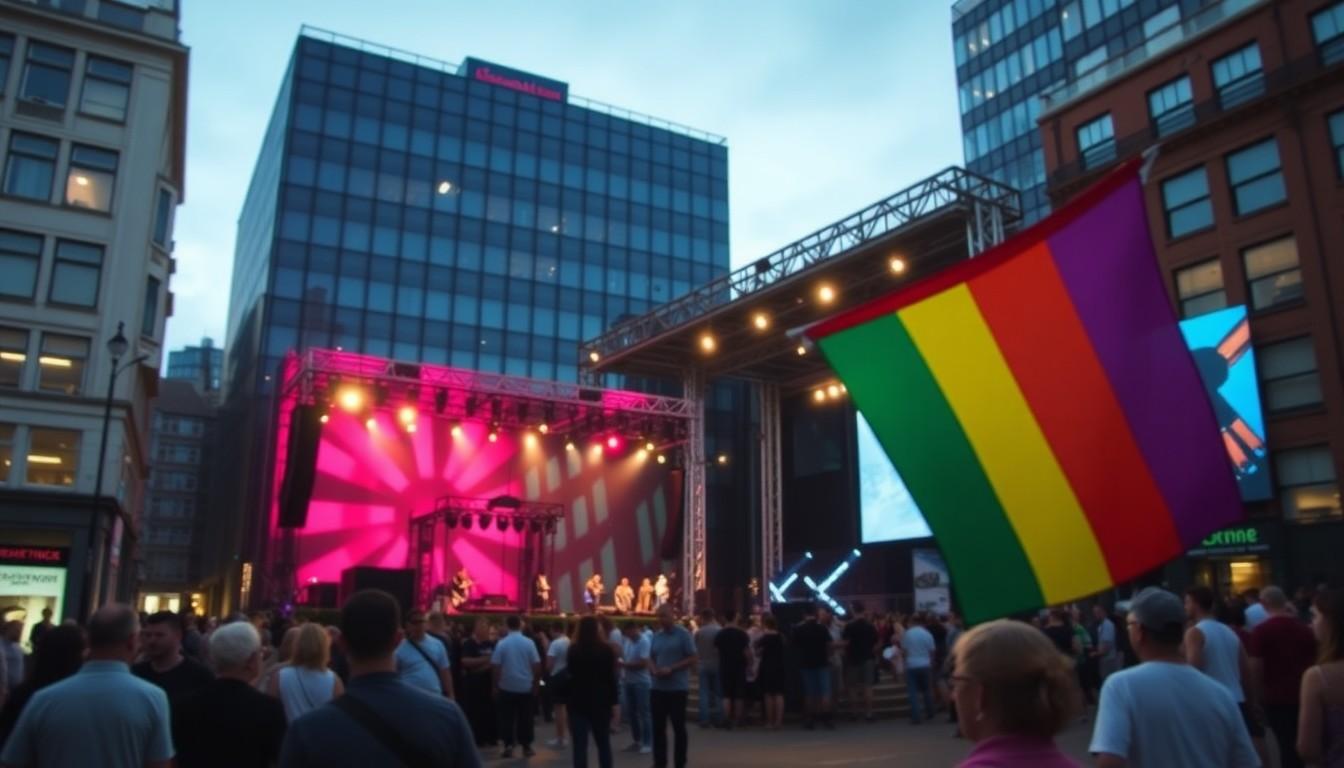
Róisín Murphy’s journey from beloved queer dancefloor icon to one of pop’s most divisive figures has become a revealing culture story. Her comments on trans issues, apologies and later public statements have reshaped how fans, critics and promoters view the Moloko star, raising uncomfortable questions about art, accountability and whether a glittering legacy can survive repeated controversy.
Essential Takeaways
- A celebrated beginning: Murphy became closely associated with LGBTQ+ audiences through Moloko and her solo dance music.
- The 2023 flashpoint: Comments about puberty blockers prompted a public backlash and an apology.
- The controversy continued: Later statements revived criticism rather than closing the debate.
- Career consequences: Murphy said her 2023 album suffered because of the dispute, while reports detailed professional fallout.
- A complicated legacy: Fans now face the awkward question of whether treasured songs can be separated from their creator.
From dancefloor darling to queer-culture favourite
Before the controversy, Róisín Murphy occupied a rare and enviable position in pop. She was stylish without seeming overly polished, theatrical without losing her edge, and deeply connected to club culture. Moloko’s “Sing It Back” became a staple of dancefloors, while her solo work kept that restless, art-pop spirit alive.
Murphy also spoke warmly about her LGBTQ+ following. In an interview with GQ, she recalled the electric experience of performing to a predominantly male audience in Paris, describing it as a moment when she felt she had found her people. That sense of belonging helped make her a natural presence at queer festivals and dance events. [4]
Her relationship with drag culture added to that affection. Murphy praised Detox, the Drag Race performer, and appeared alongside her for a Loverboy magazine shoot. It was the sort of association that felt effortless: glitter, sweat, sharp tailoring and a throbbing bassline. [4]
The 2023 comments changed the conversation
The turning point came in August 2023, when Murphy posted comments questioning puberty blockers and expressing concern about children being medically treated for gender dysphoria. The remarks spread quickly, prompting anger from LGBTQ+ supporters and many former fans.
According to the Guardian, Murphy later apologised for the “damaging” social-media reaction and said her comments had come from concern rather than hostility. She also indicated that she would step away from the public debate. [2]
That promise offered a possible route out. Public figures sometimes make a clumsy statement, recognise the harm and move forward with greater care. But Murphy’s later comments meant the episode never settled neatly into a story of apology and repair. As LGBTQ+ Nation reported, many critics felt the original remarks had been deeply hurtful, particularly because of Murphy’s long-standing connection with queer audiences. [3]
Why the apology didn’t end the fallout
The difficulty wasn’t simply that Murphy had expressed an unpopular view. It was that her comments landed against a background of trust. Fans hadn’t just enjoyed the music; many had seen her as part of a wider cultural space that celebrated difference, gender play and self-invention.
That’s why the reaction felt particularly sharp. The issue became less about one social-media post and more about whether an artist can claim solidarity with a community while making statements that members of that community experience as threatening or exclusionary.
Murphy’s own follow-up statements also kept the argument alive. In 2025, she said the response to the controversy had affected the reception of her album Hit Parade, arguing that music criticism had been pulled into an ideological campaign. The Tab reported that she described the experience as something she would “never be the same” after. [7]
There’s a familiar frustration here for audiences: they may want nuance, but online controversy tends to flatten everything into a verdict. A song becomes evidence, a past interview becomes ammunition and an apology becomes another item to dissect.
A wider debate about cancellation and creative freedom
Murphy’s case sits inside a broader argument about artistic freedom. Some supporters say artists should be allowed to express controversial opinions without losing bookings, reviews or access to audiences. Others argue that promoters and fans aren’t censoring an artist simply by deciding they no longer want to platform them.
That distinction matters. A festival dropping a performer isn’t the same as the state banning their work, while criticism from listeners isn’t automatically an attack on free expression. At the same time, professional consequences can feel severe, especially when they arrive quickly and publicly.
Murphy’s complaints about media pressure were reported alongside renewed scrutiny of her views. The episode shows how difficult it is to demand a separation between music and politics once an artist has made their public identity part of the appeal. [7]
For promoters, the practical question is often less philosophical and more immediate: will booking the artist create a hostile environment, overshadow the event or alienate the audience the festival is trying to serve? In that setting, reputational risk becomes part of the decision.
Can fans still listen to “Sing It Back”?
There’s no universal answer, and that’s what makes the question so personal. Some listeners can separate a song from the person who made it, treating “Sing It Back” as part of their own memories rather than Murphy’s current public identity. Others find that the lyrics, performances and old associations now feel impossible to detach from the controversy.
The emotional mathematics are especially complicated for queer fans. A track may have been the soundtrack to a first night out, a relationship or a moment of self-discovery. Discovering that the artist’s views now feel hostile can make those memories sting, even if the music itself hasn’t changed.
Murphy’s story also highlights how public goodwill is built over decades but can be damaged in a handful of posts. Her early work remains influential and musically distinctive, yet cultural affection isn’t a permanent shield. When an artist continues returning to the same divisive subject, audiences may reasonably judge the pattern rather than the isolated remark.
What happens to her legacy now?
The most likely outcome is not a clean cancellation or a complete return to favour. Murphy’s music will remain available, admired and played, while her public reputation will stay contested. Some fans will defend her as a talented artist punished for speaking openly; others will regard the controversy as incompatible with the community that once embraced her.
That uneasy middle ground is increasingly common in pop culture. Listeners are becoming more conscious of who benefits from their attention, while artists are discovering that old interviews and new posts can collide with astonishing speed. The result is a more alert, less forgiving audience, but not always a more thoughtful one.
For now, Murphy’s catalogue sits in that uncomfortable space between cherished soundtrack and cultural baggage. The songs still shimmer, but the context has changed. And for many listeners, that change is impossible to unhear.
Sometimes the hardest part of separating art from artist is realising the art was part of your own story.
Source Reference Map
Story idea inspired by: [1]
Sources by paragraph:
- Paragraph 1: [4]
- Paragraph 2: [4]
- Paragraph 3: [4]
- Paragraph 4: [2], [3]
- Paragraph 5: [2], [3]
- Paragraph 6: [3]
- Paragraph 7: [7]
- Paragraph 8: [7]
- Paragraph 9: [7]
- Paragraph 10: [7]
- Paragraph 11: [3], [4]
- Paragraph 12: [3]
- Paragraph 13: [7]
- Paragraph 14: [7]
- Paragraph 15: [2], [3]
- Paragraph 16: [4]
- Paragraph 17: [7]
- Paragraph 18: [3], [4]
- Paragraph 19: [7]
- Paragraph 20: [2], [3]