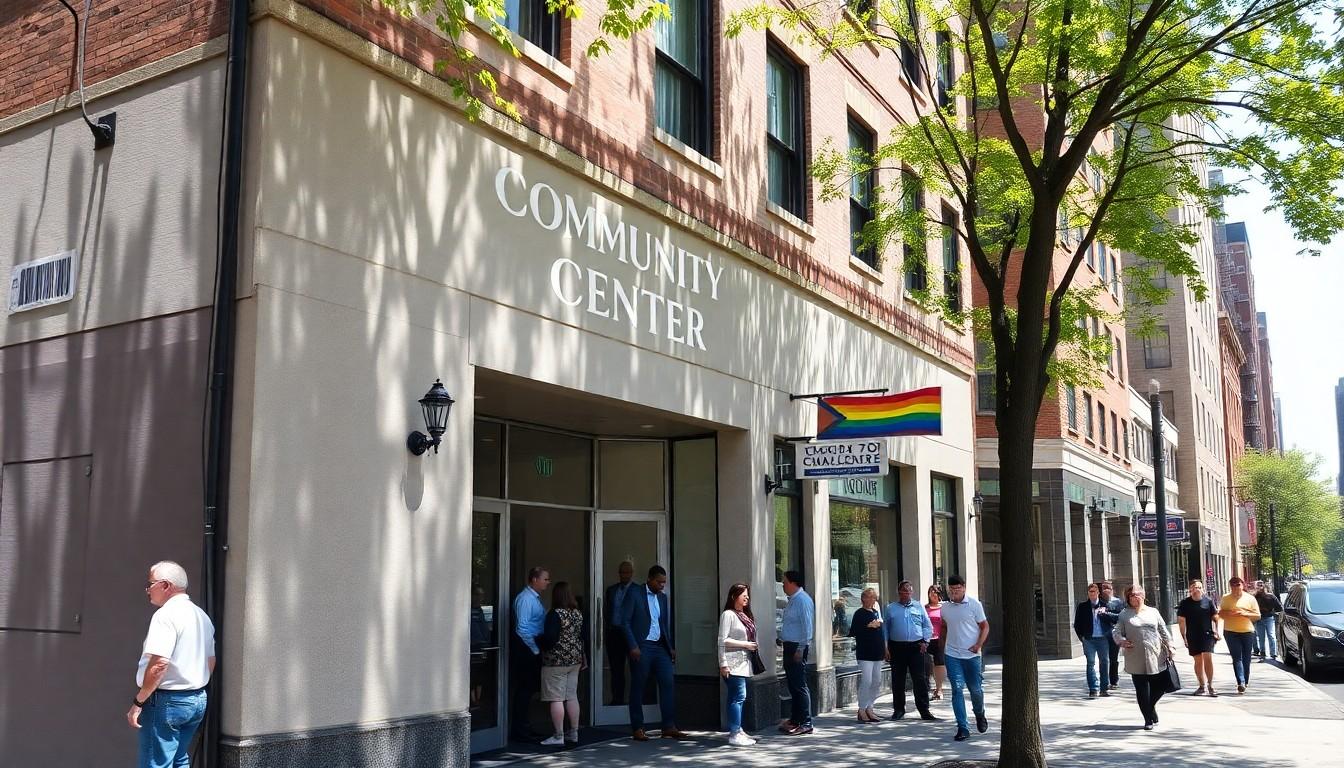
Community organisations across New York City can now apply for a share of $200,000 in LGBTQIA+ funding. The 2026-2027 NYC Unity Grant Programme will support ten projects tackling employment, housing, financial security, health and wellbeing, with applications due by 16 November 2026.
Essential Takeaways
- Ten awards available: Each successful organisation will receive $20,000.
- Three priority areas: Projects must focus on employment and education, housing and economic stability, or health and wellbeing.
- Targeted support: Priority goes to work serving transgender, non-binary, intersex and other underserved LGBTQIA+ New Yorkers.
- Key deadline: Applications close on 16 November 2026, with decisions expected by 11 December.
- Delivery window: Funded projects must be completed by 30 June 2027.
New funding aims to reach community-led projects
New York City is putting a larger pot of money behind organisations already working close to the ground. The expanded NYC Unity Grant Programme will distribute $200,000 among ten community groups, giving each one $20,000 to develop or strengthen a focused project.
That matters because local organisations often spot service gaps before large institutions do. They may be helping someone find a job, navigate housing insecurity or access affirming healthcare, often with a more personal touch than a centralised service can provide.
The latest round represents an increase of more than $60,000 on the previous cycle, according to the Mayor's Office of Equity and Racial Justice. It's a modest sum in a city as expensive as New York, but for a small nonprofit, $20,000 can fund staff time, outreach, workshops or a useful pilot programme.
What kinds of LGBTQIA+ work qualify?
Applicants must propose work in at least one of three areas: education and employment, housing and economic stability, or health and wellbeing. That gives organisations some room to shape projects around the needs they see every day.
A careers initiative might offer training, job placement or support with education. A housing project could help residents understand their rights, find stable accommodation or manage financial pressures. Health-focused work might improve access to mental healthcare, community support or other essential services.
The programme is particularly attentive to people who can face several barriers at once, including LGBTQIA+ people of colour, young and older residents, immigrants, disabled people, and transgender, gender non-conforming, non-binary and intersex New Yorkers. In practice, a strong application will need to show not only what it plans to do, but whom it will reach and why that approach fits.
Who can apply for the NYC Unity Grant?
Eligible applicants are New York City-based nonprofits or organisations working through a fiscal sponsor. They must primarily serve LGBTQIA+ residents and demonstrate that their services are equitable, culturally responsive and affirming.
The city will also expect applicants to show they can manage the project properly. That includes having a realistic budget, a clear timetable, measurable aims and the administrative capacity to submit financial and progress reports.
This isn't unrestricted cash for general running costs. Funding is tied to approved project activities and deliverables, so organisations should avoid promising more than they can comfortably complete by 30 June 2027. A sharply defined project is likely to read better than an ambitious list of loosely connected intentions.
How to make an application stand out
The practical question for applicants is simple: can a reviewer quickly understand the problem, the proposed response and the likely benefit? Applications should connect local evidence or lived experience with a manageable plan, rather than relying on broad statements about need.
It's also worth spelling out how participants will be reached. For example, an organisation might explain how it works with trusted community partners, offers multilingual support or removes barriers such as transport, digital access or fear of discrimination.
The city is holding a virtual information session on 2 November 2026, before the application deadline. Organisations with questions about eligibility, budgets or reporting should use it as a chance to test their assumptions, rather than leaving important details until the final few days.
A larger programme, but still limited places
The current scheme builds on an earlier initiative focused on transgender, gender non-conforming and non-binary New Yorkers, while widening the programme's reach across LGBTQIA+ communities. It is being coordinated by the Mayor's Office of LGBTQIA+ Affairs alongside the Mayor's Office of Equity and Racial Justice.
Successful applicants are expected to be notified by 11 December 2026. With only ten grants available, competition is likely to be keen, so concise goals and believable delivery plans will matter.
For the organisations selected, the grant may offer more than a short burst of activity. A well-run pilot can generate useful results, strengthen partnerships and help make the case for future investment. As ever, the real test will be whether the money reaches residents in ways they can feel in daily life.
The right project doesn't need to be flashy. It needs to be useful, trusted and achievable.
Source Reference Map
Story idea inspired by: [1]
Sources by paragraph:
- Paragraph 1: ,
- Paragraph 2: ,
- Paragraph 3: ,
- Paragraph 4: ,
- Paragraph 5: ,
- Paragraph 6: ,
- Paragraph 7: ,
- Paragraph 8: ,
- Paragraph 9: ,
- Paragraph 10: ,
- Paragraph 11: ,
- Paragraph 12: ,