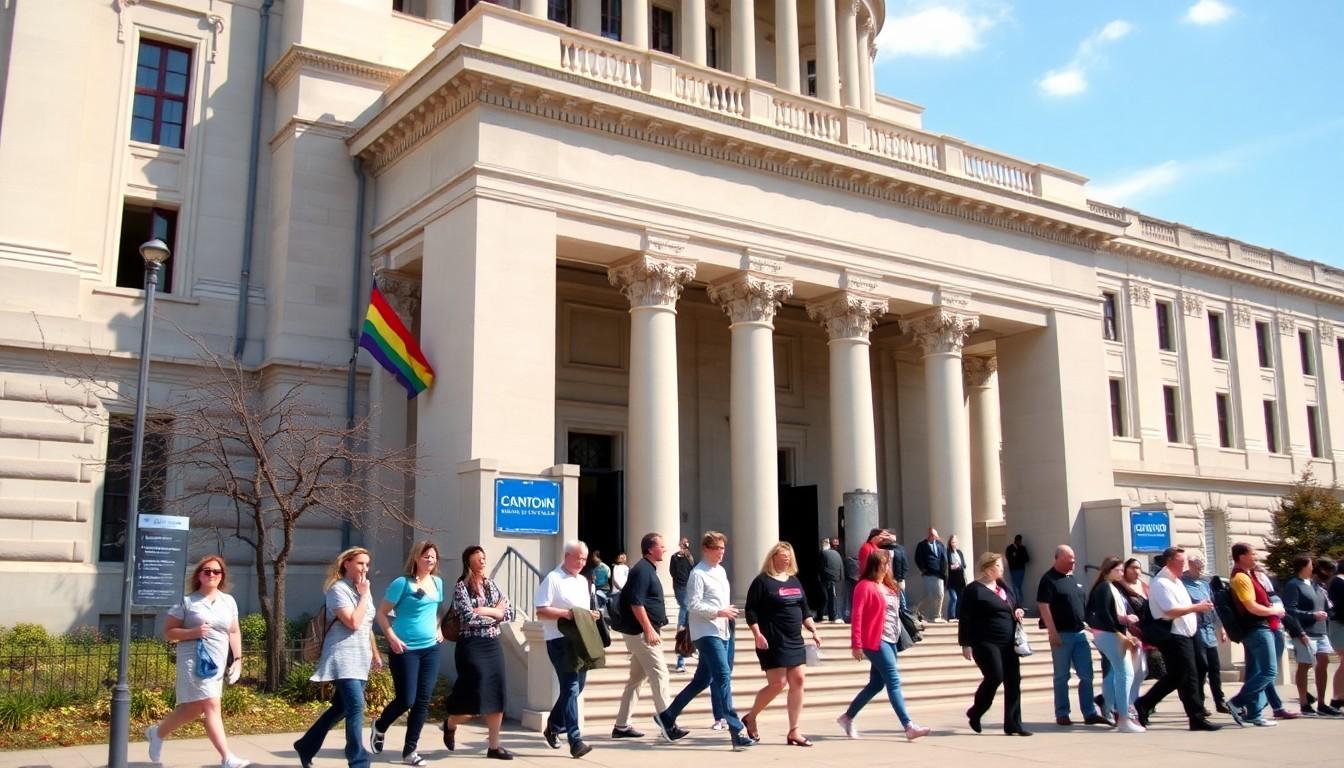
Voters are watching a striking shift in American political life, as a record 12% of US adults now identify as LGBTQ. With approval of Donald Trump reported near its lowest point and more openly LGBTQ candidates entering federal races, the figure could give representation, rights and turnout a sharper edge at the next midterm elections.
Essential takeaways
- A record share: The Human Rights Campaign estimates that 12% of US adults identify as LGBTQ, or around 25.6 million people.
- A broader political force: LGBTQ voters aren't confined to major-city gay districts, and their influence may reach well beyond familiar progressive strongholds.
- More candidates on the ballot: Eighteen openly LGBTQ candidates are running for federal office, including several seeking new seats.
- A possible Senate milestone: Chris Pappas could become the first openly gay man elected to the US Senate.
- Turnout will matter: Population size alone won't decide races; registration, local organising and voter participation will be crucial.
A record number that changes the political picture
The headline figure is hard to ignore. According to the Human Rights Campaign, 12% of American adults now identify as LGBTQ, amounting to roughly 25.6 million people. That makes the community a substantial voting bloc rather than a niche constituency easily overlooked by national campaigns.
The estimate also reflects a wider generational and cultural change. Younger adults are more likely to identify outside heterosexual and cisgender norms, while greater visibility has made it easier for some people to describe themselves openly. The result is a political map that's becoming more complicated, and considerably more colourful.
LGBTQ voters are not only found in big-city enclaves
For years, campaign strategists often pictured LGBTQ voters as concentrated in well-known urban neighbourhoods. That shorthand was always a little too neat, and newer population estimates underline why.
The Human Rights Campaign says more than 10% of adults identify as LGBTQ in 40 of the 50 states. That spread matters because close elections are frequently decided in suburban, rural and smaller metropolitan districts, where a modest shift in turnout can have an outsized effect.
It doesn't mean every LGBTQ voter shares the same priorities. Housing, healthcare, the economy, education and public safety can all shape a ballot. But candidates who ignore identity-based concerns, including protections against discrimination and attacks on trans rights, may be taking a considerable risk.
More openly LGBTQ candidates are stepping forward
The current federal field includes 18 openly LGBTQ candidates, with nine seeking new seats. Among them is Chris Pappas of New Hampshire, whose Senate bid could create a notable milestone for representation.
Tammy Baldwin became the first openly gay person elected to the Senate in 2012, but she's not defending her seat in this election cycle. A Pappas victory would therefore add a new chapter to a story that's still surprisingly short at the highest levels of US government.
Other candidates seeking new House seats include Caitlin Conley in New York, Jeremy Moss in Michigan, JoAnna Mendoza in Arizona, Marni von Wilpert and Scott Wiener in California, Chris Gallant in New York, JD Ford in Indiana and Janelle Sarauw in the US Virgin Islands. Their campaigns show that LGBTQ representation isn't limited to one region or a single political style.
Representation matters, but turnout is the real test
A larger LGBTQ population can influence elections, but only if people are registered, informed and willing to vote. Campaigns will also need to reach voters who don't live in established LGBTQ communities and who may face practical barriers, from confusing registration rules to limited transport or polling access.
This is where local organising becomes especially important. National attention can produce warm headlines, but door-knocking, trusted community groups and clear information often do more to turn support into ballots. A record population estimate is powerful; a well-organised electorate is more powerful still.
The wider political backdrop may add urgency. A Reuters/Ipsos poll cited in the reporting put Trump's approval rating at 32%, just above his lowest rating so far. That doesn't automatically translate into Democratic victories, but it suggests an unsettled electorate in which motivated groups could matter greatly.
A potentially decisive moment for LGBTQ rights
The midterms could become a referendum on more than party control. They may also test how voters respond to the steady stream of debates around LGBTQ rights, healthcare access, education and protection from discrimination.
There'll be arguments over whether identity should dominate the campaign conversation. In practice, voters rarely fit into tidy categories. Someone may care deeply about LGBTQ equality while also voting primarily on rent, wages or the cost of medical treatment.
Still, representation has a human weight that polling charts can't quite capture. Seeing openly LGBTQ candidates compete seriously for federal office can make government feel less distant, particularly for younger voters who have grown up expecting public life to reflect a broader range of identities.
The next election won't be decided by statistics alone, but the numbers suggest LGBTQ voters deserve a much bigger place in every serious campaign strategy.
A larger community could mean a louder voice, if turnout follows.
Source Reference Map
Story idea inspired by: [1]
Sources by paragraph:
- Paragraph 1: [2], [3]
- Paragraph 2: [4], [5]
- Paragraph 3: [2], [6]
- Paragraph 4: [3], [7]
- Paragraph 5: [2], [4]
- Paragraph 6: [5], [6]
- Paragraph 7: [2], [7]
- Paragraph 8: [3], [4]
- Paragraph 9: [2], [5]
- Paragraph 10: [6], [7]
- Paragraph 11: [2], [3]
- Paragraph 12: [4], [5]
- Paragraph 13: [6], [7]
- Paragraph 14: [2], [4]
- Paragraph 15: [3], [5]
- Paragraph 16: [6], [7]