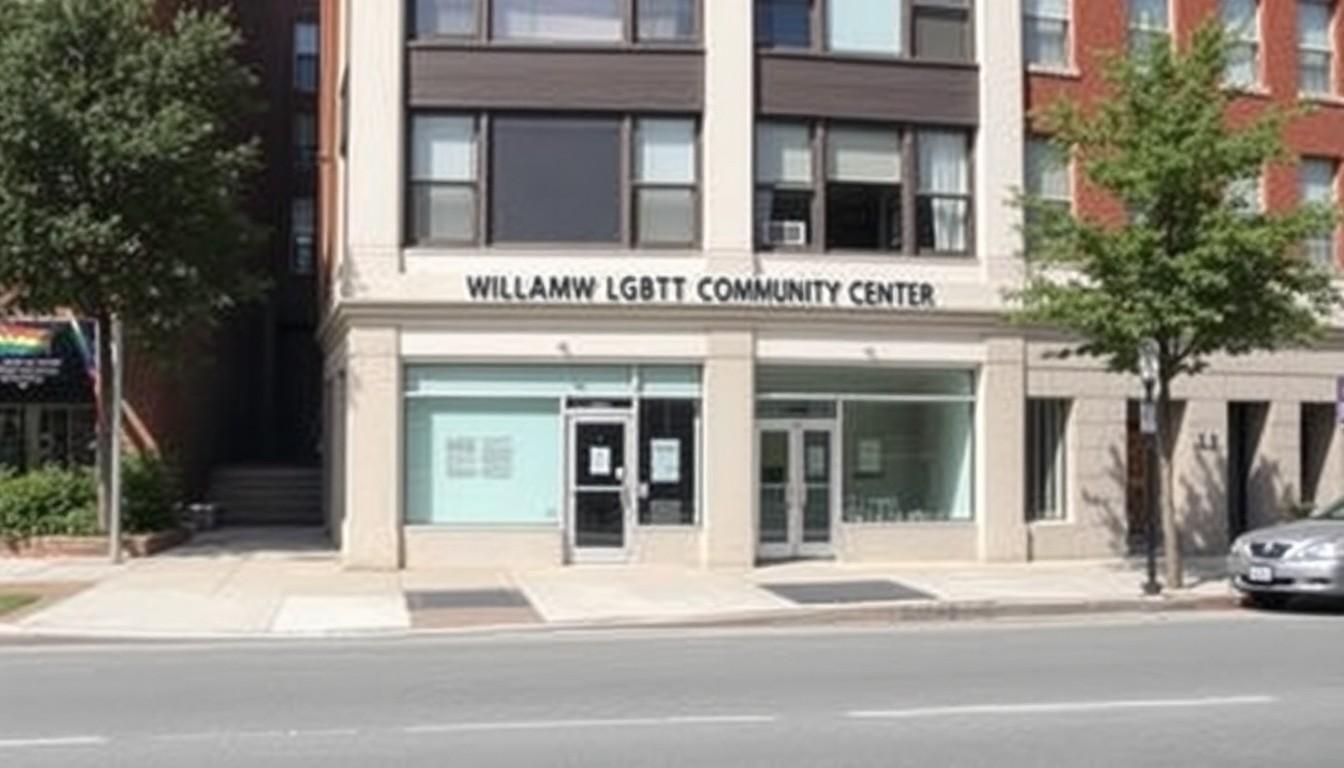
Visitors to Philadelphia’s William Way LGBT Community Center can expect an emotionally charged group exhibition where love, vulnerability and queer identity meet. Featuring Jordan Artim, D’Shon McCarthy and Dave Tavacol, the show uses painting and digital imagery to turn private experiences into vivid, sometimes unsettling public art.
Essential Takeaways
- Three distinct voices: Jordan Artim, D’Shon McCarthy and Dave Tavacol work across painting, acrylic, charcoal, photography and digital manipulation.
- Emotion takes centre stage: The artists explore intimacy, inherited trauma, spirituality, desire and the uneasy work of staying present.
- A major anniversary: The exhibition is part of William Way’s long-running programme supporting LGBTQ+ artists in Philadelphia.
- Where and when: The show runs from 5 November to 5 December at Huddle, 338 Brown Street.
- Art with a wider purpose: Artists receive 65% of sales, while 35% supports the centre’s Art and Culture programmes.
Love looks beautiful, but it isn't always easy
The exhibition’s emotional centre may be Jordan Artim’s “Sweat”, an eight-foot oil painting showing a life-size figure lifting his shirt to wipe his face in a flower-filled garden. The figure is Artim’s husband, while the garden was built by the couple beside their Philadelphia home. According to the Philadelphia Gay News, what began as a tender celebration gradually became a meditation on commitment, effort and doubt.
That shift gives the painting its quiet power. Yellow flowers and warm light make the scene feel generous at first, but the gesture also suggests fatigue. Love is present, certainly, yet so is the work required to keep a shared life growing. Artim’s garden imagery turns ordinary care into something almost mythic, without losing its earthy, slightly sweaty reality.
Three artists, one refusal to feel numb
Curator and arts exhibitions manager Jake Foster sees a thread connecting the artists: each challenges the emotional dullness that can settle over daily life. Their methods differ, but the effect is similar. Viewers are encouraged to slow down, notice what they feel and accept that meaningful art can be uncomfortable.
That idea has shaped William Way’s exhibition programme for years. The centre’s recurring juried shows give LGBTQ+ artists a platform while making space for work that might not fit neatly into commercial gallery expectations. Previous exhibitions have likewise brought together varied media and perspectives, showing how broad Philadelphia’s queer arts community has become.
D’Shon McCarthy paints pain into possibility
D’Shon McCarthy’s work moves through spirituality, femininity and the complicated ways people learn to live with pain. Pieces such as “Only If It Hurts” and “Borderlines” consider how social expectations can make suffering seem normal, particularly for women, and how those expectations can become tangled with identity.
Her acrylic and charcoal painting “Power Surge: With All Things Considered” presents a self-portrait floating above a burning house, surrounded by ghostly forms. The image draws on a dream after a period in Barbados, as well as questions about family, ancestral worship and inherited trauma. Small symbols, including flowers and a paper moth, carry the intimate weight of memories and personal change.
McCarthy’s paintings don't treat healing as a neat, finished destination. Instead, they suggest that looking directly at old patterns can create room for something different. That makes the work demanding, but also hopeful, especially for viewers who recognise the feeling of trying to build a self beyond inherited expectations.
Dave Tavacol finds ecstasy in the collision of images
Dave Tavacol’s “Ecstatic Assemblage” series takes a more digitally fractured route. Combining original and stock photography with manipulation techniques, his prints bring together religious references, bodies, drains, textures and flashes of colour. The imagery can feel playful one moment and ominous the next, as if several visual arguments are happening at once.
The series draws on Bernini’s “The Ecstasy of Saint Teresa”, a work Tavacol reads through sexuality, pain and spiritual rapture. His recurring drain imagery suggests release or redemption, while the crowded compositions reflect a personal history shaped by growing up gay and Iranian American during periods of political fear, the AIDS crisis and rising religious conservatism.
There's no single correct way into these images. One detail may look funny, another beautiful, and a third faintly disturbing. That openness is part of their invitation: stay with the picture long enough for its surface pleasures to become something more complicated.
Why William Way still matters as a cultural home
The exhibition arrives during a significant moment for William Way. Founded in 1976, the Philadelphia centre has supported LGBTQ+ culture, community and advocacy for decades, with exhibitions forming part of that work from its early years. This group show is also the final arts programme connected to the centre’s 50th-anniversary celebrations.
With the main building closed, the exhibition is moving to Huddle, where each artist will have substantial wall space to present a broader selection of work. The arrangement should make the differences between their practices easier to appreciate, while preserving the conversation between them.
The 20th Annual Juried Art Exhibition was selected by Stamatina Gregory, chief curator and director of exhibitions and collections at the Leslie-Lohman Museum of Art. For visitors, the result is more than a snapshot of three artists: it’s a reminder that queer cultural spaces can hold tenderness, anger, humour and uncertainty all at once.
Plan your visit to the Philadelphia queer art exhibition
The William Way LGBT Community Center’s 20th Annual Group Art Exhibition runs from 5 November to 5 December at Huddle, 338 Brown Street, Philadelphia. The opening reception is scheduled for 6pm to 8pm on 5 November, while an artist talk with Artim, McCarthy and Tavacol takes place from 6pm to 8pm on 12 November.
Works will be available to buy, with 65% of proceeds going to the artist and 35% supporting William Way’s Art and Culture programmes. For art lovers, that offers a chance to take home something vivid and personal while helping sustain the organisation behind the exhibition.
Most importantly, give yourself time. These aren't works designed to be skimmed between errands. Start with the colour, the texture or the odd detail that catches your eye, then see what stays with you after the first impression fades.
It's a small but powerful show about what happens when queer artists choose to feel everything.
Source Reference Map
Story idea inspired by: [1]
Sources by paragraph: