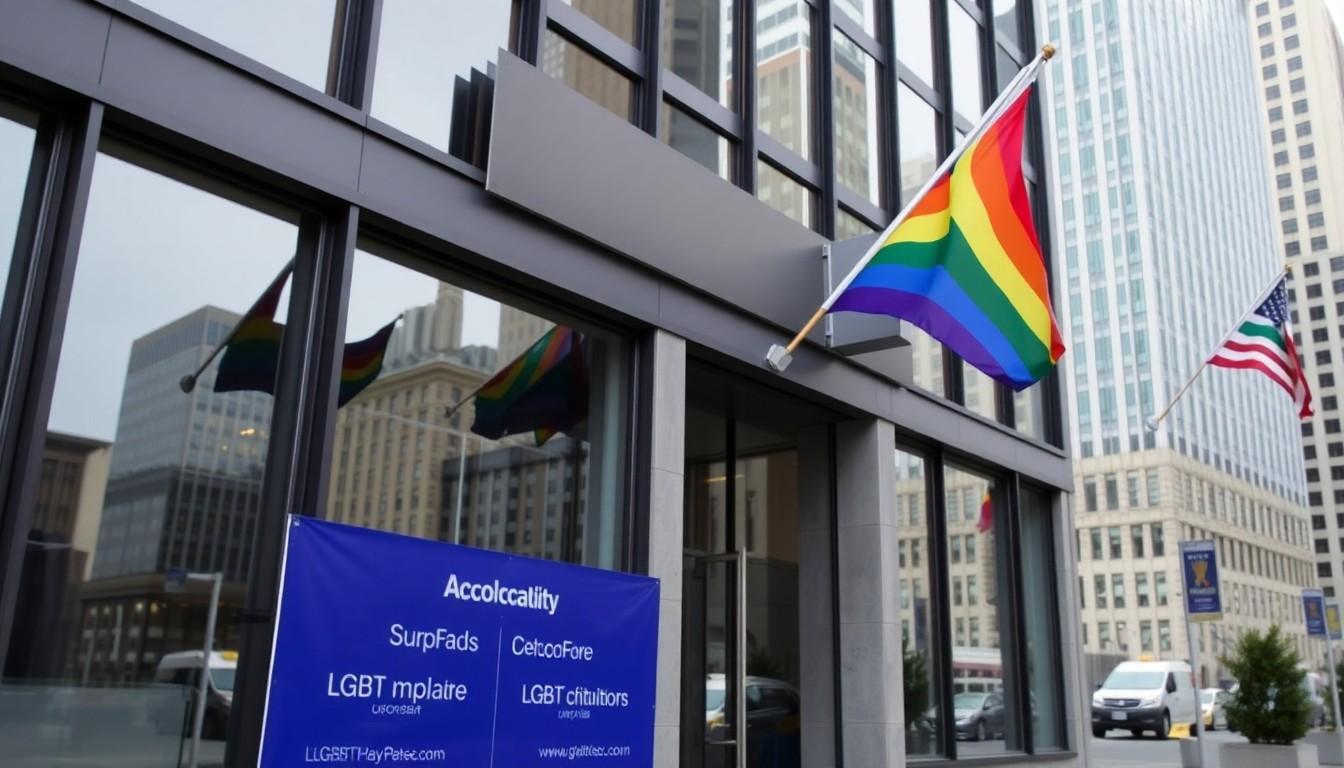
Companies backing the Human Rights Campaign face fresh scrutiny as its electoral work, corporate influence and overwhelmingly Democratic endorsement record come under the spotlight before America’s midterm elections.
Essential Takeaways
- A strongly partisan record: An analysis by 1792 Exchange identified 970 unique endorsed candidates, almost all Democrats.
- A major election push: HRC has announced a $15 million programme aimed at reaching millions of so-called Equality Voters.
- Corporate ties are shifting: Participation in HRC’s Corporate Equality Index has reportedly fallen sharply among major companies.
- Policy influence goes further: The organisation’s corporate scoring system has helped shape workplace benefits and LGBTQ-related policies.
- The debate is widening: Supporters see HRC as a civil-rights advocate, while critics question its political and cultural reach.
A civil-rights group with a clear political identity
The Human Rights Campaign presents itself as America’s largest LGBTQ advocacy organisation. But its endorsement history suggests that it’s also a highly focused political operator, with a record that overwhelmingly favours one party.
According to an analysis from 1792 Exchange, HRC’s archived announcements contained 1,408 endorsements between 2010 and October 2026. Those endorsements covered 970 individual candidates, including 964 Democrats, two Republicans, three non-partisan candidates and one independent.
That works out at more than 99% Democratic representation among the unique candidates identified. It’s a striking figure, particularly for businesses that describe their HRC relationships as support for broad workplace equality rather than alignment with a particular political movement.
The organisation is entitled to endorse candidates, of course. The question for companies is whether their public partnerships accurately reflect the full character of the groups they support.
HRC is turning up the volume before the midterms
HRC’s influence isn’t limited to press releases. In April, it announced a $15 million electoral programme called Let’s Get Free, designed to reach 74 million Equality Voters before the midterm elections.
The campaign is expected to combine advertising, events and grassroots organising in competitive congressional contests. HRC says it has roughly four million members and supporters, giving the programme a substantial ready-made audience.
Recent endorsements have also focused on candidates campaigning for state legislatures, including transgender and non-binary contenders. HRC’s own announcements describe these candidates as part of a broader pro-equality slate, while critics argue that the group’s priorities reach well beyond conventional anti-discrimination protections.
Fox News reported that some vulnerable Democratic candidates could face political difficulties because of their association with LGBTQ campaign positions, particularly those involving youth gender medicine. That highlights the awkward balancing act for politicians: support from a powerful advocacy group can energise loyal voters, but may also create vulnerabilities in closely fought seats.
The Corporate Equality Index gives HRC a second route to influence
HRC’s political endorsements are only one part of its reach. Its affiliated foundation runs the Corporate Equality Index, a widely recognised scorecard that assesses companies on LGBTQ-related workplace policies.
For businesses, a high score can be useful shorthand for inclusion. It may reassure employees, customers and investors that a company takes equal treatment seriously. But the index also creates pressure to adopt specific policies, especially when a poor rating risks reputational criticism.
The Daily Caller’s analysis argues that HRC helped encourage the expansion of transgender healthcare benefits after tightening its index requirements. Whether viewed as positive policy leadership or undue corporate pressure, the episode shows how an advocacy organisation can shape business decisions far beyond election endorsements.
That distinction matters. A company can support fair treatment at work without necessarily agreeing with every position taken by an advocacy group on medical care for minors, sport, bathrooms or other contested issues.
Corporate support is cooling, but the relationship hasn’t disappeared
There are signs that large companies are becoming more cautious. CNBC reported that participation by Fortune 500 firms in the Corporate Equality Index fell by 65% in 2026, while the National Center for Public Policy Research said HRC corporate sponsorships declined by 38% between 2024 and 2025.
The 1792 Exchange also reported that HRC’s Platinum Corporate Partners had fallen by roughly 48% from their 2022 peak. Sponsorship of the organisation’s annual National Dinner reportedly dropped by 54.5% between 2024 and 2025.
Those figures point to a broader corporate retreat from highly visible diversity, equity and inclusion commitments. Businesses are facing pressure from shareholders, employees and customers across the political spectrum, so many are reviewing affiliations that once seemed relatively risk-free.
Still, several prominent partnerships remain. Critics have questioned how companies that promise political neutrality can continue to work with an organisation whose candidate endorsements are so one-sided. For executives, the practical challenge is no longer simply whether a partnership looks progressive. It’s whether it fits the company’s stated values, customer base and approach to political impartiality.
What should companies consider next?
The sensible starting point is transparency. Businesses should distinguish between supporting basic non-discrimination principles and funding an organisation’s electoral machine or preferred positions on contentious social policy.
They should also review how third-party scorecards affect internal decisions. A high rating can be valuable, but it shouldn’t replace a company’s own judgement about benefits, workplace rules or employee welfare. Nor should a corporate giving platform quietly exclude organisations simply because they’re associated with an unpopular political viewpoint.
This debate is unlikely to fade after the midterms. As corporations reassess DEI programmes and advocacy partnerships, HRC’s political activity will remain a test case for how businesses manage social issues in an increasingly polarised marketplace.
For shoppers and employees, the takeaway is simple: corporate affiliations often carry more political baggage than their polished logos suggest.
Review the partnership, understand the policy and decide whether the association still fits.
Source Reference Map
Story idea inspired by: [1]
Sources by paragraph: