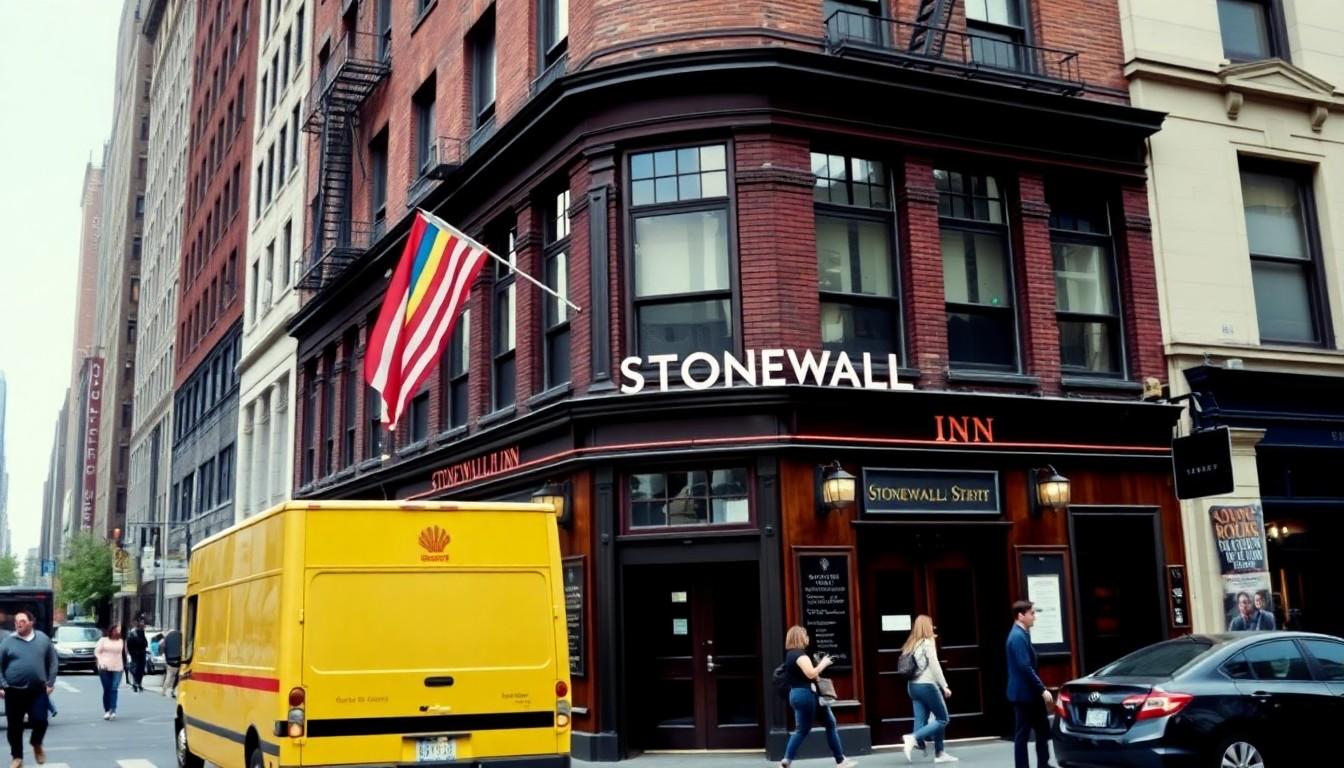
Visitors can now step inside the Stonewall Inn as it appeared during the 1969 uprising, thanks to a new online 3D model created from photographs, historical records and oral histories. The immersive experience offers anyone with a phone or computer a closer look at the bar, its dance floor and the setting that helped change LGBTQ+ history.
Essential Takeaways
- A digital time capsule: The model recreates Stonewall’s 1969 interior, including the entrance, coat check and jukebox.
- Built from evidence: Researchers used archival images, written records and first-hand accounts to guide the reconstruction.
- Open to everyone: The experience can be explored online from anywhere with an internet connection.
- More than a bar: Stonewall became a landmark of LGBTQ+ resistance after the police raid in June 1969.
- A changing building: Today’s Stonewall Inn doesn’t preserve the original interior, making the model especially valuable.
Stonewall’s lost interior is back in view
The Stonewall Inn is still standing on Christopher Street, but much of the room that witnessed the 1969 uprising has vanished. The new 3D model fills that gap with a remarkably tangible sense of place: you can move through the entrance, look towards the dance floor and locate details that would otherwise survive only in memories and photographs.
The NYC LGBT Historic Sites Project and Making Gay History developed the model to coincide with LGBTQ+ History Month. According to the NYC LGBT Historic Sites Project, the project draws on historical research and recorded testimony to show how the bar looked and felt during the summer of 1969.
That sensory detail matters. History can feel distant when it's reduced to dates and plaques, but a virtual room gives the story walls, shadows and awkward corners. It makes the past easier to imagine, which is precisely why this kind of technology can be so effective.
Why the 1969 setting matters
Stonewall was already unusual before the uprising. It was one of New York's few gay venues where people could dance, helping it attract a younger crowd at a time when LGBTQ+ spaces faced constant police scrutiny and discrimination.
The bar was raided in the early hours of 28 June 1969. What followed was not an isolated confrontation but several nights of protest, helping to galvanise a movement that would soon lead to commemorative marches and a more visible fight for LGBTQ+ rights.
The digital reconstruction places those events in their original surroundings. The NYC LGBT Historic Sites Project has long documented places connected to LGBTQ+ life and activism, and this model extends that work into an interactive format.
A virtual tour designed for anyone, anywhere
Unlike a physical museum visit, the Stonewall model doesn't require a trip to Manhattan. The project can be opened on a phone or computer, making it useful for students, researchers, visitors planning a trip and anyone curious about LGBTQ+ history.
Making Gay History says the model complements its archive of recorded interviews, particularly by giving visual context to recollections from people who were there. Hearing an elder describe the bar is powerful; being able to see the room they're describing adds another layer.
Earlier digital projects have taken a similar approach across New York's LGBTQ+ landmarks. BroadwayWorld reported on interactive tours covering Stonewall and other historic sites, while the project has also promoted online access as a way to broaden public engagement.
What you can see inside the model
The reconstruction invites visitors to explore several recognisable parts of the bar, including the entrance, coat-check area and dance floor. The location of the jukebox is included too, a small detail that helps the space feel lived-in rather than merely architectural.
For the best experience, take your time instead of clicking rapidly from room to room. Look at how the spaces connect, notice where people might have gathered and consider how crowded, hot and tense the venue could have felt on a summer night.
The model isn't a replacement for visiting the Stonewall National Monument in person. It does something different, though: it restores an interior that visitors can no longer see. That makes it particularly useful for understanding the physical setting behind the familiar name.
A landmark that has kept changing
The original Stonewall Inn closed soon after the uprising, and the site went through several later incarnations. A bar using the Stonewall name returned in the late 1980s, followed by another venue that eventually became today's Stonewall Inn.
The current bar is an important working landmark, but it occupies only part of the earlier footprint and doesn't retain the original 1969 interior. The Stonewall Inn's wider significance has nevertheless been formally recognised, including its listing as a National Historic Landmark and its designation as the first US national monument dedicated to the LGBTQ+ rights movement.
The official Stonewall Inn continues to welcome visitors as a living venue, while the 3D model preserves a version of the building that can no longer be experienced in quite the same way. Together, they offer two views of the site: one alive in the present, and one carefully reconstructed from the past.
It's a clever use of technology, but also a deeply human one. Sometimes the quickest way to understand why a place mattered is simply to see where people stood.
Explore the model at your own pace and let the room tell some of its story.
Source Reference Map
Story idea inspired by: [1]
Sources by paragraph:
- Paragraph 1: [2], [6]
- Paragraph 2: [2], [3]
- Paragraph 3: [5], [7]
- Paragraph 4: [2], [3]
- Paragraph 5: [4], [5]
- Paragraph 6: [2], [6]
- Paragraph 7: [3], [7]
- Paragraph 8: [2], [6]
- Paragraph 9: [5], [7]
- Paragraph 10: [2], [4]
- Paragraph 11: [2], [5]
- Paragraph 12: [4], [6]
- Paragraph 13: [3], [4]
- Paragraph 14: [2], [4]
- Paragraph 15: [5], [7]
- Paragraph 16: [2], [4]
- Paragraph 17: [3], [6]