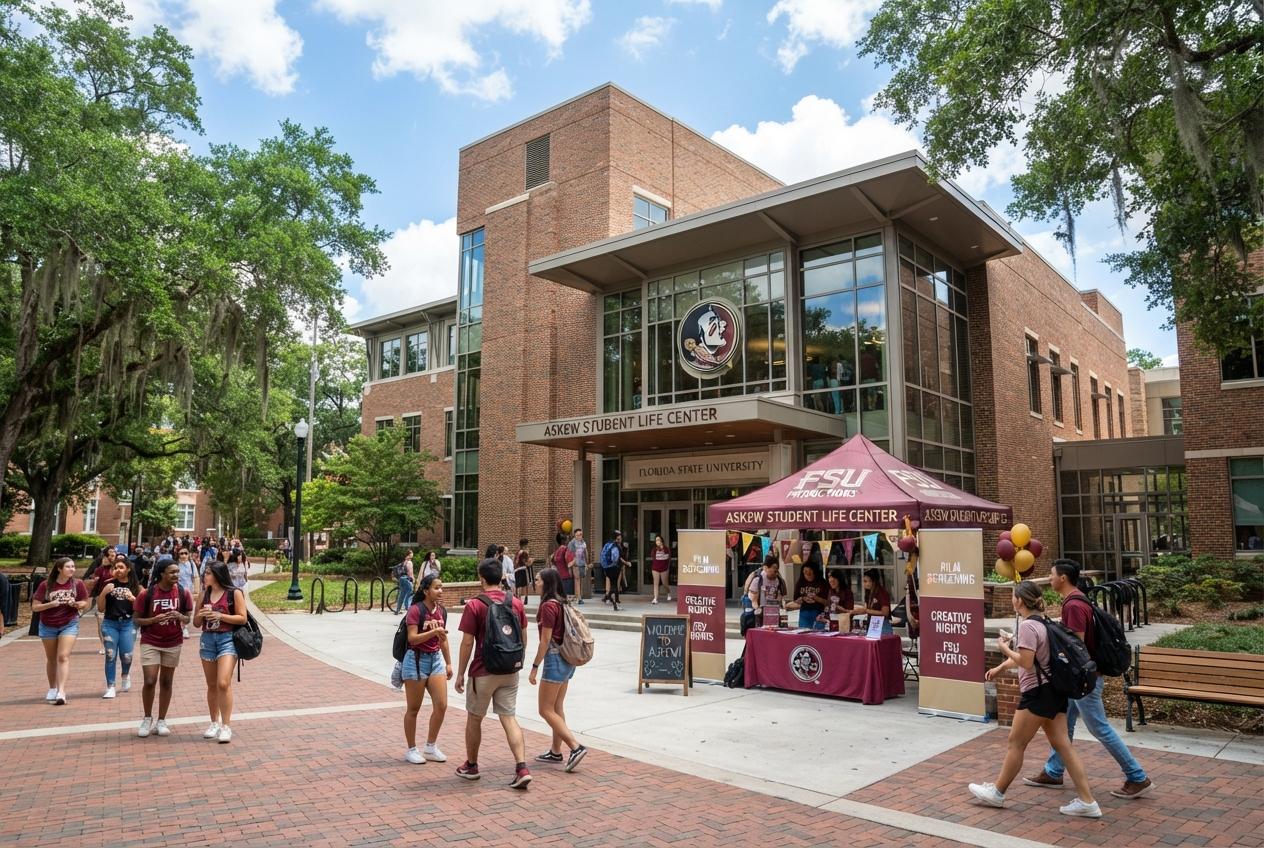
Students are turning campus drag shows into vivid, handmade celebrations of queer creativity. At Florida State University, performers, organisers and recent graduates brought music, comedy, costumes and landmark-inspired routines to the stage, showing why amateur drag remains such a memorable part of student life.
Essential Takeaways
- More than a night out: Campus drag shows can create welcoming spaces for LGBTQ+ students and allies.
- DIY is part of the charm: Performers built hats, wings, props and costumes from foam, cardboard and recycled materials.
- Themes spark originality: Landmark and travel concepts encouraged routines ranging from the Space Needle to the White House.
- Performance styles vary: Lip-sync, dance, gymnastics and quieter, song-led numbers all found room on the programme.
- The tradition has history: Florida State's Pride Student Union has supported queer student life for decades.
A campus stage becomes a place to belong
The strongest impression from Florida State's amateur drag show wasn't simply the glitter, sequins or energetic dancing. It was the atmosphere: a theatre full of students sharing popcorn, laughter and a visible sense of permission to be themselves.
Organised by the Pride Student Union at the Askew Student Life Center, the event formed part of the university's LGBTQ+ history programming. The evening's road-trip theme gave performers a playful framework, while the bigger purpose was unmistakably about visibility and community.
That balance matters. A student drag show isn't just a smaller version of a professional production. It can feel more personal because the people on stage are classmates, recent graduates and fellow members of the campus community. Florida State's event made that closeness part of the appeal.
Handmade costumes give amateur drag its spark
Some of the most memorable details came from materials that wouldn't look especially glamorous in their original form. One performer transformed foam, cardboard and a cereal box into architectural headpieces and moving accessories, with family help adding paint and finishing touches.
The result wasn't polished in the conventional theatre sense, and that's precisely why it worked. You could imagine the cutting, gluing and last-minute adjustments behind each prop. The visible effort made the routines feel inventive rather than manufactured.
DIY design is also practical for students working with limited budgets. Recycled card, fabric scraps, craft foam and borrowed clothing can become bold visual shorthand when the idea is strong enough. In drag, a recognisable silhouette often matters more than an expensive finish.
Why themed drag shows keep audiences guessing
The event's landmarks-and-destinations concept encouraged performers to think beyond a standard lip-sync. A hat could become a famous tower, a turquoise costume could suggest a national monument, and a pair of sculpted wings could turn a song into a visual joke.
That kind of prompt is useful for newer performers because it offers a starting point without dictating the result. One routine might lean into comedy and construction, while another focuses on glamour, movement or emotional interpretation. The audience gets variety, and performers get room to experiment.
Florida State's wider events calendar has also featured professional drag performances and themed nights, suggesting that campus audiences are being introduced to several sides of the art form. The professional shows bring polish, while amateur events reveal the creative process more openly.
Drag isn't only about high-energy choreography
Fast songs, splits and flips may draw the loudest reaction, but quieter performances can be just as effective. One student performer deliberately paired a dance-led number with a ballad, using the second song to show that drag can hold attention without constant tricks.
That distinction is worth remembering when choosing a show or planning a first performance. Drag can be athletic, comic, glamorous, political or deeply sincere, sometimes within the same routine. There isn't one correct level of movement, makeup or spectacle.
For audiences, the best approach is to stay open to contrast. A flashy number may get everyone cheering, then a slower performance can change the room's mood completely. That emotional range is part of what makes a campus drag show feel less like a simple variety act and more like a shared live experience.
A long-running tradition with a fresh generation
Florida State's Pride Student Union has existed since 1969, placing the event within a much longer history of queer organising on campus. National LGBTQ+ history programming similarly encourages students to connect present-day celebration with the people and movements that came before them.
That context gives even a playful night of wigs, props and pop songs extra weight. Students aren't only putting on a show; they're taking up space in a tradition that has often depended on creativity, solidarity and a willingness to be seen.
Across universities, calendars continue to include professional drag nights, themed performances and talks about queer history. The formats differ, but the appeal is consistent: students want events that are social, expressive and welcoming without feeling overly formal.
A handmade costume may wobble, a prop may need a last-second repair and a routine may take an unexpected turn. That human touch is the point. It reminds audiences that confidence is often built in public, one performance at a time.
A good campus drag show leaves the audience entertained, but it also leaves the room feeling a little more open.
Source Reference Map
Story idea inspired by: [1]
Sources by paragraph:
- Paragraph 1: [2], [6]
- Paragraph 2: [3], [4]
- Paragraph 3: [2], [5]
- Paragraph 4: [2], [6]
- Paragraph 5: [2], [3]
- Paragraph 6: [2], [4]
- Paragraph 7: [2], [3]
- Paragraph 8: [2], [4]
- Paragraph 9: [2], [6]
- Paragraph 10: [5], [6]
- Paragraph 11: [3], [4]
- Paragraph 12: [2], [7]
- Paragraph 13: [2], [6]
- Paragraph 14: [2], [3]